
Juan Bautista Segonds
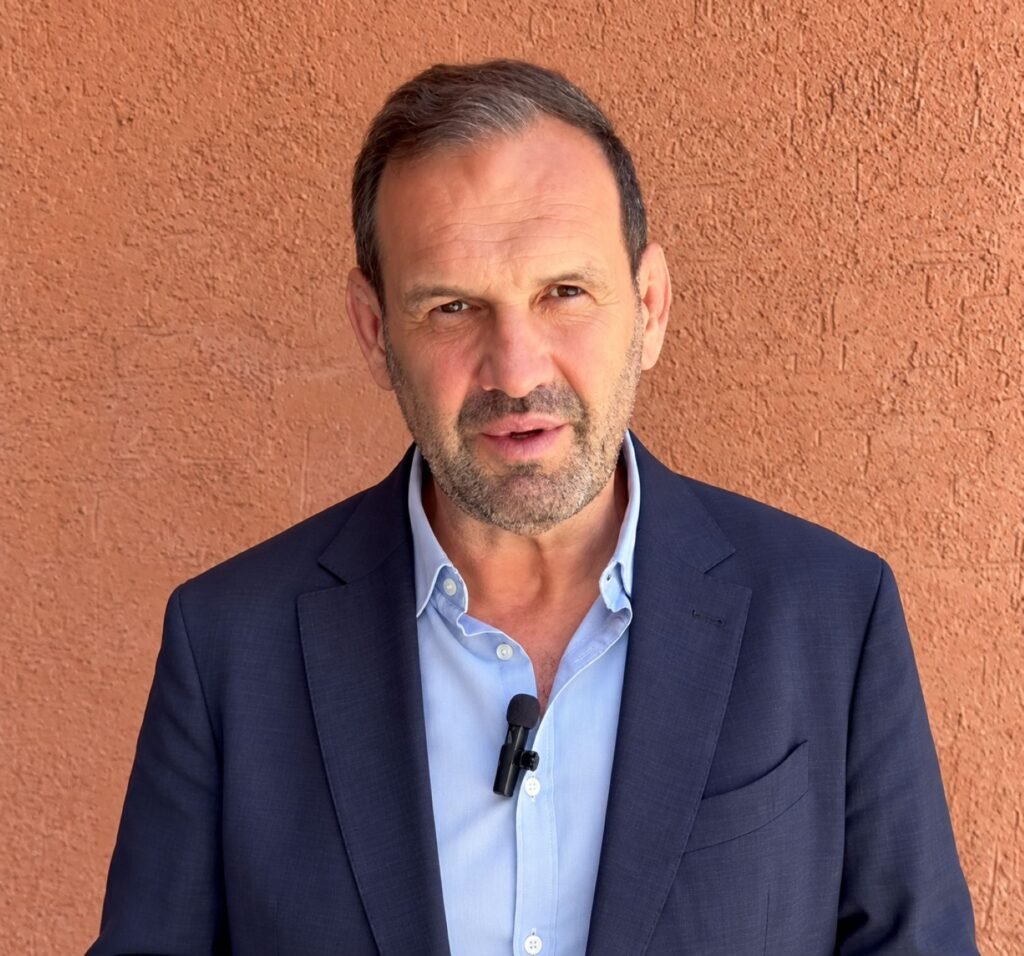
Juan Bautista Segonds is known as the “Madman for Peace,” a nickname he earned by organizing scrums where the world draws borders: between Israelis and Palestinians in Jerusalem, Argentine and British Falklands War veterans, and Cubans and Americans in Havana. A former rugby captain, founder of Rugby Sin Fronteras, and coach to Argentina’s Davis Cup-winning team, he found that mission after three business failures and some of the deepest wounds a person can carry. His story is one of a passion that cannot be understood without the pain that preceded it.
The boy from Coronel Suárez who found refuge in the scrum
Segonds started playing rugby at eight at Coronel Suárez Rugby Club. At eighteen, he captained the team that won the championship in 1987. Rugby came into his life when he needed it most: at ten, he had been sexually abused by his basketball coach, an experience he would not speak about publicly for decades. At twenty-one, he suffered another devastating loss: his best friend was murdered beside him outside a football stadium, and that night everyone in their group was detained except the killer.
Rugby remained his mainstay. He spent fifteen years playing for Club Pueyrredón’s first team in Buenos Aires, where he was captain and received the CAP award. He represented San Isidro and later coached youth teams and the first team at Los Cardos in Tandil. Thirty years on the pitch left him with a conviction he repeats in his talks: the scrum is the only place in sport where nobody pushes alone.
Alongside rugby, he pursued an entrepreneurial career that began at fourteen and ended in financial failure three times. The last collapse was the hardest: in 2008, he presented an innovative grain scale at an exhibition in Amsterdam. Months later, the conflict over Resolution 125 devastated his business. Years afterward, in an interview with MDZ, he disclosed that he had twice come close to taking his own life.
Scrums where the world draws borders
His life’s work emerged from that final business collapse in January 2009. On December 13 that year, he founded Rugby Sin Fronteras with Gustavo Zerbino—a survivor of the Andes plane crash—and Fernando Vela. Their stated mission was straightforward: to build peace and promote respect, tolerance, teamwork, and solidarity through rugby.
The foundation turned rugby into a passport. Between 2009 and 2012, it traveled to the Falkland Islands four times to bring together islanders, Argentines, English people, and war veterans. In 2010, it built a “bridge of solidarity” in Fray Bentos during the pulp mill dispute. In 2011, it climbed to the Valley of Tears to honor the Uruguayans involved in the Miracle of the Andes and traveled to South Africa to pay tribute to Nelson Mandela. On November 23, 2012, it achieved the image that traveled around the world: fifty young Israelis and fifty Palestinians playing together in Jerusalem, the day the group was dubbed “the madmen for peace.” Mass scrums followed—including one involving more than 1,200 children in Bahía Blanca—along with the First World Declaration of Peace in France, a gathering of Argentine and British veterans in London in 2015, and a meeting of Cubans and Americans in Havana in 2017.
Recognition followed: Peace Ambassador in 2011, Messenger of Peace by Benedict XVI in 2012, and, in 2015, Rugby Sin Fronteras was named Foundation of the Year by Peace and Sport.
From the Davis Cup locker room to corporate meeting rooms
Segonds also found a place in elite sport. Between 2015 and 2016, he was the holistic coach of Argentina’s Davis Cup team, led by Daniel Orsanic, which won the trophy for the first time in Argentine tennis history. President Mauricio Macri awarded him a medal of merit for that achievement. His work on the team’s physical, psychological, emotional, energetic, and spiritual dimensions was the professional expression of the message he had been sharing through the foundation: a group becomes a team, or it falls short.
The personal turning point at the center of his story has a date: June 10, 2012, when he underwent a near-death experience. “I literally died, and from that point everything started to flow,” he says. That day shaped the philosophy he now shares in his talks: he stopped believing that the outside world was the cause and his inner world the effect, and reversed the equation. He explored those ideas in two books—Cómo transformar un grupo en un equipo (2017) and Vivir en Equipo (2023)—and delivered two TED talks and more than a hundred lectures in Argentina, Spain, the United States, Uruguay, Colombia, Italy, and France. He also runs workshops such as “A Complaint-Free Environment” in companies, municipalities, and schools. He remains connected to rugby: since 2016, he has worked with Qompi Rugby, the team of the Toba Qom community in Formosa.
His stated purpose fits into the line he uses as his signature: to inspire people to illuminate their lives. The boy who found refuge in a club in Coronel Suárez came to believe that rugby was a tool rather than an end in itself, and devoted his life to putting that belief into practice.