
Emilia Garito
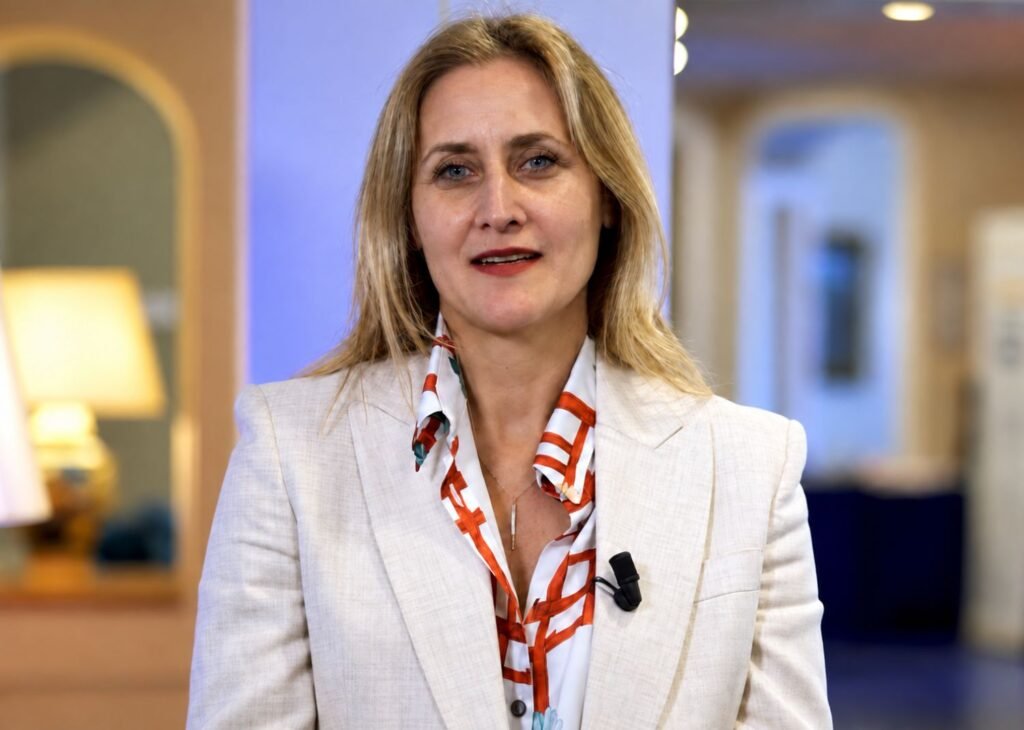
Emilia Garito became passionate about something almost nobody notices: the dormant patent. A computer engineer trained at Rome’s Sapienza University, she left a career working on radar systems at the Leonardo group to found Quantum Leap, the firm she built into an Italian leader in patent brokerage and technology transfer: the art of taking science out of laboratory drawers and turning it into businesses. This profile follows that fascination and how it shaped her career, from military radar to the TEDxRoma stage.
From the humanities to military radar
Garito was born in Catanzaro, in Italy’s Calabria region, on January 19, 1974, and her path began far from machines. She came from a humanities background before choosing Computer Engineering at Rome’s Sapienza University, specializing in system dynamics to model complex systems. That combination—literature first, equations later—shaped the way she talks about innovation. She gave it a Socratic name: maieutics, the practice of helping bring forth ideas that already exist within organizations.
Her first professional decade unfolded at Alenia Marconi Systems, part of the Leonardo-Finmeccanica group, between 2000 and 2010. She was a project manager for radar and command-and-control systems for the Italian Air Force, then took responsibility for international sales to NATO countries. Ten years in defense technology taught her the commercial value of technical knowledge, as well as how much of it goes to waste: publicly funded science that never reaches the market.
The business of awakening patents
In 2010, she left the security of Italy’s largest industrial group to found Quantum Leap, a patent broker: a firm that identifies underused patents at universities, research centers and companies, assesses their value and finds commercial opportunities for them. To do this, she developed her own method for evaluating the economic value of intellectual property, combining qualitative and quantitative criteria. She also adopted an approach she calls intellectual property lifecycle management: supporting an asset from its creation through to the realization of its value.
Her client portfolio shows the scale of the venture. Leonardo, Danieli, Ferrovie dello Stato, Enel X, the Italian Institute of Technology and universities including Sapienza, Bologna and Udine have all worked with the firm. Alongside this, the European Commission appointed her as a project evaluator for Horizon 2020, the continent’s framework program for research. She served as an ambassador for IBM Watson and the ANA Avatar XPRIZE, and joined the artificial intelligence task force at the Agency for Digital Italy. StartupItalia! included her among Italy’s 150 women scientists, entrepreneurs and innovators. Her work also reached academic journals: in 2019, a study on female entrepreneurship in STEM used Quantum Leap as its case study.
An advocate for innovation
Garito’s passion extends beyond her company, and it shows in where she spends her spare time. She curated and organized eight editions of TEDxRoma and has been a TEDx ambassador in Italy since 2017. From that platform, she returns to the same argument: European science does not have a talent problem; it has a problem translating research into market applications. In 2020, she founded the ReFutureIT think tank to explore Italy’s technological rebuilding. She also co-founded the technology-focused political group 10 Volte Meglio, invests as an angel through Tech Coast Angels, advises startups for Finpiemonte and has written columns for HuffPost Italia and the AGI news agency. Different roles, all serving the same cause.
Her career also has a gender dimension that she does not avoid discussing. She built it in two of the most male-dominated environments in the Italian economy: the defense industry and venture capital. That experience helped make her a subject of academic study. The engineer who began by selling radar systems became the public face of a profession that was barely known in Italy: finding an owner, a price and a purpose for dormant knowledge. Across her twenty-five-year career, the connecting thread has been turning curiosity into infrastructure.