
Yvon Chouinard
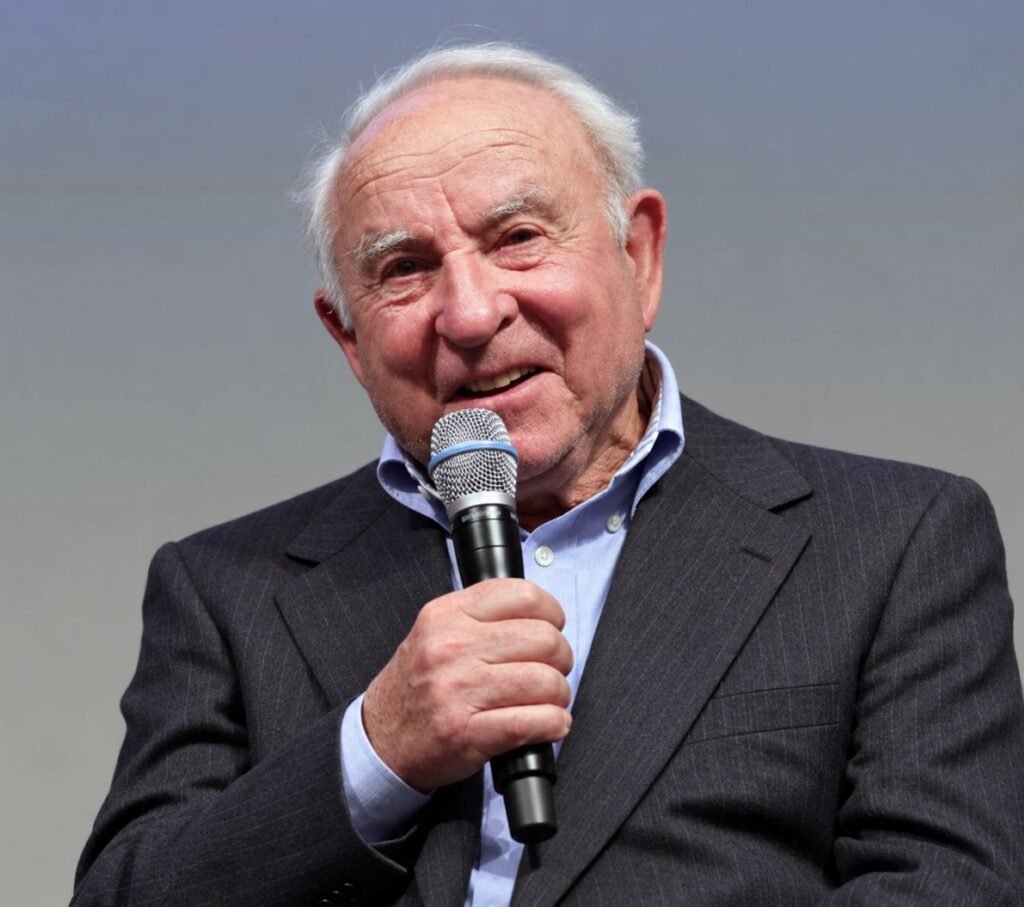
Yvon Chouinard never wanted to be a businessman. He wanted to climb, surf, fish and spend as much time outdoors as possible. To finance that life, he began making climbing tools in a second-hand forge, and that decision led him, almost unintentionally, to found Patagonia, one of the world’s best-known outdoor clothing brands. Half a century later, when the company was worth billions, he gave it away so its profits could be used to protect nature. His story shows how far a passion can go when it is taken seriously.
A Boy From Maine Who Found His Place Outdoors
Chouinard was born in 1938 in Lewiston, Maine, into a French-Canadian family. As a child, he attended a French-speaking school and, in 1947, his family moved to Southern California. The move took him away from the environment he knew and pushed him outdoors, where he felt more comfortable than in any classroom.
His first passion was falconry. At 14, he joined a falconry club in Southern California. To reach hawk nests on cliffs, he had to rappel down rock faces using ropes, and there he discovered something that fascinated him even more than the birds: climbing. By 16, he was already traveling to Wyoming to climb and search for nests in the mountains.
The Blacksmith of the Valley
By the late 1950s, Yosemite had become a center of world climbing. Chouinard and other young climbers spent entire seasons in the valley, living on very little so they could climb every day. The problem was the equipment: the soft-iron pitons used for protection bent easily and often had to be left in the rock.
Rather than accept the problem, he taught himself blacksmithing, bought a used forge and began making reusable steel pitons. He sold them to fellow climbers, often directly from the trunk of his car. He did it so he could keep climbing, not because he wanted to build a company.
Yosemite’s Golden Age
As a climber, Chouinard became one of the figures of Yosemite’s so-called golden age. In 1964, he took part in the first ascent of the North America Wall on El Capitan with Royal Robbins, Tom Frost and Chuck Pratt, without using fixed ropes. The following year, he and TM Herbert established the Muir Wall on the same formation using a cleaner style than earlier ascents.
More than his records, it was his ideas that made him influential. He argued that in the mountains, how one reaches the summit matters as much as reaching it at all, and that notion of style became one of the foundations of modern climbing.
When Passion Forced the Business to Change
In 1965, he founded Chouinard Equipment with Tom Frost, and by 1970 it had become the leading climbing-equipment supplier in the United States. Then he noticed something that troubled him: the pitons his company made, repeatedly hammered in and removed, were destroying the cracks in the rock walls he loved.
The decision he made was painful. He began discouraging the use of his best-selling product and promoted clean climbing, using aluminum pieces that could be wedged into cracks and removed without leaving damage. His passion for the mountains mattered more than the business he had already secured.
A Journey to Fitz Roy
In 1968, Chouinard embarked on a trip that would shape his life. With his friend Doug Tompkins, founder of The North Face, and other companions, he drove from California to Argentine Patagonia to climb Mount Fitz Roy, in what is now El Chaltén, Santa Cruz Province. There they established a new route that became known as the Californian Route.
The Patagonian landscape affected him so deeply that years later he named his clothing company after the region. His friendship with Tompkins lasted almost half a century. In December 2015, Chouinard was with him on General Carrera Lake in Chile when Tompkins’s kayak capsized and he died from hypothermia.
Patagonia, a Company Built to Keep Climbing
Patagonia was founded in 1973, almost as an extension of the equipment business. Chouinard began selling durable rugby shirts for climbing, and clothing gradually surpassed pitons and carabiners in sales.
He describes himself as a reluctant businessman. He wrote a book about his philosophy, Let My People Go Surfing, whose title reflects an actual company policy: if the waves are good, employees can leave to surf and make up the hours later. Patagonia was also one of the first companies in the United States to provide on-site childcare for employees’ children.
His passion for nature also shaped the products. Since 1985, the company has donated a percentage of its sales to environmental causes, and in 2002 Chouinard co-founded 1% for the Planet to encourage other businesses to do the same. In 1996, Patagonia switched all of its cotton to organic, and in 2011 it published a Black Friday advertisement in The New York Times asking customers not to buy one of its jackets unless they really needed it. Chouinard attributes the brand’s success to an almost obsessive focus on quality: making clothing that lasts a lifetime and can be repaired if it breaks.
Earth as the Only Shareholder
In September 2022, Chouinard made the decision for which he is perhaps best remembered. Together with his wife, Malinda, and their children, he transferred ownership of Patagonia to two new entities: the Patagonia Purpose Trust, which holds the voting shares to protect the company’s values, and the Holdfast Collective, an organization that receives all profits not reinvested in the business and uses them to fight the climate crisis. The company was valued at around $3 billion.
The family continues to guide both structures. The company, with more than 3,000 employees and stores in more than ten countries, is now led by CEO Ryan Gellert. Chouinard, who always felt uncomfortable with the idea of being a billionaire, summed up the decision in a phrase that traveled around the world: from then on, Earth became Patagonia’s only shareholder.
Fly-Fishing at 87
At 87, Chouinard remains loyal to the same passions. His most recent book, Pheasant Tail Simplicity, written with fellow anglers Craig Mathews and Mauro Mazzo, focuses on fly-fishing, another of his lifelong interests, and defends the same idea that has guided his life: simplicity.
Those who know him say he still lives modestly. The boy who lowered himself down cliffs to watch falcons never stopped looking for the same thing: direct contact with nature and a willingness to take responsibility for the damage one causes. Everything else, including a multibillion-dollar company, was a consequence.