
Maru Arabehety
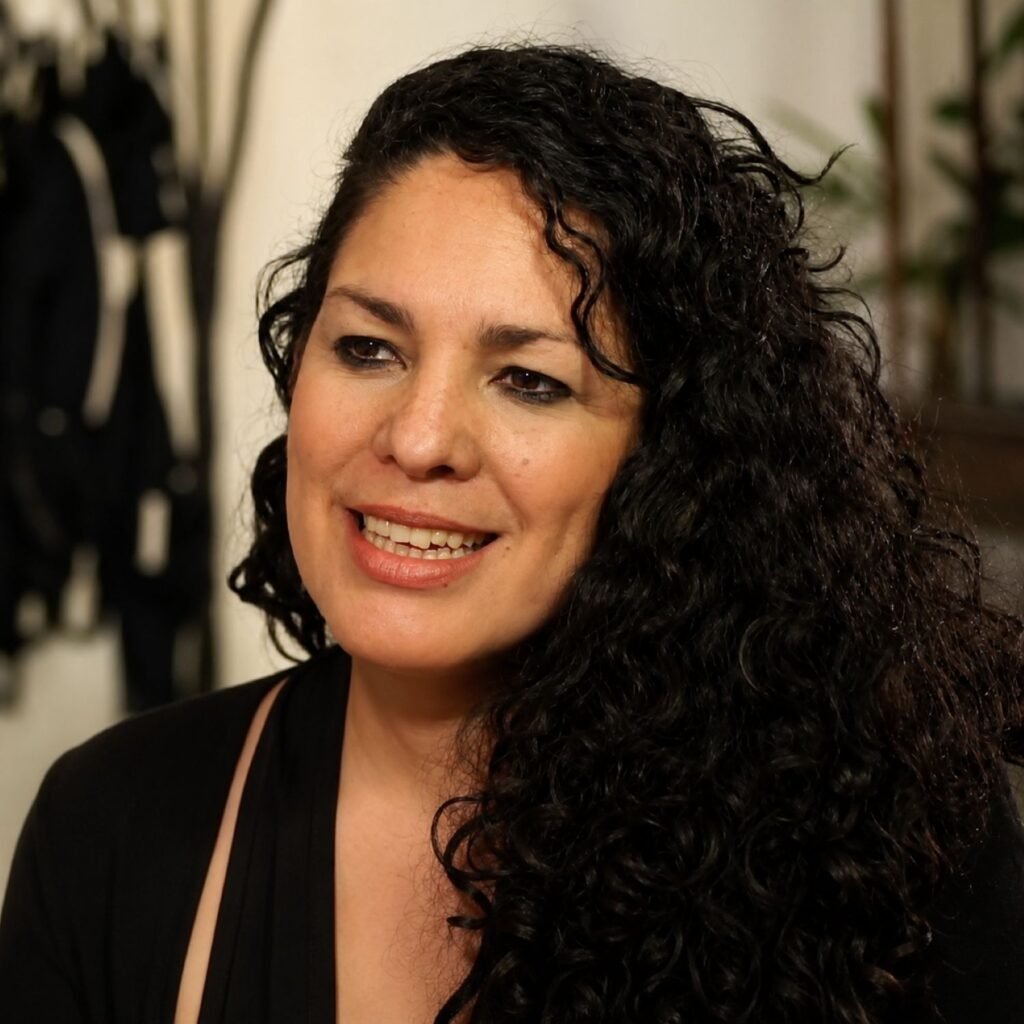
María Eugenia Arabehety created Elle Van Tok, a lingerie brand without standardized sizes, binary gender categories or a defined age range. She trained in Buenos Aires, continued her education in Europe and built the project from Bariloche with seamstresses in vulnerable situations, labels that germinate and campaigns in which the models decide what they want to show. She reached the final stage of the Entrepreneur of the Year award twice. This is the story of a passion born from her own discomfort.
Some brands are born from a market opportunity, while others begin with anger. Elle Van Tok belongs to the second group, and its founder does not hide it: the project began because she herself had experienced almost everything her customers would later tell her. The size that is unavailable. The cut that squeezes where it should not. The feeling that the beautiful garment was designed for someone else’s body. Maru Arabehety adds a nuance that is often left out of conversations about sizing: sometimes discrimination comes from the environment, and sometimes people impose it on themselves.
A name that means serious words
Elle Van Tok is a phonetic play on words. Said quickly in Spanish, it sounds like palabras mayores, an expression that suggests something important or serious. The joke makes sense once the brand’s purpose is understood: to speak seriously about bodies, desire and who has the right to feel good in an intimate garment.
Its creator was born in Buenos Aires, earned a degree in Fashion Design from the University of Buenos Aires and later taught Art and Design History at the same university. Before creating the brand, she lived in Germany and Poland, where she trained specifically in lingerie, a technical specialty far more demanding than the word might suggest. Several years ago, she chose Bariloche as the place to live with her family.
There is another fact she brings up when asked where her idea of inclusion comes from: she was adopted. She also mentions having experienced harassment and abuse from an early age, experiences that, she says, built an empathy that was first directed toward women and later expanded. Her interpretation is direct: going through difficult periods makes a person more empathetic toward others.
Two years in workshops before the first garment
The concept appeared in 2012. Instead of beginning to sell immediately, she spent two years learning in workshops. That initial patience explains much of what came later: the brand was not built as an attractive idea that then had to find a feasible production method. The process worked the other way around.
In April 2013, her business plan received a distinction from the Buenos Aires government’s Entrepreneurial Development program in the plan quality category. Once in Bariloche, she participated in local training programs, including business model workshops and the Emprepyme clinic offered by the municipal government. None of this is glamorous, but it is what sustains a venture when enthusiasm encounters production costs.
The 70% the industry decided not to see
Arabehety initially believed she was serving a niche. The figures corrected her: around 70% of the population falls outside Argentina’s standard size charts. What the industry treats as an exception is, in practice, the majority.
Elle Van Tok’s response was to eliminate the chart. Its garments have no standardized sizes, binary gender categories or prescribed age group, and the company follows a commercial rule that is far from minor: it does not charge extra for larger sizes or made-to-measure pieces. That detail may appear administrative, but it is what translates the message into the final price.
The effect on the person receiving the garment appears in customer testimonies. Ivo Colonna, from the duo BIFE, said it had been a long time since he had worn a thong and that trying on one made by the brand gave him the feeling that someone had considered a body like his. It is a modest statement that precisely describes what the brand does: it does not promise transformation; it promises consideration.
Who does the sewing
The project defines itself as a triple-impact business, based on the collaborative economy, social integration and environmental care. Its founder adds a fourth pillar: political commitment, inclusion and sisterhood.
In practice, this means that production provides work for women in socially vulnerable situations and women deprived of their liberty. The product bags are made from cotton by members of the Kuñá Mbareté cooperative, whose name means Strong Women.
Over time, Arabehety reconsidered her own definition of social integration. At first, she understood it as providing work to people with limited opportunities. She later reformulated it in terms of horizontality, shared knowledge and partnerships rather than beneficiaries.
Labels that bloom
The environmental component has a concrete and rather charming expression. Together with Viví Más Verde, the company developed labels made with seeds: the label is removed from the garment, moistened, planted and allowed to bloom.
This is complemented by recycled packaging and the reuse of fabric scraps, which return to the production cycle as new garments or accessories. At one point, the company was also exploring materials derived from potatoes, avocados and seeds for future products.
The logic described by the founder is that of an ecosystem: taking responsibility for the product’s destination from the beginning of the supply chain until the moment someone throws it away.
Who decides how they are shown
The brand’s communication strategy went through three stages that are worth examining closely, because they contain the political heart of the project.
At first, the company produced campaigns with professional teams. The idea was for top-level photographers and makeup artists to work with this range of bodies, with a feminist perspective behind the camera. Trans people were later included in the productions, under one condition: they would have a voice and a vote regarding what they wore. In the following stage, material began arriving from followers themselves, who now create a large part of the brand’s visual identity.
Arabehety points out that these homemade productions are not simply about showing oneself. They involve confronting numerous fears and barriers, which is a different kind of work from posing.
Figures who became involved without charging a fee gathered around the project, including actress and singer Muriel Santa Ana and gender journalist Luciana Peker. The brand also organizes workshops and participates in activities related to diversity, the fight against gender violence, disability and empowerment.
Casa Rosada, November 2018
In November 2018, the brand became a finalist in two competitions at the same time. One was Emprendedores de Río Negro, organized by Nobleza Obliga. The other was the Entrepreneur of the Year award, held as part of Global Entrepreneurship Week, which took place in Argentina for the first time that year.
Out of 103 submitted projects, Arabehety reached the group of five finalists. She presented her venture at the Casa Rosada Museum, accompanied by the Punto Pyme office of the Undersecretariat for Productive Innovation. The award went to Jairo Trad from Córdoba, founder of Kilimo, an efficient irrigation platform for agriculture. The following year, she was again among the distinguished projects in the 2019 edition.
Outside Argentina, Endangered Bodies, an NGO dedicated to challenging imposed body standards, recognized the brand in both 2017 and 2018.
The messages that arrive
An underwear brand reaches people in one of the most private areas of their lives, and that has consequences no business plan can anticipate. Arabehety receives messages from people who feel lonely, excluded or marginalized, and some of them come from situations of profound pain. She receives them, responds to them and carries their weight. In one interview, she said she had cried a great deal on her most recent birthday because of one of those messages.
Her way of describing what the brand does in response is simple and does not promise too much: offering a hug. She also uses another word, transmutation, to describe the passage from those painful stories into an object that gives something back.
Alongside the pain comes the other half of the balance: people who found an answer that took them into account and who say, without hesitation, that it made them happy.
Growing without losing the purpose
By 2021, the brand had operations in Río Negro and Buenos Aires and had reached forty points of sale across the country during the pandemic. Sales doubled year after year and tripled during one season. That growth brought its own problem, the kind many entrepreneurs would like to have: insufficient production capacity. Finding an investment partner to support the next stage was identified as the following step.
What sustains the project, regardless of its scale, is a premise its founder repeats: she wanted to create a brand that had meaning. It began with a small team and gradually expanded through the people she calls allies.
Twelve years after the concept first appeared in 2012, its purpose remains the same as it was at the beginning: to make the garment that no one had once been willing to sell to her.