
Constanza Ceruti
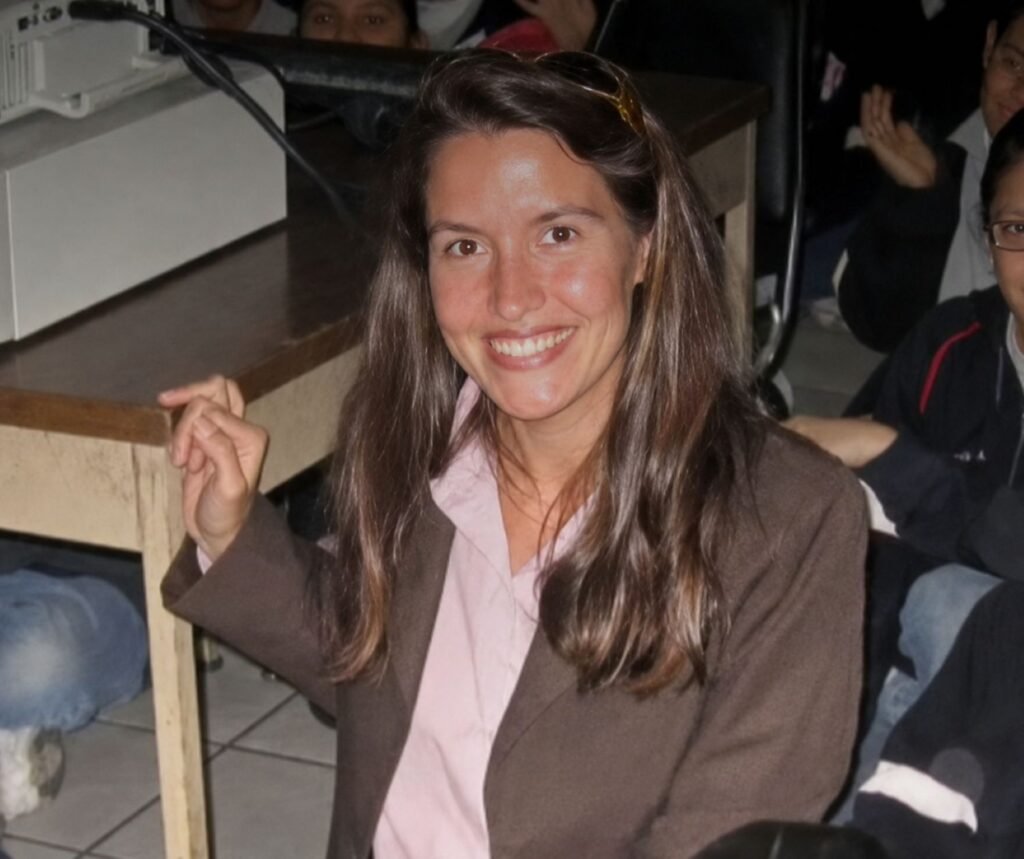
Constanza Ceruti is the first female high-altitude archaeologist in history. She co-led the expedition that discovered the Children of Llullaillaco at an altitude of 6,739 meters in 1999, has written more than twenty-five books and helped establish disciplines that had not previously existed. She also endured two decades of being overlooked in her own country. This is the story of a passion that began at the age of fourteen in the mountains of Córdoba and has yet to reach its limit.
Some vocations are encouraged by the family, while others take the family years to understand. Constanza Ceruti’s belonged to the second group. Her childhood home in Buenos Aires contained an enormous library assembled by her father, and that was where her love of the humanities began: books about ancient civilizations and distant cultures offered the first indication that she would become an archaeologist and anthropologist.
Mountaineering, however —the attraction to risk and exposure to the elements— appeared without any family precedent that could explain it. She has acknowledged that her interest initially seemed almost incomprehensible to her relatives, and that understanding came only with time.
Fourteen years old and a hill in Córdoba
Her first contact with the mountains was modest: climbs in the Córdoba hills when she was fourteen or fifteen. There was no cinematic revelation, only repetition. Trekking in Bariloche followed, through wilderness camps with the university pastoral group and also alone, where she learned to move through difficult terrain.
It is worth pausing over something that heroic profiles often omit: as a child, she had asthma and had to wear a back brace for several years because of a spinal curvature. The mountaineer who would later reach the summit of Aconcagua did not begin with a privileged body.
She discusses it without drama and even with humor. She believes the mountains welcome her because of the love and respect she feels for them, rather than because of any physical ability, which she describes as fairly limited.
More than one hundred summits above 5,000 meters
She graduated in Anthropology from the University of Buenos Aires with a Gold Medal and later earned her doctorate with honors from the National University of Cuyo. In between, and in parallel with her academic training, she accumulated a record that remains unusual even in international mountaineering: more than one hundred ascents of peaks exceeding 5,000 meters, many of them alone and without logistical support.
Her map includes the 6,882-meter Pissis and the 6,962-meter Aconcagua, as well as mountains in Ecuador, Bolivia, Peru, northern Chile and Patagonia. That record earned her the title of Mountaineer of the Year in 1997 and the Argentine Army’s Golden Condor, the country’s highest distinction for high-altitude experience, which no woman had received before her.
A Peruvian crater and the project that followed
In 1998, anthropologist and National Geographic explorer Johan Reinhard invited her to take part in a month-long excavation inside the crater of the Misti volcano in southern Peru, at an altitude of more than 5,800 meters, alongside a team from the Catholic University of Santa María in Arequipa.
There, surrounded by tents and hypoxia, they began outlining the following year’s project. They also worked together on a rescue operation at Quehuar, where treasure hunters had destroyed a mummy.
The objective of the Llullaillaco project was not to find mummies. Ceruti insists on this point because it reaches the core of her profession: the aim was to study the highest archaeological site on the planet, understand how the space had been used and determine which ceremonial and logistical elements were involved during the Inca period. It was never a treasure hunt.
March 1999: nine remained
The expedition began with fourteen members. The photographer sent by National Geographic developed pulmonary and cerebral edema at the intermediate camp and had to be evacuated. When the vehicle left the base in the middle of a snowstorm, most of the collaborators from Salta chose to return to the city.
Nine people remained to carry out the work at the summit, 6,739 meters above sea level, for approximately one month.
Ceruti makes a point of naming them individually whenever she can: the expedition leaders, Reinhard and herself; Peruvian archaeology students Jimmy Borouncle, Rudy Perea and Orlando Jaén; anthropology student Antonio Mercado from Salta; and Arcadio Mamani, his brother Ignacio and his nephew Edgar, members of an Indigenous community from the Colca region.
What they found was not a single moment, but the result of several exhausting days: three bodies naturally mummified by freezing, preserved so remarkably that they appeared to be asleep. A seven-year-old boy, a six-year-old girl who had been struck by lightning after her death and a fifteen-year-old adolescent girl. Around them were more than forty grave goods.
Everything was documented without digital cameras or mobile phones, which were not available to an expedition at the end of the twentieth century. In 2001, the three children were declared National Historic Assets and the volcano’s summit was designated a National Historic Site.
One particular scene from those days remained fixed in her memory: the recovery of the Lightning Girl, because they were able to see her face there, at the summit.
“Children with wings” and “children with pages”
For six years, while the mummies were held temporarily at the Catholic University of Salta, Ceruti coordinated the interdisciplinary studies: radiology, dentistry, genetic and hair analysis, and examinations of the offerings.
Specialists arrived from North America, Europe and Australia, and dozens of scientific papers were published. Together, they made it possible to reconstruct the children’s lives and their role in Inca state ceremonies.
Her connection with them became emotional. She calls them her children with wings, the fruit of the great love represented by the mountains, and admits that working with them awakened maternal feelings connected with the need to protect them.
Her other children, she says, are those with pages: more than twenty-five books and two hundred scientific articles.
Added to that is something less visible but more structural: she helped build entire fields of study that previously had neither a name nor an established program. High-altitude archaeology, glacier archaeology, high-altitude ethnography, the anthropology of sacred mountains and, more recently, montology. Young researchers now enter through doors that she opened.
The other side: recognized abroad, erased at home
The profile would be incomplete without its harsher side, which she recounts without euphemisms. Her name was omitted for fourteen years from the MAAM, the museum in Salta created specifically around the findings of that expedition and now one of the country’s most visited cultural institutions.
Meanwhile, others accepted tributes as discoverers of the mummies despite not having been on the mountain during the excavations and not being professional archaeologists at the time.
Ceruti attributes that erasure to provincialist and misogynistic fictions, and points out that the contribution of an Argentine archaeologist with Indigenous ancestry proved uncomfortable. Over the years, several people apologized, claiming they had been misinformed.
She has also spoken publicly about years of workplace harassment, psychological abuse and ideological persecution in professional settings, as well as one specific regret: not responding earlier and more firmly.
Her career, she adds, was sustained through every form of austerity, including the hitchhiking journeys her colleagues know by heart, and without ever receiving a CONICET grant.
The awards that did arrive
In 2006, she received the Prince of Asturias Award for Communication and Humanities, presented to National Geographic and shared with four other scientific explorers.
In 2017, she received the Gold Medal of the International Society of Woman Geographers, a distinction awarded to barely twenty women over the course of a century, among them Amelia Earhart and Jane Goodall.
Her honors also include the Wings WorldQuest Courage Award and recognition from National Geographic as one of the world’s six most outstanding young explorers. She has lectured at dozens of universities, academies and museums and shared a panel with Reinhold Messner at The Explorers Club in New York.
In Salta, she serves without pay as director of the Institute for High-Altitude Research at UCASAL, created the Sacred Mountains course and teaches Tourism students, many of them members of Andean communities. She also teaches in a master’s program focused on heritage valuation and has written opinion columns for El Tribuno de Salta.
Seventy flights of stairs
The discipline remains intact and takes forms that are far from glamorous. In Salta, she climbs San Bernardo Hill. In Buenos Aires, she tackles seventy flights of stairs: the seven floors of the building where her mother lives, repeated ten times without stopping. She also walks between eight and fifteen kilometers every day.
The aim is not to maintain an athletic condition, something that has never interested her, but to remain ready to begin an ascent as soon as the opportunity appears.
That readiness can still be seen in the field. In September 2025, she appeared in Villa de Merlo, San Luis, and climbed Cerro Blanco and Cerro Áspero with guide Germán Romero, walking approximately fifteen kilometers along old mining trails. She also entered the freezing waters of Salto del Tigre.
She has been conducting anthropological studies of the region’s mountain ranges, following earlier work at the Cruz de Chumamaya and Mogote Bayo.
What remains to be done
Her list of unfinished projects is, predictably, a list of mountains. At the local level, she would like to take teaching into the highlands through study trips and field seminars that combine active tourism with academic education.
She also has a declared dream: to establish a center for the study of sacred mountains where her library could remain available to students, mountaineers and teachers.
It is consistent with where everything began. The story started with her father’s library and a hill in Córdoba. Half a century later, her project is to bring those two things back together.