
Luis Fondebrider
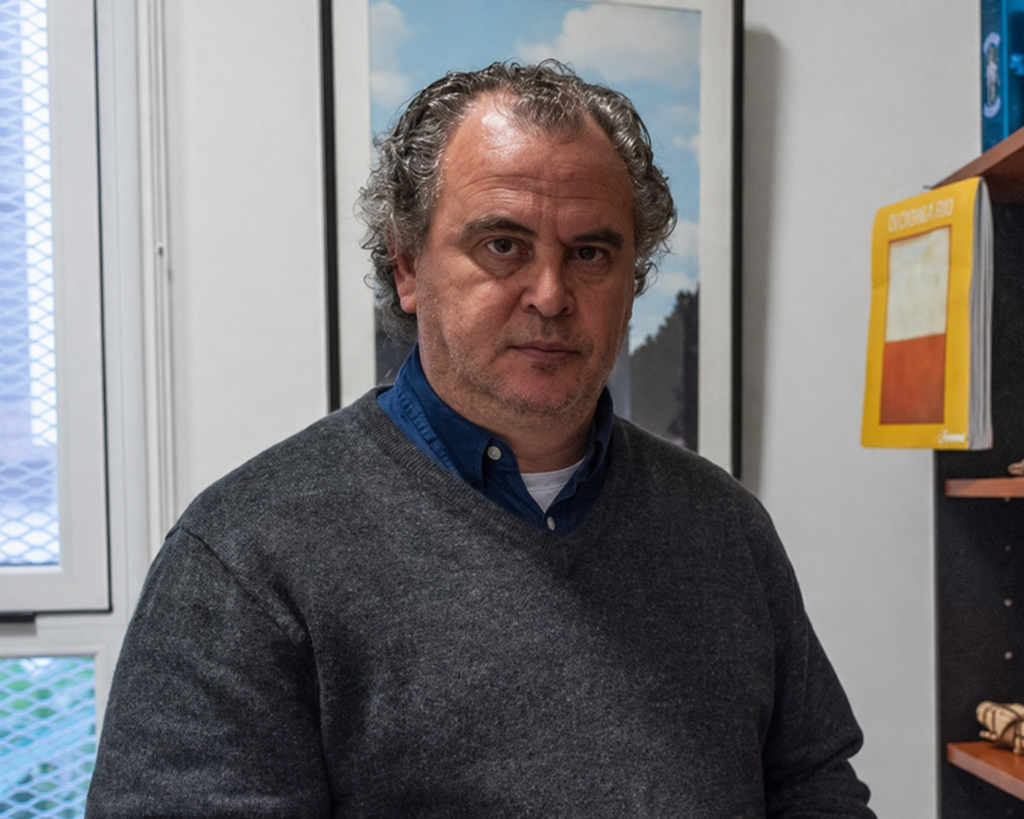
He wanted to be a footballer. He played as a number five in Boca Juniors’ youth divisions until he was sixteen, when his father told him he had to choose between football and studying. Because he was bad at mathematics and physics, he enrolled in a broad degree that, at the time, required neither: anthropology.
Four decades later, Luis Fondebrider is a world authority on the identification of missing persons, has worked in around sixty-five countries and, in February 2026, was named a Chevalier of the Legion of Honour by decree of the French president. He is still a Boca supporter and still watches football.
The day a group of students said yes
The starting point has almost documentary precision. In February 1984, with Argentina’s restored democracy still new and fragile, the courts ordered the exhumation of bodies buried as unidentified persons in cemeteries across the country. For two months, those exhumations were carried out by gravediggers in the presence of official forensic doctors, and the remains ended up being destroyed.
The Grandmothers of Plaza de Mayo, who had been traveling the world looking for a scientific method that could help establish links with their missing grandchildren, reached the American Association for the Advancement of Science. The organization sent a delegation of forensic specialists to Buenos Aires. Among them was Clyde Snow, an American forensic anthropologist who decided to conduct an initial exhumation and needed local help.
He asked anthropology graduates, and they refused. The delegation’s translator, an Argentine medical student, then offered to ask some archaeologist friends. Fondebrider was nineteen; the others were between twenty-two and twenty-four.
He tells the story without heroics. They were politically engaged students who supported the human rights movement, attended demonstrations and spent hours discussing how to fix the world. Suddenly, there was a concrete opportunity to do something through what they were studying, and they jumped in without thinking twice. The human rights organizations told them one sentence that settled everything: our children were your age when they disappeared.
Learning what university had never taught them
The first years were complete improvisation. Nobody had taught them how to tell a family that their loved one had been found, or how to prepare a project for a donor. They worked alongside prosecutors, police officers —at first, the same police force that had killed and disappeared people— and other forensic experts who looked at them suspiciously because they were anthropologists rather than doctors.
After two years working with Snow, the group formally established the Argentine Forensic Anthropology Team in 1987. There were six or seven people. By 2021, when Fondebrider left after thirty-seven years, there were around seventy, with offices in Argentina, the United States, South Africa, Mexico and Spain, and a method bringing together eleven scientific disciplines: doctors, anthropologists, archaeologists, dentists, geneticists, geographers, physicists, mathematicians and architects.
The model they developed combines prior investigation —the who, how, where and when that police would examine in any criminal case— with multidisciplinary analysis of the remains. It was the first team of its kind in the world, and its rule for international work is striking: they never lobby or offer themselves. They are called, they go, train local people and leave. They do not stay indefinitely.
The numbers behind the method
By around 2016, the EAAF had identified 710 people from approximately 1,200 sets of recovered remains, employed 65 professionals and worked in nearly fifty countries. Fondebrider has served as an expert witness in more than seven hundred cases before Argentine courts.
A decisive development was the Latin American Initiative for the Identification of Missing Persons, launched in 2007. For years, the main limitation had not been genetics but information: investigators lacked ante mortem data about what those people had been like in life. The initiative created a Family Blood Bank that eventually collected around 10,400 samples representing approximately 4,200 family groups, with some sixty hospitals across Argentina authorized to receive them.
At the same time, the team continued searches at sites that had operated as clandestine detention centers —La Perla in Córdoba and Pozo de Vargas in Tucumán— and expanded its work to cases after the dictatorship: disappearances under democracy, victims of trafficking and police violence, among them Luciano Arruga, who spent five years buried as an unidentified person in Chacarita Cemetery.
The cases that made headlines around the world
The list is long, and Fondebrider recounts it with a notable lack of solemnity. In 1995, after journalist Jon Lee Anderson interviewed a retired Bolivian general, Bolivia’s government was forced to create a commission to search for Che Guevara’s remains in Vallegrande. The first site produced nothing. A year and a half later, the correct call came: the body was there, alongside six or seven others. Identification was not especially difficult because investigators had dental molds and records of injuries Guevara had suffered in the Congo; the body was missing its hands but still had its jacket.
Fondebrider’s comment about the discovery says a great deal: famous people do not particularly interest him, and they do not especially interest his colleagues either.
In 2011, he joined the international team called to determine Salvador Allende’s cause of death, which concluded that he had died by suicide. Pablo Neruda’s case proved more complex, and the controversy over whether his remains indicate poisoning or the effects of cancer medication remains unresolved. In February 2026, Fondebrider validated the investigation by Colombia’s Search Unit that led to the recovery of the remains of priest Camilo Torres, work he described as impeccable.
What stayed with him
Asked which exhumations marked him most deeply, he did not choose any of the famous ones. He named two.
The first was in 1992 in El Mozote, El Salvador, where the army had killed around a thousand people over ten days in 1981, most of them women and children. Fondebrider had to open a grave containing 152 children in a space measuring five by seven meters. What he remembers are the toys and pacifiers.
The second was his first time in Bosnia, at a grave containing two hundred and fifty bodies still wearing their clothes. What stayed with him were the shoes.
As the years pass, he says, he cries more than he used to. Two things move him: Maradona and the return of remains to families.
A way of talking to people
One ethical position runs through his entire career, and he states it plainly: families must be told the truth, even when it is painful. Do not promise what cannot be delivered, do not tell them what they want to hear and do not treat them like children. The information, he says, does not belong to the forensic team. It belongs to them.
He also dislikes the word victim. He prefers to speak about people, because the person in front of you had projects, dreams and work, and the fact that something terrible happened to them is one detail in their biography, not their entire identity.
That also leads to his bluntest definition of the profession: they do not return life, they return the dead. Identification can ease anguish and give a family a place where they can bring a flower. And it does something broader, which he describes as a form of reinsertion: disappearance makes a person seemingly cease to exist, and identification returns them to society, to their family and to their community.
What he says when he is not measuring bones
Fondebrider does not restrict himself to forensic reports. In September 2020, during the pandemic, he publicly criticized Argentina’s management of the dead after Buenos Aires Province suddenly added more than 3,500 fatalities to its official statistics. His argument was that counting the dead should not be so difficult, that the problem was not money but efficiency, and that it reflected an endemic failure in the country, traceable from the handling of Eva Perón’s body to the dead of the Malvinas War, the La Plata floods and the AMIA bombing. The team had been warning national, provincial and municipal authorities about the issue since May.
His diagnosis of missing-person searches around the world is equally direct: without sustained political will, nothing happens, and that will is pushed by civil society. Only fourteen countries have long-term search programs. Missing people do not vote, and that affects budget decisions. And separating the search for the missing from justice for those responsible is a mistake, because impunity guarantees repetition: if disappearing five hundred people has no consequences, nothing prevents it from happening again.
Geneva, Spain and a decoration
In 2021, Fondebrider left the EAAF and the International Committee of the Red Cross offered him leadership of its forensic unit in Geneva, with 120 professionals working around the world. He spent two years in the position and resigned in December 2022. Since then, he has worked as an independent consultant based in Spain.
On January 26, 2026, by presidential decree, France named him a Chevalier of the National Order of the Legion of Honour, the distinction created by Napoleon in 1802. A letter from Ambassador Romain Nadal highlighted Fondebrider’s contribution to documenting human rights violations and identifying missing persons, mentioning two cases of particular significance to France: the identifications of Léonie Duquet in 2005 and Yves Domergue in 2010.
His interpretation of the award characteristically shifted attention away from himself. He said each identification and each grave represented only a small contribution to a collective process spanning forty years, and that the team’s work was important but never definitive: it sits alongside survivor testimony, documents and other evidence evaluated by judges.
How a vocation like this survives
He was asked how he had preserved his sensitivity after forty-one years. He gave two answers. First, always work as part of a team, with people you trust. Second, do things outside work: read, listen to music, go to the movies, see friends and play sports. When the workday ends, he disconnects, because more time does not necessarily mean better work. In a country he himself describes as completely psychoanalyzed, he has never been to therapy.
There is also a deeper reason he repeats when explaining why he chose this path: he attended a public university, society invested money in his education, and this work is his way of giving something back.
His assessment, after everything, is modest and precise. He says he gave back history, that he works with microhistory, which at the end of the day is the history of a people. That he made a very small contribution to a collective task. And that he failed many times.
What sustains him, he says, is the strength of the families. He remembers his first trip to Colombia in 1991, when women from a relatives’ association took him by bus to Zipaquirá, singing and laughing along the way. He wondered how they could still be like that after everything that had happened to them. That question still gives him hope.