
Jorge "Pepo" Ferradas
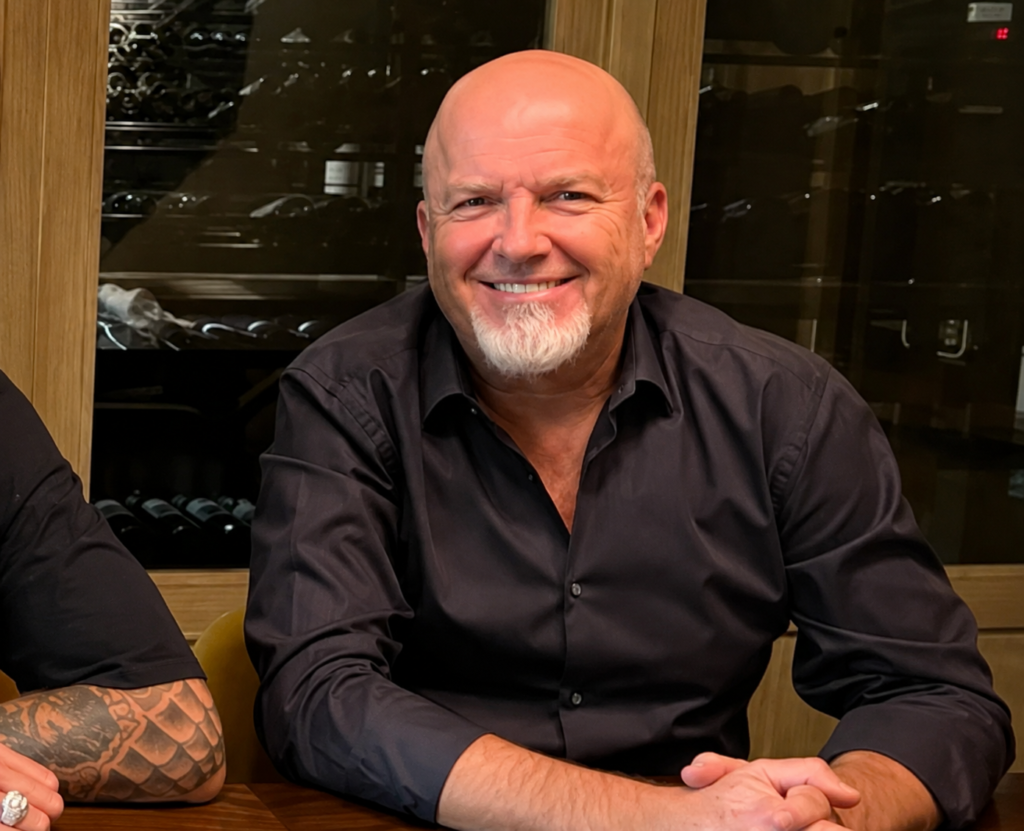
There is a line of his that says a great deal about the way he works. When he took over the international management of Brazilian singer Giulia Be in 2022, he said that at that point in his career and personal life, he wanted to focus on artists he not only believed in as a business proposition, but who also inspired him and brought him joy to work with.
Coming from someone who has worked at Sony, Universal, Live Nation and Univision, and who managed Shakira’s career across every Spanish-speaking market, the statement is more than decoration. It is a selection criterion that can be traced through nearly every move Jorge “Pepo” Ferradas has made over the past two decades.
From Buenos Aires to the front line of the global music business
Ferradas began his career at record labels and eventually became president of Sony Music Sur. Around 2004, he made the decision that redirected everything: he left Argentina and the executive position to move into artist management.
That move took him to Shakira, whom he managed during his first stage in management across all Spanish-speaking markets, while also overseeing her agreement with Live Nation. He later joined Universal Music Group, where he participated in the creation and development of GTS, the group’s management and touring division focused on Latin artists.
Live Nation followed, where he spent more than five years as vice president of Touring, working between Los Angeles and New York. By the time he reached his next desk, he had already spent twenty-five years in the industry and understood its three main sides from the inside: the label, the tour and the artist.
Univision: millions of minutes to fill
In January 2016, Univision Communications created a position that had never existed before and gave it to him: president of its Music division. His mission was to unify the company’s music strategy across television, radio and digital platforms, including music events and its radio programming team. He reported to Isaac Lee and worked out of New York.
His reading of the opportunity was typical of him. He told Billboard that the company had millions of minutes in which to develop music content and that its platform was unique in the world. Within thirteen months, he had already produced Rise Up As One, a concert held in October 2016 in San Diego near the Mexican border; signed a five-year 360 agreement with Calle 13’s Residente through Fusion Media Group; revamped the production teams behind the company’s award shows; and relaunched its publishing arm.
That work earned him the No. 96 spot on the 2017 Billboard Power 100, the ranking of the most influential executives in the music industry, entering the list directly without a previous position.
Another project from that period says a great deal about the voices he wanted to hear. He launched My Música VIP, a platform created in partnership with M&M’s and dedicated to emerging artists, connecting fans with live experiences. In 2018, an edition featuring singer and influencer Johann Vera was held in Miami. Ferradas argued that the company had a responsibility to promote new generations of talent.
The return to independence
When that chapter ended, he assessed what he had learned —production, award-show management and the inner workings of a media company, something he had never done before— and decided to return to what he knew best. In 2019, he founded FPM Entertainment.
His diagnosis of the profession was clear: the era of the all-knowing, all-powerful manager who told artists how to dress and what songs to perform was over. For Ferradas, today’s manager is the leader of a team made up of people with different skills and experiences.
The first name was Nathy Peluso, in May 2019, based in Spain and supported by local partnerships to cover the market. Camilo followed, on Ricardo Montaner’s recommendation, at precisely the moment when the Colombian artist was moving from respected songwriter to stadium-level solo performer. In November of that year, Ferradas added Lali Espósito, with whom he had worked before, completing a regional base spanning Spain, Miami and Argentina.
The pandemic moved him to another city. He left New York and settled in Miami, opening an office in Brickell, convinced that it was the right professional base for that stage of his career.
“The power of what is real”
The phrase he chose to describe the kind of artist he looks for is his own and works as a statement of principle: they work with artists who have the power of what is real.
He explained it this way: audiences value authenticity, without unnecessary spectacle hiding what is not there; work that comes from the heart is valued more than ever and eventually produces commercial success. It sounds like a simple idea until it is applied to actual decisions about whom to represent, and then it becomes demanding.
He spoke about his roster with the same logic. He described Camilo as an enormously talented artist with a unique connection to the public; Nathy Peluso as emotion turned into music and one of the best live performers he had ever seen; and Lali as a complete artist across singing, acting and dancing, noting that her different sides strengthen rather than divide her.
He was even more explicit about Giulia Be. Ferradas said he was convinced from the first time he heard her sing, and that discovering her skills as a songwriter and producer, her understanding of melody and her work ethic were what led him to join the project. He spoke of privilege and honor, two words not often found in industry press releases.
A roster built on conviction
FPM’s current and recent roster explains the weight the company has gained in the Latin market.
Camilo and Evaluna Montaner are long-term clients. Lali Espósito went through her consolidation as a stadium artist with Ferradas, including a sold-out Argentine tour that ended at Vélez with 45,000 tickets sold. In November 2022, he formalized an alliance with Federico Lauria, CEO of DalePlay and manager of Duki, Bizarrap and Nicki Nicole, to co-manage Spanish artist Rels B. They had been friends for years and had collaborated on tours and projects, but it was the first time they worked together on building a career from the ground up.
In 2022, Ferradas took over the international management of Giulia Be, coordinating with her Brazilian team. And in June 2024, Rauw Alejandro brought him into his new team to lead the overall strategy for his career, alongside his longtime lawyer and personal manager.
The dedication outside the office
One domestic detail illustrates his relationship with the profession better than any formal statement. Although he has lived outside Argentina for more than two decades, he still follows closely what happens there. Part of the reason is family: one of his daughters lives in the country. But the other part is pure professional curiosity. He listens to Argentine radio and watches Argentine television to stay up to date on both music and football, almost like a permanent stereo feed.
That same dedication becomes visible when he speaks publicly. In May 2023, he responded directly to Maxi Trusso after the musician used disparaging language about Lali Espósito, suggesting that Trusso’s anger came from a collaboration she had declined. It was the kind of direct defense a manager is not necessarily required to make.
What he says about the industry
In March 2025, appearing on Urbana Play’s Perros de la Calle, he summed up an idea rarely heard from someone who has reached the top of the business: the music industry is deeply unfair because talent alone does not determine what happens.
The observation carries weight coming from someone who has worked with Shakira, Soda Stereo and Camilo, and who has devoted much of his recent career to artists at precisely the moment when they were ready to move into a bigger league. That is, by his own definition, the moment he looks for: not discovery itself, but the point at which the talent is already there and needs a structure capable of supporting it.
A profession built on uncomfortable decisions
His career is full of moves that, from the outside, might look like steps backward. He left the presidency of a record company to become a manager. He left a global media corporation to return to independence with his own company. He traded New York for Miami in the middle of the pandemic.
Each of those turns follows the same logic: getting closer to where the things that interest him actually happen. Corporate structures gave him tools —he learned production, award-show management and the mechanics of media at Univision, something he readily acknowledges— but his way of working requires choosing, one by one, the people he wants to accompany.
After more than three decades in the industry, he still describes his work in terms of what excites him rather than what it bills. In a business where numbers often become the only language, that insistence is probably his most recognizable trait.