
Marianela Núñez
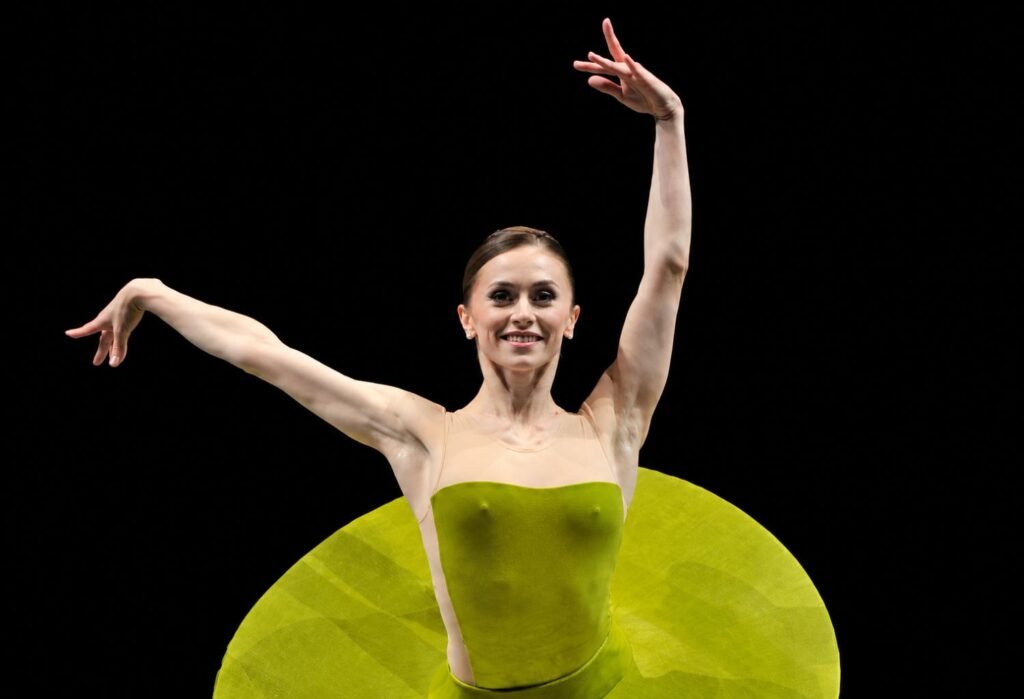
Her mother enrolled her in ballet at three. By five, she had already decided that it would be her life. At six, she entered the Teatro Colón school; at fourteen, principal dancer Maximiliano Guerra chose her as his partner; and at fifteen, she auditioned for The Royal Ballet in Los Angeles without speaking a word of English. They hired her, but British law did not allow her to work before sixteen. She waited a year. She joined the corps de ballet in 1998 and became a principal dancer in 2002, at twenty. In July 2026, after twenty-eight years with the same company, she premiered the first programme she had curated herself at the Royal Opera House.
By five, she had already decided
This story of dedication begins before she could understand what she was choosing.
She was born in Buenos Aires in 1982, the youngest of four siblings. Her mother enrolled her in ballet classes at three, probably for the same reason any mother signs a daughter up for an activity. By five, Marianela had already decided that this would be her profession.
At six, she entered the Teatro Colón Ballet School, Argentina’s most demanding training system for the discipline. There she established the routine she has never abandoned: barre every day, class before anything else, the body trained as an instrument from childhood.
It is worth considering what that means in practice. A six-year-old girl entering the Colón is not taking an extracurricular class. She is beginning a professional career a decade early, in a discipline that eliminates the vast majority of those who attempt it.
Fourteen and Maximiliano Guerra
The first sign that she was more than just another student came early, from someone with the authority to recognise it.
At fourteen, principal dancer Maximiliano Guerra chose her as his dance partner, and the Teatro Colón Ballet brought her into the company. She danced with him in Buenos Aires and on tour.
An established principal choosing a fourteen-year-old as his partner is not an act of generosity: it is a technical decision. In a classical pas de deux, the dancer providing support depends on the precision of the dancer being supported, and nobody risks their own performance on a partner who is not up to the task.
Los Angeles, 1997: an audition without English
In 1997, while on tour, she auditioned for The Royal Ballet in Los Angeles. She was fifteen and did not speak English.
They offered her a contract. Then an obstacle arose that had nothing to do with dance: British labour law did not permit her to work in the United Kingdom before sixteen. The solution was for her to attend The Royal Ballet School for a year, with her contract guaranteed for the following season.
Consider what that year involved. A fifteen-year-old moving alone to another continent, to a language she did not speak, to wait for a job she could not yet do. That is the part of a vocation that audiences do not see onstage.
1998, 2000, 2002
What followed was a rapid rise within a structure where promotion comes slowly.
She joined the corps de ballet in 1998, at sixteen. In 2000, she was promoted to first soloist. In 2002, at twenty, she was appointed principal dancer.
Between those last two steps came an episode that appears in almost every account of her life because it established her reputation. In 2001, she replaced Leanne Benjamin as Kitri in Don Quixote, alongside Carlos Acosta. Kitri is one of the most technically punishing roles in the classical repertoire, with its celebrated third-act adagio, and stepping into that role beside Acosta is a test without a safety net.
Twenty-eight years with the same company
Here is the fact that distinguishes her career from almost any other, and it is a matter of endurance.
Her accumulated repertoire encompasses the entire catalogue of classical ballet and much of the modern: Kitri, Swanilda, Aurora, the Lilac Fairy, the Sugar Plum Fairy, Nikiya, Gamzatti, the dual role of Odette and Odile in Swan Lake, Juliet, Giselle, Cinderella, Manon and Alice. She has danced works by Frederick Ashton, John Cranko, Kenneth MacMillan, Wayne McGregor and Christopher Wheeldon. As a guest artist, she has performed in Austria, the United States, Italy, Argentina and Australia, with frequent appearances at La Scala and collaborations with Roberto Bolle.
The awards followed: the Olivier for Outstanding Achievement in Dance in 2013; recognition as best female dancer at the Critics’ Circle National Dance Awards on four occasions—2005, 2012, 2018 and 2022; Argentina’s Platinum Konex as the decade’s best female dancer in 2009; and the María Ruanova Award in 2011. In the 2025 New Year Honours, the British Crown appointed her an Officer of the Order of the British Empire for her services to dance.
But the most telling number is the years. In 2018, after a performance of Giselle, she celebrated two decades with The Royal Ballet, and artistic director Kevin O’Hare described her as one of the great ballerinas of her generation. She is now at twenty-eight.
In a discipline where most careers end in the mid-thirties because of accumulated physical wear, continuing to dance leading roles at forty-four, in one of the world’s three or four most demanding companies, is the result of managing the body consistently over decades.
Timeless, a letter of thanks
She marked those twenty-eight years with something she had never done before: she put together a programme herself.
Marianela: Timeless ran at the Royal Opera House from 29 July to 2 August 2026 and was the first production she curated for the company. She chose the repertoire: Jerome Robbins’s In the Night and Frederick Ashton’s Marguerite and Armand, one of the works she returns to most often, alongside a selection of divertissements. She also brought together many of the company’s principals and soloists.
Her explanation of the programme gives meaning to the title of this article. She described it as a love letter to the company and its audience, and presented it as a way of thanking her dance partners, her colleagues, the institution and the people who had come to watch her for almost three decades. On Instagram, she summed it up: without them, she would not be here.
A ballerina who earns the opportunity to create her own celebratory programme can choose to place herself at its centre. She used that opportunity to put others onstage.
“I feel invincible”
In two interviews with La Nación in late July and early August 2026, she offered the phrase that best describes the fuel behind all of this. She said that, even when she is tired or worried, she gets up, leaves home and feels invincible.
It is not a declaration of triumphalism. It describes a routine: tiredness and worry are accepted as part of the day, and her craft is what gives them order.
Her schedule remains open and has expanded into new territory. On 1 October 2026, she was announced as the face of the partnership between L’Oréal Paris and the Royal Ballet and Opera, the first beauty partnership in the institution’s history. It includes a journey through the backstage spaces of the Royal Opera House, revealing the work behind each performance: morning class, preparation and the rituals before the curtain rises. She called it a great honour and said she was looking forward to bringing the two worlds together.
It is consistent with the rest. A career built on the invisible side of the profession has become associated with a project whose purpose is precisely to reveal that side.