
Paloma Herrera
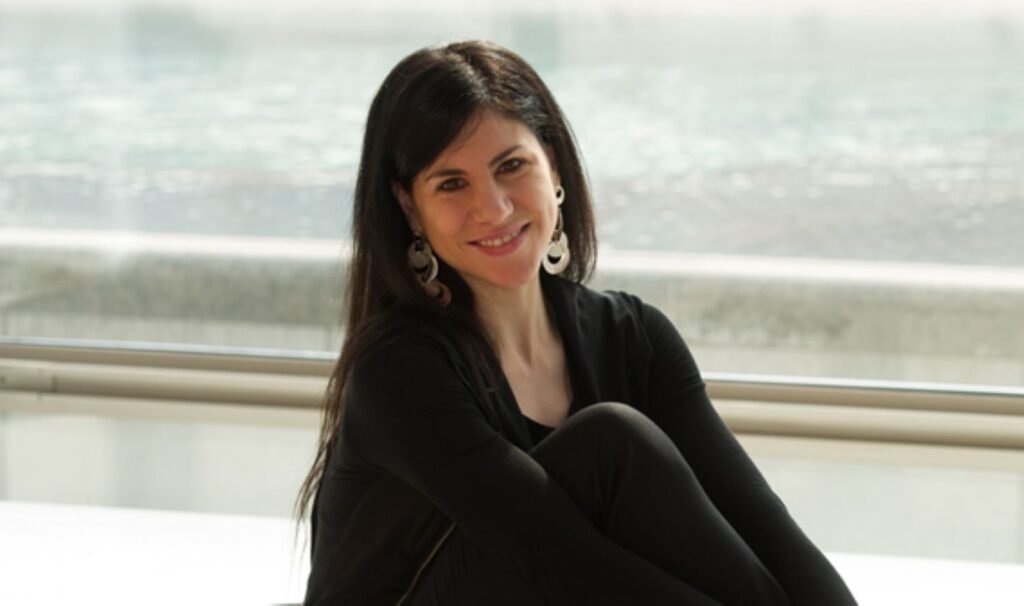
Some children discover something they like. Others discover something they cannot imagine living without. Paloma Herrera belongs to the second group. She started dancing at seven and understood almost immediately that this was where she belonged. She called it her bubble, and sometimes her religion. She hated vacations because they kept her away from class and even took her pointe shoes to the beach so she would not lose days of training.
That intensity, which in someone else might have become destructive, worked as a compass for her. It took her to New York at fifteen, made her the youngest principal dancer in the history of American Ballet Theatre at nineteen and sustained her through twenty-four seasons. It also gave her, at forty, the clarity to leave when she felt she had given everything she had.
A vocation that allowed no days off
In 1983, her parents took her to study with Olga Ferri, one of the great figures of Argentine ballet and a teacher who trained generations of dancers. That first encounter reorganized her life. Herrera later said that she had always assumed everyone was born knowing what they wanted to do, and only as an adult did she realize that was not true.
Her discipline was never imposed from outside. She was the first to arrive at class, never missed a session and hated any interruption to her training. In 1985, at nine, she won first prize at the Latin American Ballet Competition in Lima. The following year, she impressed a jury at Teatro de la Ribera while competing against professional dancers. At fourteen, she became a finalist at the prestigious Varna International Ballet Competition in Bulgaria.
From Buenos Aires to New York, nonstop
She graduated from the Teatro Colón’s Instituto Superior de Arte with top marks and soon began receiving invitations from international figures. Natalia Makarova invited her to work in London with the English National Ballet. Not long afterward, Herrera arrived at New York’s School of American Ballet, where she was placed directly in the most advanced class and chosen for the leading role in Raymonda at the school’s annual performance.
In 1991, at fifteen, she joined the corps de ballet of American Ballet Theatre. Her family moved with her. In 1993 she became a soloist and, in 1995, at nineteen, she was promoted to principal dancer. No one in the company’s history had reached that rank at such a young age.
At the Metropolitan Opera House, she danced all the major roles in the repertoire and became a muse for choreographers including Twyla Tharp, Nacho Duato, James Kudelka and Jiří Kylián.
As a guest artist, she performed with the New York City Ballet, the Kirov, the Bolshoi, La Scala in Milan and the National Ballet of Cuba. In Buenos Aires, she shared the stage with Julio Bocca, Maximiliano Guerra and José Carreño.
Perfection as fuel, not punishment
One of Herrera’s ideas helps explain how she lasted so long in a profession that can demand so much from those who practice it. Perfection, she says, does not exist. She used it as an aspiration rather than a standard with which to punish herself: the certainty that there was always something more to improve.
The same approach appears in her teaching. When she talks about the master classes she gives around Argentina, she insists that technique alone does not make a good dancer. What also matters is how dancers take care of their bodies and the relationship they build with their work. She has never believed, she says, in harsh teaching.
Leaving at the right time
In 2015, at forty, Herrera retired from the stage. American Ballet Theatre’s spring season was her last. She said goodbye alongside Julie Kent and Xiomara Reyes, two other principal dancers from the company. After twenty-five years of living in New York, she returned to Argentina.
Retiring while still in peak form is unusual, and it says a great deal about how she understands her vocation: not as a career that must be stretched as long as possible, but as something that deserves everything you can give while you are able to give it.
In 2017, she returned to the Teatro Colón, this time as director of its permanent ballet company, replacing Maximiliano Guerra. She remained in charge for five years, including the difficult months of the pandemic, and resigned in 2022 amid tensions with part of the company and calls for greater support from city authorities.
It was the most difficult chapter of her career, and perhaps the one that shows how the level of demand that worked for her personally does not always translate in the same way when leading others.
What remained on the other side
At 50, Herrera lives in Argentina, closer to her parents, and divides her time between ballet seminars and her fragrance line. In 2012, her image was added to the Galería de Ídolos Populares at Argentina’s presidential palace alongside Julio Bocca. Dance Magazine named her among the ten dancers of the century, and she appeared on the cover of The New York Times Sunday supplement.
She once wrote something about her own name that works as a summary of everything else. She always identified with it, not because of the obvious comparison between the flight of a dove —paloma in Spanish— and that of a dancer, but because of freedom. The freedom to fly in every direction.
It is a different way of looking at what is usually called discipline. For decades, Paloma Herrera did things that from the outside can look like sacrifices —never missing class, training during vacations, moving to another continent at fifteen— but she experienced them differently: as the freedom to do exactly the one thing she wanted to do.