
Judit Polgár
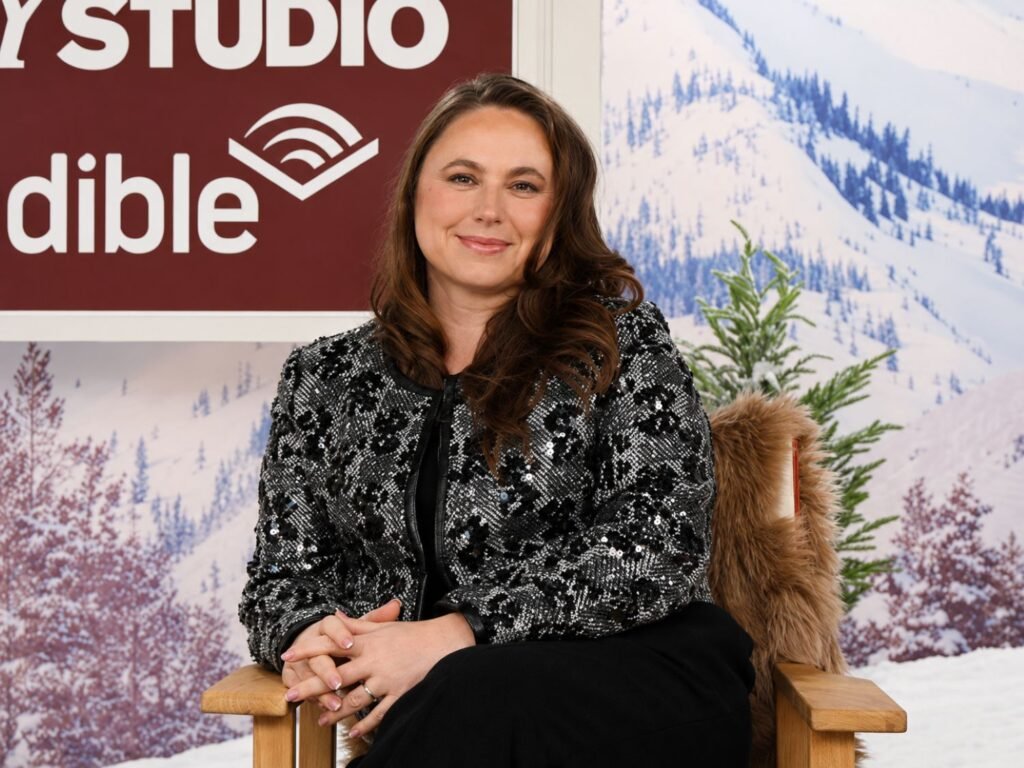
Only one woman in chess history has reached the top 10 of the world’s overall rankings. Her name is Judit Polgár. That the record still stands decades later says as much about her talent as it does about the decision that defined her career. She turned down women’s tournaments and chose to face the strongest players in the world, regardless of gender. With an almost monastic dedication to that choice from childhood, she became a grandmaster at 15, breaking a record Bobby Fischer had held for 33 years, and rose to eighth in the world. Her passion for the game continued after her retirement in 2014. Today it finds expression in education, a festival that fills the Hungarian National Gallery with chess, and even a Netflix documentary about her life.
The Polgár experiment and a childhood built around the chessboard
Judit’s passion began, in a sense, as a working hypothesis. Her father, the Hungarian educator László Polgár, believed genius could be developed and decided to test the idea by homeschooling his three daughters with chess at the center of their education. The result was unique in the history of the game. Susan became a grandmaster and women’s world champion, Sofia became an international master, and Judit, the youngest, surpassed them both.
The experiment could only go so far. Judit brought her own drive to it. At seven, she was already playing blindfold games against masters and winning. At 12, she became the youngest female player to enter the overall world top 100 and reached No. 1 in the women’s rankings, a position she held for more than 26 years. With thousands of chess books and files of recorded games, the Polgár home in Budapest functioned as a high-performance training ground. For the three sisters, it was where chess became a way of life.
Playing the strongest opponents
Chess had, and still has, a women’s circuit with its own titles, prizes, and rankings. The Polgárs rejected it on principle. To become the best, they reasoned, you had to face the strongest players, and those players competed in open tournaments. Judit made that rule part of her identity and played in hardly any women-only events throughout her career. The reasoning was as simple as it was demanding. The way to improve was to play stronger opponents.
The payoff came in December 1991, when she won the open Hungarian National Championship and earned the grandmaster title at 15, becoming the youngest person to do so at the time. She beat Bobby Fischer’s 33-year-old record by a month. The final round showed her temperament. A draw would have secured the title, but she played for a win against grandmaster Tibor Tolnai and finished first. For a teenager who had heard established players say that women could not sustain long battles over the board, every point was also an answer.
Eighth in the world and a win over Kasparov
Polgár remained among the world’s elite for more than two decades. She became the first woman to compete in a World Chess Championship, reaching the quarterfinals in Las Vegas in 1999. In 2005, she took part in the world title tournament in San Luis, Argentina, becoming the only woman to emerge as a serious contender for the overall crown. She also broke the 2,700 Elo barrier, a feat no other woman has achieved, reaching a peak rating of 2,735 in 2005 and eighth in the world rankings in 2004.
Her most symbolic victory came in 2002, in the Russia versus the Rest of the World match. She defeated Garry Kasparov, then the world No. 1, who had made disparaging remarks about women’s chess years earlier. It was the first time Kasparov had lost to a woman, and the game resonated well beyond the result. Over her career, Polgár defeated a list of world champions in various formats that few players of any gender could match. In 2021, she was inducted into the World Chess Hall of Fame.
Motherhood and retirement on her own terms
Polgár combined a demanding career with a full personal life. She started a family and had two children at the height of her career. After each birth, she returned to elite competition to keep playing the strongest opponents, something unprecedented at the highest level of chess. Her passion for the game gave shape to her life.
In 2014, after nearly three decades on the circuit, she announced her retirement from competitive chess. She went on to commentate on world championships, including the match between Magnus Carlsen and Sergey Karjakin, and wrote an autobiographical trilogy beginning with How I Beat Fischer’s Record. She also set out to pass on to her children and the wider public what her father had taught her. Chess was, above all, a way to learn how to think.
Bringing chess to classrooms and new audiences
Retirement broadened her influence. Through the Judit Polgár Foundation, she made chess an educational tool. Its free teacher training program had trained 4,500 Hungarian teachers by the end of 2025. Since January 2026, Hungary’s University of Public Service has offered an accredited program for early childhood educators with support from the foundation.
Her most visible event is the Global Chess Festival, which she has organized since 2014. The 11th edition, in September 2025, drew about 5,000 people to the Hungarian National Gallery. It featured the first-ever RubikChess tournament and a simultaneous exhibition that Judit won 6–0. The 12th edition, in September 2026, focused on critical thinking and brought the Polgár sisters together onstage again. Her story reached a wider audience in February 2026, when Netflix released Queen of Chess, a documentary about her rise that was invited to the Sundance Film Festival. Half a century after her father put a chessboard in front of his daughters, Judit Polgár’s passion still does what it always did. It shows how far the boundaries of the game and its players can be pushed.