
Silvia Gold
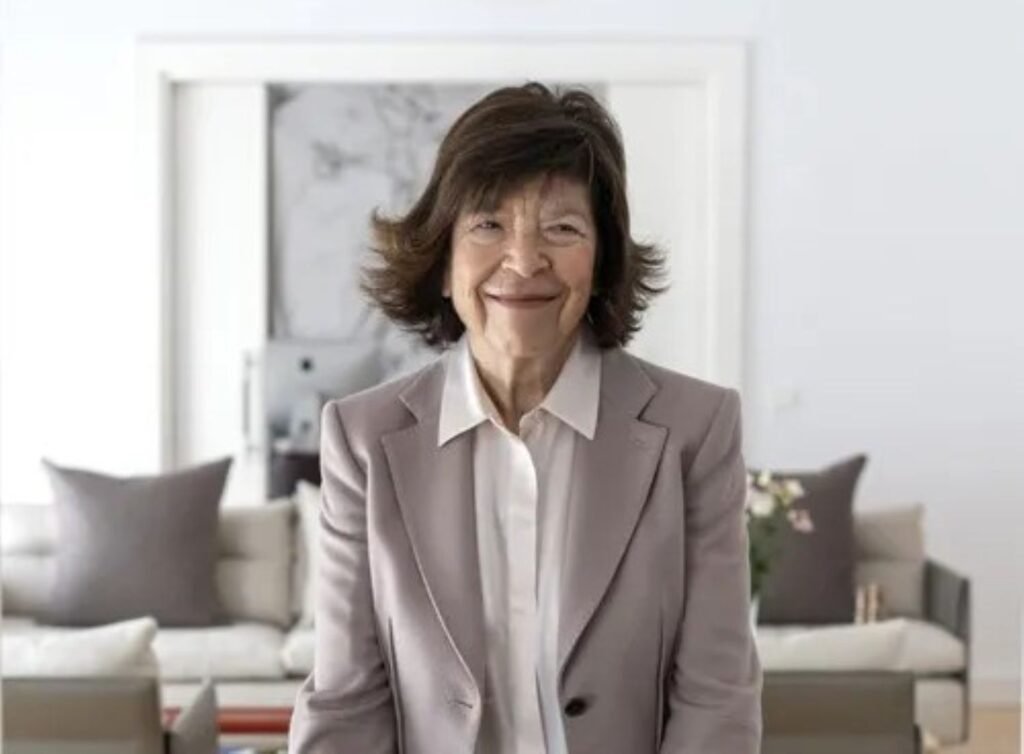
She earned her biochemistry degree while raising two young children, went into exile in Barcelona a few years later and, together with her husband, built one of Latin America’s largest pharmaceutical groups. Yet when Silvia Gold speaks about her true passion, she does not point to the company. She points to Fundación Mundo Sano and its fight against neglected diseases, conditions that affect millions of low-income people but rarely rank among the pharmaceutical industry’s priorities.
This profile follows those two lives and the point at which they meet.
A family pharmacy and a family laboratory
Silvia Gold was born in Buenos Aires in 1948 into a household where pharmacy was the family profession.
Her mother had arrived in Argentina at the age of eleven from what is now Belarus. She entered first grade without speaking Spanish and eventually qualified as a pharmacist. Her father, Dr. Roberto Gold, was also a pharmacist. Together they ran a laboratory.
Silvia married at 21, while she was in the third year of her university degree. She had her first child during her fifth year and graduated in December 1972, shortly after the birth of her second.
She began working in the family business while pursuing a doctorate in pharmacognosy, the study of medicines derived from natural sources. Her description of those years is straightforward: a great deal of work and two babies.
Barcelona, 1976
As Argentina moved toward the 1976 military coup, her father urged the couple to leave the country.
She and Hugo Sigman, a psychiatrist, chose Barcelona almost by elimination. Gold later described it as a fortunate decision. They arrived in a Spain emerging from its own dictatorship and beginning to modernize.
Daily life, however, could feel like a step backward from Buenos Aires. She recalls that during the early years it was sometimes difficult to persuade a bank manager to speak directly to her rather than ask for her husband.
The original plan was for Sigman to continue working in psychiatry while she joined a laboratory in Granollers. The job proved incompatible with raising two small children, so they created their own activity instead: managing the European purchase of raw materials for her family’s Argentine laboratory.
That small operation became the origin of Chemo.
Their third child was born in Spain. Since then, Gold has described herself as having two identities and two homes.
A business group built as a couple
After democracy returned to Argentina, the couple came back without completely leaving Spain behind. Their companies eventually came together under Grupo Insud, a group with businesses in life sciences, agribusiness, culture, conservation and energy.
Its operations expanded across more than forty countries and created thousands of jobs.
Gold speaks about working with her husband without romanticizing the experience. It was demanding, but it also gave her a kind of flexibility that she considers essential for women trying to sustain professional careers.
She could work at home until one in the morning and ask him to cover a meeting when family responsibilities required it, an arrangement that would have been harder to negotiate with an ordinary business partner. Two of their children later joined the company.
At the strategic level, Gold emphasizes the importance of consortia connecting companies with academic research groups.
The group began developing products with the National University of Quilmes and the University of Buenos Aires. Decades later, it continued working with many of the same scientists.
One of its central areas is the production of biosimilars, medicines designed to match already approved biological treatments. Gold argues that producing them locally lowers prices, strengthens scientific capacity and reduces the need for foreign currency to import expensive therapies.
The Oxford-AstraZeneca vaccine
In August 2020, mAbxience, the group’s biotechnology company, became part of one of the most closely watched health projects in the world.
Its plant in Garín, built with an investment of approximately US$40 million, was selected to manufacture the active ingredient for the first 200 million doses of the Oxford-AstraZeneca COVID-19 vaccine intended for Latin America.
Final packaging was to take place in Mexico, with financial support from the Carlos Slim Foundation.
Gold approached the announcement with less triumphalism than many of those around her. She stressed that the vaccine was still undergoing Phase 3 clinical trials and explained that pausing a study after a possible adverse event was part of normal scientific procedure rather than evidence of a scandal.
That reaction reflected the way she usually communicates science: acknowledging the importance of an achievement without presenting uncertainty as failure.
Mundo Sano, her declared passion
Her father created Fundación Mundo Sano in 1993 and died shortly afterward. Gold has chaired it since 1998 and often says that she inherited the organization while it was still in its infancy.
Its initial focus was Chagas disease, an infection endemic to Latin America. The foundation later expanded its work to other neglected diseases, including intestinal parasites, mosquito-borne infections and health problems affecting populations that rarely appear in commercial or political priorities.
One of the defining episodes in that history involved benznidazole, a medicine used to treat Chagas disease.
When a worldwide shortage was declared in 2010, Mundo Sano promoted a public-private alliance with Laboratorios Elea-Phoenix to produce the drug in Argentina.
It received approval in the country in January 2012 and later supplied other markets. In 2017, the United States Food and Drug Administration approved benznidazole for pediatric use.
Gold describes that moment as the point when the foundation entered a different international category.
In 2012, Chagas disease was also included in the London Declaration on Neglected Tropical Diseases, and Mundo Sano became the only Latin American organization within the Uniting to Combat Neglected Tropical Diseases partnership.
A concrete objective for 2030
Gold’s long-term objective is precise: that no child should be born with Chagas disease by 2030.
The strategy is based on diagnosing and treating women of childbearing age. Once successfully treated, a woman greatly reduces the risk of transmitting the infection during pregnancy.
Gold considers it indefensible that testing for Chagas is still absent from routine gynecological care in many endemic areas and among migrant populations originating from those regions.
The foundation carries out fieldwork in Argentina, Spain and Ethiopia. Its programs combine diagnosis, treatment, prevention, research and cooperation with public health systems.
The work illustrates the difference between a disease being scientifically treatable and a population actually gaining access to treatment.
What she says when asked about her country
Gold does not avoid difficult diagnoses.
She argues that some medicine prices may be legal but remain morally unacceptable. In her view, no treatment should cost US$1 million or be capable of bankrupting an entire national health system.
Her criticism of Argentina is directed less at one government than at a broader cultural weakness: the idea that public resources belong to nobody, while family interests and private property are valued more highly than citizenship.
She finds it particularly painful that a country capable of producing enough food for many times its population continues to experience hunger.
That concern also shapes her definition of leadership. Politicians, businesspeople, journalists and professionals who possess greater economic or intellectual resources, she argues, have a responsibility to raise standards rather than lower them.
Where the two lives meet
Gold has received the EY Lifetime Achievement Award, the Gold Medal of the Royal Academy of Medicine and Surgery of Murcia and recognition from scientific and pharmaceutical institutions.
She has also participated in international boards and advisory councils connected with global health and development, often as one of the few Latin American representatives in the room.
She regards that position as part of the work itself: carrying the perspective of a region that remains underrepresented in the global cooperation system.
When the foundation was named Mundo Sano, or Healthy World, the phrase may have sounded excessively ambitious.
After four decades spanning laboratories, exile, business development, biotechnology and fieldwork, Gold uses that ambition as evidence of her own argument: those with the means to act have an obligation to aim higher.