
Patrick Pouyanné and the consistency of an energy career
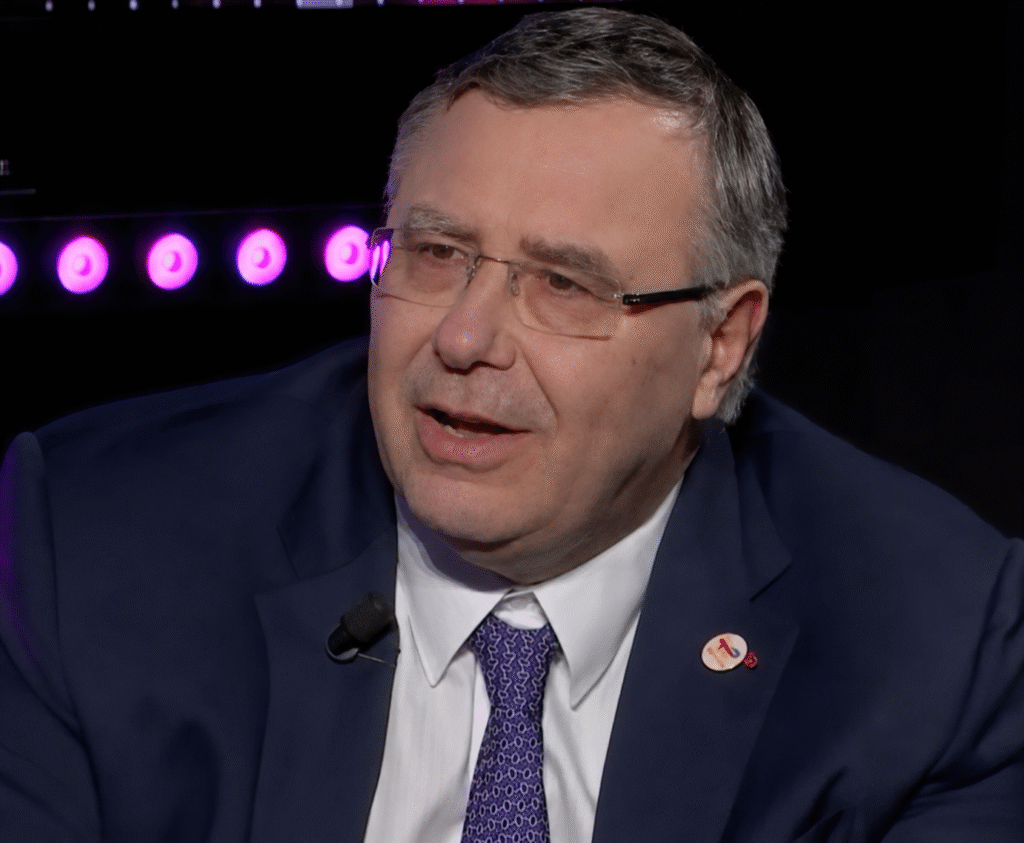
Patrick Pouyanné’s career can be read as the story of a technical vocation that reached corporate leadership. His path was not built from sudden public exposure or from a high-profile personal brand, but from sustained specialization in energy, industry, engineering and the management of complex systems. His education at École Polytechnique and in the Corps des Mines helps explain the starting point of that vocation: a professional culture where engineering does not function only as academic knowledge, but as a tool for managing infrastructure, strategic resources and long-term decisions.
A technical vocation brought to industrial scale
Before arriving at TotalEnergies, Pouyanné worked in the French public administration in areas linked to industry, the environment and technology. That initial stage helps explain an important dimension of his career: energy is not only a business activity, but also a matter of industrial policy, economic sovereignty, territorial planning and security of supply. From the beginning of his career, his field of work was connected to sectors where technical decisions have broad social and economic consequences.
His incorporation into TotalEnergies in 1997 marked the beginning of a long stage within the same organization. He was first connected to exploration and production, one of the most technical areas of an energy company. That field works with geology, reserve assessment, drilling, costs, operational risks and infrastructure. Later, his path took him into finance, economics, information systems, strategy, business development, research, refining and chemicals. That sequence shows a career built through accumulated experience, not through superficial leaps.
Professional passion, in his case, is not expressed as individual romanticism. It appears as permanence, learning and the ability to sustain a complex activity over decades. Energy is an industry where results are rarely immediate. A project can require years of technical studies, authorizations, financing, construction, operation and commercial maturity. Dedication appears there as a form of professional resistance: accepting long cycles, working with uncertainty, understanding changing variables and maintaining a strategic direction even when the context shifts.
Remaining, adapting and leading the transition
The relevance of that dedication can be observed in 2026. Pouyanné continues to lead TotalEnergies as chairman and CEO, and in March of that year he chaired the Board meeting that called the Shareholders’ Meeting for May 29. For a profile centered on vocation, this detail does not function only as corporate news: it shows continuity in a career that spans almost three decades within the same energy group and more than a decade in its global leadership.
Pouyanné developed his career within a company that also went through a deep transformation. Total stopped being presented only as a major international oil company and began consolidating itself as TotalEnergies, a multi-energy company. That change does not erase the weight of oil and gas, but it incorporates electricity, renewables, liquefied natural gas, biofuels and emissions reduction into a broader vision. Leading that transformation requires a particular vocation: not remaining fixed in the company’s historical identity, but also not ignoring the material reality of global energy demand.
Along these lines, his dedication can be understood as a search for continuity between training, industry and the energy future. Pouyanné does not appear as an external executive who arrived to manage numbers, but as someone who gradually expanded his understanding of the company from different points of the business. That trajectory makes it possible to read his profile as that of a leader who turned technical knowledge into direction capacity. In energy, that conversion is especially important because business decisions depend on physical assets, technology, contracts, logistics, regulation and market confidence.
The vocational dimension can also be seen in the tensions he faces. Pouyanné leads an energy company at a time when the sector receives environmental criticism, transition demands, shareholder pressure and requirements for secure supply. Remaining in that position means sustaining a difficult conversation: producing energy for economies that still need it, reducing emissions, investing in new platforms and responding to public questioning. His trajectory shows a less visible but decisive form of passion: the willingness to work within an industry that does not offer simple answers.
From this perspective, Patrick Pouyanné represents a professional dedication associated with energy as a field of working life. His story makes it possible to speak of passion without falling into a decorative tone. Passion appears as discipline, permanence, accumulated knowledge, adaptation and the capacity to lead a global company at a moment when energy has become one of the most complex issues of the twenty-first century.