
Orlando Gill
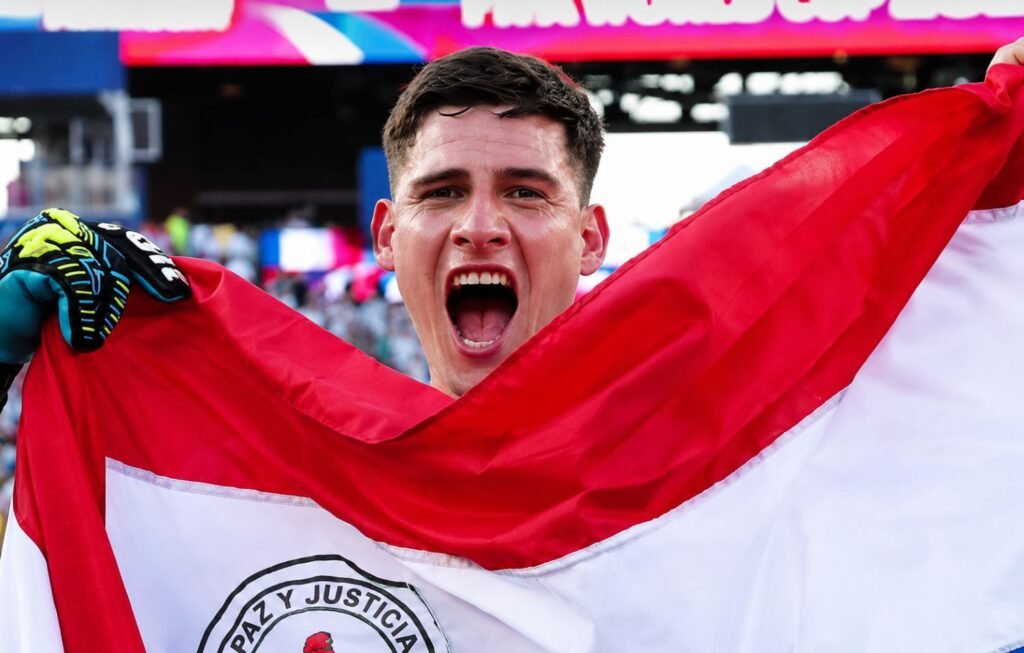
Behind every save that all of Paraguay celebrates today, there are years almost no one saw. Before becoming one of the figures of the 2026 World Cup, Orlando Gill was a boy playing amateur football, working to put food on the table at home and having to give up the little he had to support his family. That story of endurance is what gives another meaning to his present.
The years when nothing was left over
Until he was around 18, Gill played amateur football, far from contracts and cameras. When his son Lautaro was born, the priority stopped being the goal and became his family. To make a little money, he sold clothes, sold boots and even gave up his Paraguay Under-20 national team shirt, a garment that is a treasure for any footballer. His wife was the one who told those hard moments, which today contrast brutally with newspaper covers and the embrace of an entire country.
A vocation that was not negotiable
What is remarkable is that, in the middle of those urgencies, he never let go of the goal. He could have hung up his gloves to devote himself to a safer job, but he chose to sustain the dream even when the dream did not pay the bills. That stubbornness — the decision to keep goalkeeping when everything pushed in the opposite direction — is what explains his character on the pitch: a goalkeeper who does not shrink against Germany or France because he had already faced much harder matches outside it.
The big opportunity came only when he crossed into Argentina. In his first year at San Lorenzo de Almagro, he earned a place in the reserve team, became one of the team’s standout players and reached a final. That performance opened the door to the first team, and once inside, he never let go of it. What for many would have been a ceiling was, for him, only the first step.
The criticism that made him stronger
Along the way, he also received blows that leave a mark. The legendary José Luis Chilavert, the greatest reference among Paraguayan goalkeepers, once called him a “mute goalkeeper,” a criticism that could have weighed like a burden on another footballer. Gill chose not to answer with words. He let his hands and reflexes speak, and as the matches went by, he turned that criticism into fuel. The fact that the comparison came from none other than the most famous goalkeeper in Paraguayan history made it even heavier, and that is why his silent response carried so much value. Today, much of Paraguay sees him as the natural heir to the national team’s goal, the position Chilavert once turned into legend.
An embrace from afar
His most human side became visible after the feat against Germany. In the middle of the celebration, with the whole country at his feet, Gill dedicated an emotional message to a sick nephew, a gesture that showed what he is made of beyond sporting performance. At a moment when many would have thought only of their own glory, he chose to remember those he loves. That detail completed the bond with a fan base that had already adopted him for footballing reasons.
What this story means
For Gill, the 2026 World Cup was much more than a tournament: it was confirmation that every sacrifice had been worth it. He said it himself, recognizing that what he experienced with Paraguay is the most important thing in his career. The elimination against France hurt, but he left the tournament as the symbol of a simple and powerful idea: that talent without sacrifice is not enough, and that sometimes the one who goes furthest is the one who had to give up the most along the way. The kid who once sold his shirt to support his family now has a new one, the starting shirt of the national team, and no one questions it anymore.