
Navi Pillay
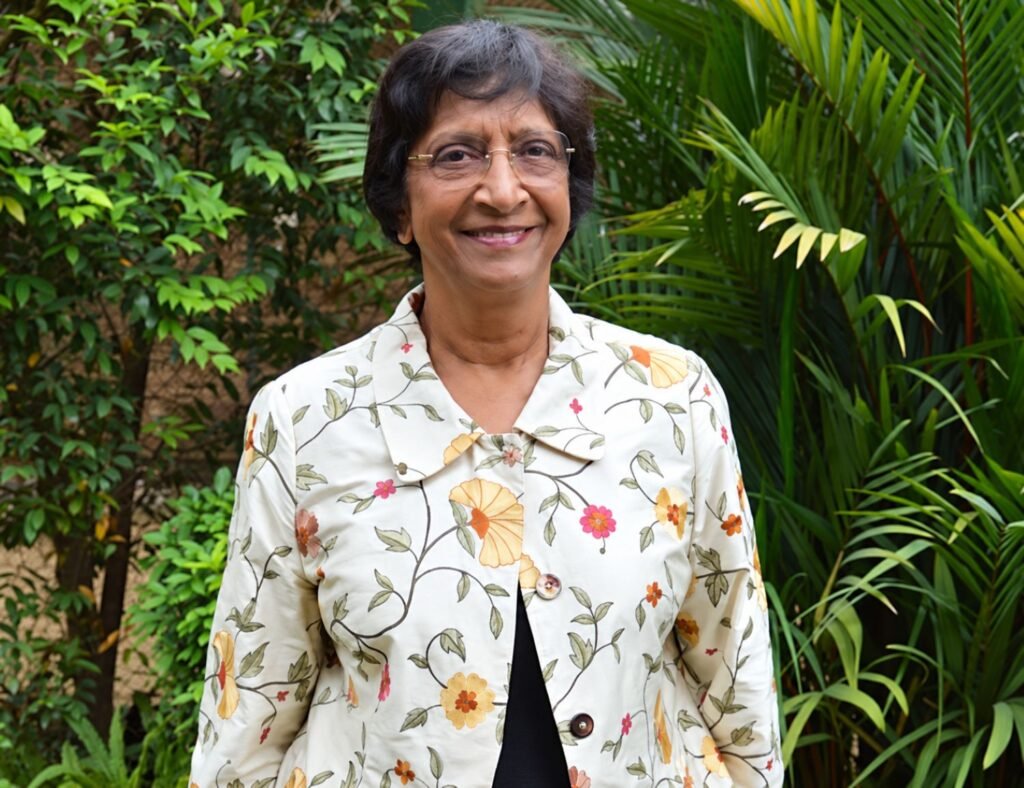
She is the daughter of a bus driver and grew up in a poor Indian neighborhood in Durban, in apartheid-era South Africa. In 1967, she became the first Black woman with her own law practice in her province, and most of her clients were political prisoners. Thirty years later, she presided over the tribunal that established that rape can constitute genocide. On October 9, 2026, at 85, she received the Nobel Peace Prize.
Her First Words Came From Nuremberg
When she spoke for the first time as a Nobel laureate, she chose the place before the words. She did so from the Nuremberg Tribunal courtroom, the chamber where those responsible for state crimes were first tried in 1945.
She dedicated the prize to the victims of international crimes. And she took the opportunity to warn about something that has been troubling her: political attacks against international law, particularly against the International Criminal Court, where she herself served as a judge.
The Norwegian Nobel Committee honored her for decades of work against impunity, from her struggle against apartheid to her involvement in investigations of genocide and crimes against humanity, and for her contribution to an international legal order based on the accountability of states and those who govern them. Jørgen Watne Frydnes, who chairs the committee, summed up the reasoning in a brief statement: international law is a foundation for a more peaceful world.
Clairwood, 1941
She was born on September 23, 1941, in Clairwood, a neighborhood of Durban, when the province was still called Natal. Her family was of Tamil Indian origin and had limited means. Her father drove a bus.
For a poor Indian girl in 1950s South Africa, the system had a fairly predetermined path, and it did not lead to university. She studied anyway: she earned her first degree in 1963 and completed her law degree in 1965, both at the University of Natal. During her studies, she joined the Non-European Unity Movement, one of the organizations opposing the racial regime.
She completed her legal training in Durban with the lawyer Narainsamy Thumbi Naicker, who was associated with the African National Congress. And in 1967, at twenty-six, she opened her own practice. She was the first Black woman in the province to do so.
Defending Those No One Wanted to Defend
The detail that explains that decision is simple: she did not choose political litigation out of abstract activism. It was what there was.
Her clients were apartheid’s political prisoners. She defended Phyllis Naidoo. She defended members of the Non-European Unity Movement charged in 1971 under the Terrorism Act. She also defended her own husband, Gaby Pillay, when he was detained.
And in 1973, she achieved something that went beyond her cases: she secured recognition of political prisoners’ right to legal counsel. Until then, the state could hold them without access to any lawyer.
In the mid-seventies, she took on the defense of figures from the Black Consciousness Movement, including Saths Cooper and Strini Moodley.
Meanwhile, she continued studying. She went to Harvard, where she earned a master’s degree in Law in 1982 and a doctorate in Juridical Science in 1988, when she was over forty. In 1985, she co-founded Equality Now, an organization dedicated to women’s rights.
When apartheid fell, she participated in the Women’s National Coalition and contributed to drafting the equality clause of the South African Constitution. Her work as a litigator became foundational text.
September 1998, Arusha
In 1995, she was appointed a judge of the International Criminal Tribunal for Rwanda, established to try the genocide of the previous year. She remained there until 2003 and served as its president between 1999 and 2003.
The ruling that placed her in law books came in September 1998. The defendant was Jean-Paul Akayesu, former mayor of the commune of Taba, convicted for his role in the atrocities against the Tutsi in 1994. The judgment established something that had not previously existed in international jurisprudence: that rape and other forms of sexual violence can constitute genocide and crimes against humanity, depending on the circumstances and the intent with which they are committed.
She later described it with a phrase that captures the change: rape went from being considered a spoil of war to being a war crime.
It is worth measuring the distance between those two scenes. The lawyer who fought in 1973 for a detainee to be able to see a lawyer was, twenty-five years later, signing the judgment that redefined how international law understands sexual violence in armed conflicts.
From The Hague to Geneva
Between 2003 and 2008, she served as a judge at the International Criminal Court in The Hague.
Then, from 2008 to 2014, she held the position of United Nations High Commissioner for Human Rights, the system’s most visible role in that field. From there, she denounced violations in Syria, Gaza and Sri Lanka, with an approach that earned her as much support as hostility among governments.
She never stopped working after that. She chairs the International Commission Against the Death Penalty, based in Madrid, and served as an ad hoc judge at the International Court of Justice in the case brought by The Gambia against Myanmar over its treatment of the Rohingya minority.
In 2021, she assumed the chairmanship of the UN’s independent commission of inquiry on the Occupied Palestinian Territory, a position she left in November 2025. In September of that year, the commission concluded that Israel is committing genocide in Gaza. The Israeli government rejected that conclusion, which remains a matter of international dispute. It is the most contested part of her career and also the one that received the most attention when the Nobel was announced.
An Idea Sustained for Sixty Years
Before the Nobel, she had already received the Stockholm Human Rights Award in 2010, the Defender of Democracy award from Parliamentarians for Global Action in 2014, and the Sydney Peace Prize last year.
What stands out when looking at the entire sequence is not the list of positions. It is the repetition of the same act on increasingly larger scales: ensuring that someone left defenseless by power has somewhere to turn. She did it for apartheid detainees in the seventies, survivors of the Rwandan genocide in the nineties, and civilian populations in half a dozen conflicts since then.
At 85, her stated concern is not her own legacy but the fragility of the structure she helped build. That is why she chose Nuremberg as the place to speak. And that is why her first message as a Nobel laureate was an appeal to political leaders: protect human rights and prevent war.