
Taylor Kitsch
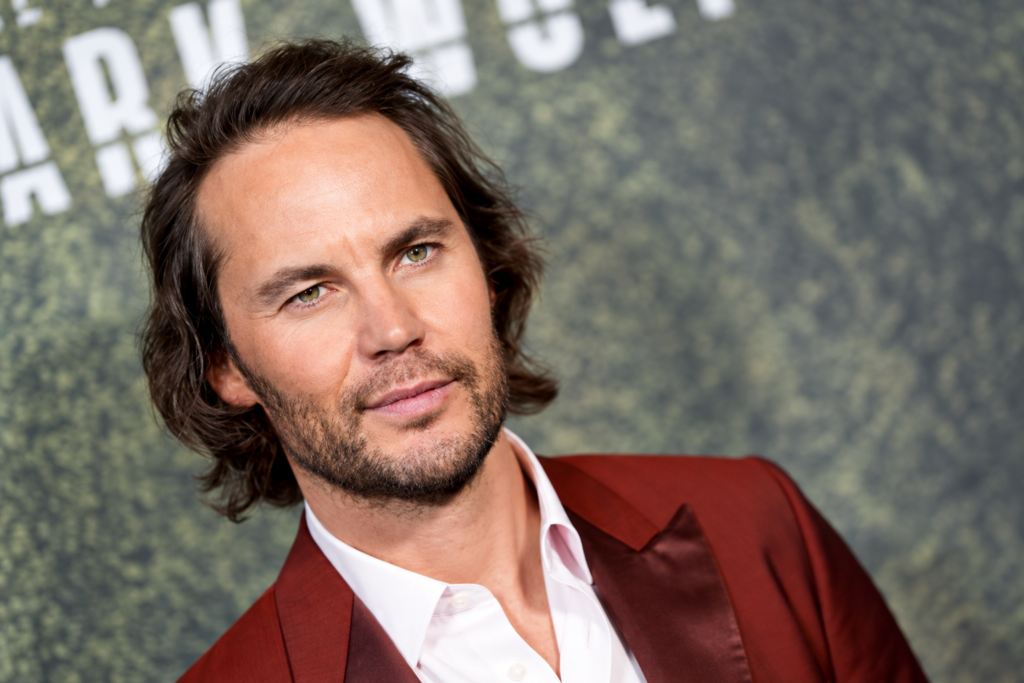
He grew up in a trailer park in British Columbia, wanted to become a hockey player until a knee injury told him otherwise, and arrived in New York with so little money that there were nights when he slept on the subway. Twenty years later, he stars in Netflix and Prime Video series, is building a retreat for people in recovery on 22 acres in Montana and photographs wildlife from a specially equipped truck. Taylor Kitsch’s story is not best understood as a stroke of luck: it is a story of persistence sustained over a long period of time, even when the results were not coming.
A childhood without a safety net
He was born in Kelowna in April 1981. His parents separated when he was one, and his mother, who worked for the province’s liquor board, raised three boys on her own in a trailer park. His father worked in construction. Two younger half-sisters came later. He attended Gleneagle Secondary School in Coquitlam and spent time at the University of Lethbridge.
His first ambition was not acting but hockey. He played for the Langley Hornets until a knee injury permanently closed that door. That early ending offers a key to understanding much of what followed: the way he prepares physically, his insistence on doing his own action scenes whenever production allows it, and his recurring choice of characters defined by physical strain.
New York on three dollars a day
In 2002, he moved to New York to work as a model with IMG while studying acting with Sheila Grey. Campaigns for Diesel and Abercrombie & Fitch create an image of success that does not match the reality of those years.
He worked several jobs at once to pay the rent. There was an apartment without electricity. There were weeks when he survived on around three dollars a day. And there were nights when he simply slept on the subway. Looking back on that period, he does not talk about sacrifice or turn it into an epic story; he describes New York as an intense city that tested him and, against the stereotype, speaks warmly about the people he encountered, even underground.
The story that sums up his level of commitment
By the time he reached Los Angeles, things had not improved much: he was living in his car and doing as many as four auditions a day. In 2025, during a television interview alongside his The Terminal List: Dark Wolf co-stars, he told the most humiliating story from that period without the slightest embarrassment.
He had stopped at a coffee truck before an audition and ordered something particularly strong. On the way there, he began to feel sick. Sitting in the waiting room, with the bathroom only a few feet away, his body gave out. Most people would have left. He went into the bathroom, threw his underwear in the trash, returned to the waiting room, waited for his turn and did the audition anyway. He did not get the part and does not even remember what project it was for; he only knows it was some television pilot. When asked whether it had been his audition for Friday Night Lights, his answer was immediate: he got that one.
The story is funny, but it also explains something. At that point in his life, missing an audition was not an option.
Tim Riggins and Peter Berg’s eye
Friday Night Lights arrived in 2006 and gave him the character with whom he is still most closely identified: Tim Riggins, the troubled player on a Texas high school football team. He stayed for all five seasons and received two Teen Choice Award nominations. Before that, he had smaller roles in Kyle XY, Godiva’s and several films, making his feature-film debut in The Covenant.
The series also produced a partnership that runs through his entire career: his relationship with director Peter Berg. They worked together again on Lone Survivor, where Kitsch played Lieutenant Michael Murphy; on Painkiller; and on American Primeval, the Netflix western miniseries released in January 2025 and set during the Utah War of 1857.
While filming the series, he used breaks to shoot movies: Gospel Hill, The Bang Bang Club —in which he portrayed Pulitzer Prize-winning South African photographer Kevin Carter— and X-Men Origins: Wolverine, where he played Gambit. Then came the two major 2012 blockbusters, John Carter and Battleship, followed by work with Oliver Stone on Savages.
When the role hit close to home
The project he describes as the most rewarding of his career was Painkiller, Netflix’s 2023 miniseries about the origins of the opioid crisis in the United States. He played Glen Kryger, a tire-shop owner who is injured at work, receives a prescription for OxyContin and becomes trapped in an addiction that tears his family apart.
Peter Berg has said publicly that Kitsch was the first and only person he called for the role, and explained why: Kitsch’s sister Shelby struggled for years with a severe opioid addiction, and he stepped away from his career in the middle of the previous decade to support her through recovery. She is sober today, and he often describes helping her through that period as his greatest personal achievement, above any film or television release.
Kitsch prepared for the role with a specialized adviser and sent notes to the production to refine details. His stated goal was to help reduce the stigma and shame surrounding addiction. The way he summed it up has less to do with acting than with purpose: he considers it one of the projects that explains why he does what he does.
Selling his dream house and driving twenty hours north
He lived in Austin, Texas, for more than fifteen years, where he eventually built the house he had always imagined. In 2021, he sold it, climbed into his adventure truck and drove roughly twenty hours north to Bozeman, Montana.
He gives three reasons, none of them professional: he missed the mountains, he missed having four seasons and he wanted to be closer to the wildlife he photographs. He also wanted to simplify his life. He says nature gives him more silence and peace and feels much closer to the place he came from.
There, he bought 22 acres and began building with his own hands and those of his team: an A-frame house that will serve as a communal space, cabins, a geodesic dome and a wood-fired hot tub. In his descriptions of the project there are baby foxes, trails, places to write or read and a sweat lodge led by a local shaman.
Howlers Ridge Fund: turning passion into a program
The property is not the whim of a retired star. From the beginning, Kitsch conceived it as a nature-based healing retreat for veterans, people in recovery and those dealing with grief or trauma, a project shaped by what he witnessed firsthand with his sister.
That idea was formally established in 2025 as Howlers Ridge Fund, a nonprofit organization combining nature retreats, educational programs and funding for other organizations working toward similar goals. The logic is the same one he applied in his private life: take people away from the noise, place them somewhere where the landscape helps bring order and accompany them through the process.
On what that kind of inner work requires, he has a definition that avoids romanticizing it: working on yourself is frightening, he says, and if it is frightening, that is a sign that it is working.
A commitment that started long before
His charitable work did not begin in Montana. He participated in the Malibu Triathlon, played charity hockey games and traveled to Uganda and Kenya in 2008 to work with the African Children’s Choir. He has always been reserved about that side of his life, just as he is about his private life. He regularly supports youth sports and, on set, pushes to perform his own stunt work.
The present: Ben Edwards and what comes next
Since 2022, he has played Ben Edwards in The Terminal List, Prime Video’s adaptation of Jack Carr’s novel: a former Navy SEAL turned CIA operative who is also the best friend of Chris Pratt’s character. The role worked well enough to justify a prequel centered on him, The Terminal List: Dark Wolf, released on August 27, 2025.
In between are True Detective, Waco —where he portrayed David Koresh—, The Normal Heart, Only the Brave, American Assassin and 21 Bridges. His filmography has no obvious genre pattern, but it does have a clear constant: damaged characters, people pushed to the limit, and stories that are real or inspired by real events.
When an intense shoot ends, the routine he describes is always the same. He loads up the truck, heads into the wilderness, takes photographs and goes fly-fishing. The drive that led him to sleep on a subway in his twenties is the same one that now has him building cabins in the mountains: he did not change direction, he changed who it was for.