
Tracy Chapman
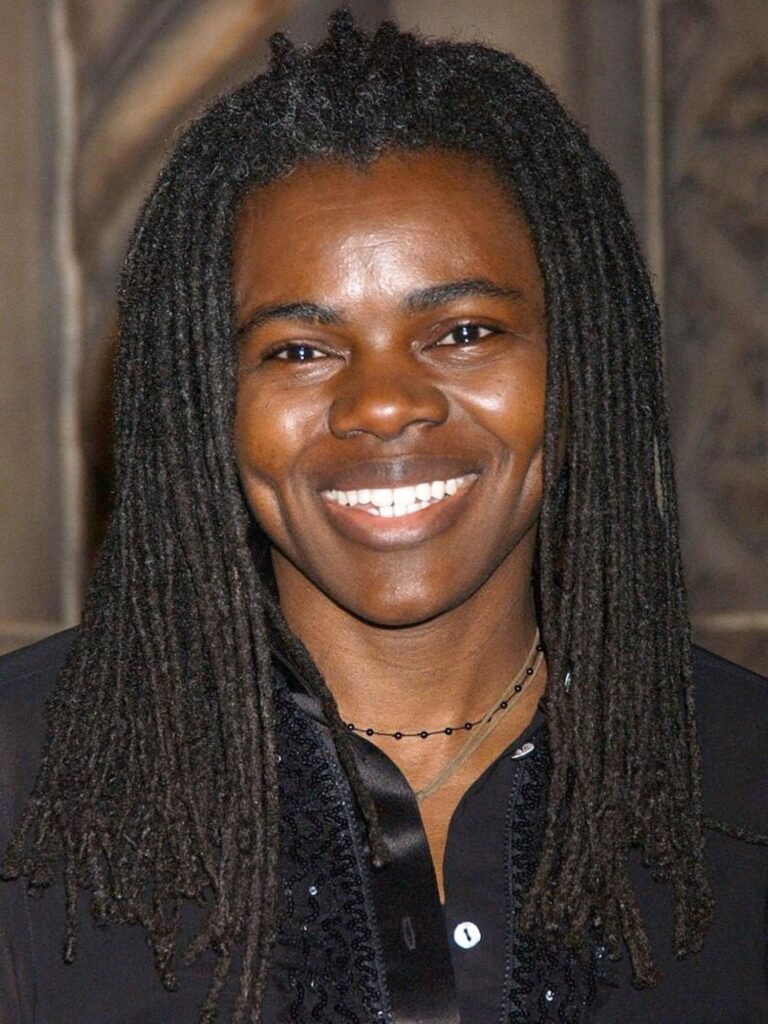
Tracy Chapman built a musical career based on narrative precision, social sensitivity and a reserved relationship with fame. Her passion for song appears in a sober, intense and lasting body of work, where guitar, voice and writing function as tools to narrate inequality, the desire for change, love, loss and everyday dignity.
Music as a way of looking at the world
Tracy Chapman developed a way of singing and writing that does not depend on excess, but on observation. Her artistic passion can be recognized in songs that feel like small scenes from life: people who work, wait, love, lose or search for a way out. That gaze turned her work into a singular point within folk and acoustic pop, because each composition brings together contained emotion, social narrative and a voice capable of sustaining intensity without overacting.
A formation shaped by social sensitivity
Born on March 30, 1964, in Cleveland, Ohio, Tracy Chapman found in the guitar an early tool to organize ideas and emotions. She later studied at Tufts University, where she became connected with anthropology and African studies. That formation helps explain her writing: her songs do not reduce problems to individual stories, but show how poverty, inequality and lack of opportunity shape concrete lives.
The passion for writing with precision
Tracy Chapman’s dedication can be perceived in her expressive economy. Her songs do not need large arrangements to build depth: a guitar, a clear melody and a well-chosen narrative are enough to create an atmosphere. That precision requires work, listening and control of language. In her work, every phrase fulfills a function. Passion appears as creative discipline, not as disorderly impulse, and that is why many of her songs remain relevant decades later.
“Fast Car” and a universal story
“Fast Car” was included on her 1988 debut album and became one of the most recognized songs of her career. The lyrics narrate the desire to escape a life marked by economic hardship, family responsibilities and expectations that wear down over time. Chapman does not present a simple fantasy of liberation, but a story where movement coexists with frustration. That combination made the song intimate and universal at the same time.
A career guided by coherence
After the impact of her first album, Tracy Chapman received critical recognition and Grammy Awards in 1989, including Best New Artist and Best Female Pop Vocal Performance for “Fast Car”. However, she did not turn fame into a permanent exercise in exposure. Her career continued with albums such as Crossroads, Matters of the Heart, New Beginning, Telling Stories and Our Bright Future, always with a sonic identity tied to the word, the guitar and social awareness.
Social commitment without stridency
Tracy Chapman’s passion is also expressed in her attention to social issues. Songs such as “Talkin’ Bout a Revolution” show political writing without falling into pamphlet language. Her work speaks of inequality, racism, violence, poverty and human rights through concrete characters and scenes. That form of commitment is effective because it does not impose an external slogan: it allows the story to reveal the conflict. In Chapman, music functions as narrative and as conscience.
Privacy and control of her own path
Unlike many figures in the music industry, Tracy Chapman kept her personal life away from media exposure. That reserve does not imply distance from her audience, but a clear decision about the limits between work and intimacy. Her dedication to music coexisted with a firm defense of her own space. In an industry that often turns private life into promotional material, Chapman chose to keep the song at the center.
Renewed relevance through new generations
The version of “Fast Car” recorded by Luke Combs placed the composition back at the center of the musical conversation. In 2023, the song received recognition as Song of the Year at the Country Music Association Awards, a relevant event for a work written decades earlier. Her performance with Combs at the 2024 Grammy Awards showed the permanence of her artistic language. Chapman did not need to modify her identity: time confirmed once again the strength of her writing.
A legacy marked by depth and consistency
Tracy Chapman built a legacy based on depth, coherence and respect for the craft. Her passion does not appear as a search for constant protagonism, but as fidelity to a way of composing and singing. The influence of that dedication runs through her career and public life: she chose few words, measured appearances and songs capable of lasting. Her work shows that a sober voice can have enormous reach when it is sustained by narrative truth.