
Selva Almada
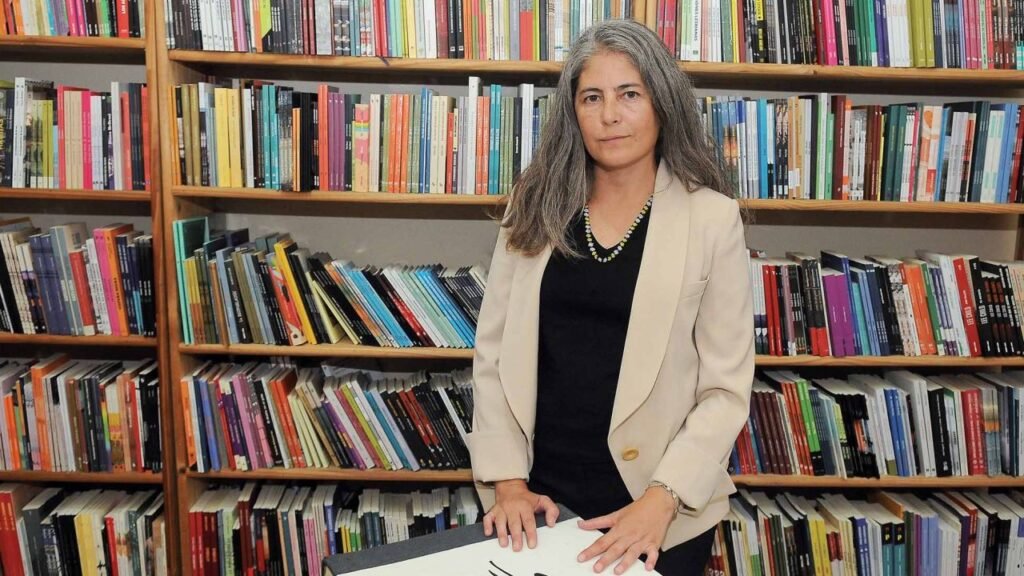
Selva Almada is one of the most recognized Argentine writers in contemporary fiction. Born in Villa Elisa, Entre Ríos, she built a body of work shaped by the landscape of the Litoral region, rural memory, underlying violence and human bonds marked by silences that are difficult to name. Her passion for writing does not appear as an ornamental gesture, but as a form of persistent observation, capable of turning towns, roads, rivers and houses into literary settings of strong emotional density.
A childhood linked to territory
Selva Almada was born on April 5, 1973, in Villa Elisa, Entre Ríos, a city that left a visible mark on her narrative sensitivity. The landscape of the Litoral, with its rivers, roads, small towns and particular forms of conversation, appears in her literature as something deeper than a geographical backdrop. In her books, territory organizes relationships, conditions silences and makes visible tensions that often remain hidden in everyday life.
The province as a literary starting point
Almada’s work shows that the province can be a complete narrative center, not a periphery subordinated to major capitals. Her stories are often set in rural areas, towns and spaces of transit where characters carry desires, guilt, family mandates and inherited violence. That aesthetic choice reveals a passion for observing what is usually left outside the urban narrative, with precise attention to bodies, gestures and words spoken halfway.
A writing practice built with patience
Selva Almada’s dedication to literature can be seen in a sustained trajectory that began before her international recognition. She published books such as Mal de muñecas, Niños and Una chica de provincia before gaining greater visibility with El viento que arrasa. That path shows a writer shaped by constant practice, workshops, reading and the search for her own voice. Her style does not depend on verbal excess, but on an expressive economy charged with meaning.
The Wind That Lays Waste and a recognizable voice
The Wind That Lays Waste, published in 2012, established Selva Almada as a central author in recent Argentine fiction. The novel works with faith, exposure, family, the desire to escape and the tension between adults and young people in a space marked by heat, road and waiting. One of her greatest strengths is already visible there: turning an apparently minimal situation into a complex moral scene, where each character seems to carry a story that is never fully spoken.
The passion for narrating what is not said
In Almada’s literature, passion is not expressed through emphatic phrases, but through an insistence on what remains unsaid. Her characters often do not explain what they feel, yet their actions, silences and ways of being in the world reveal deep conflicts. This way of writing requires rigorous observation. The author works with what is suggested: normalized violence, family memory, a social threat or an emotion that cannot find direct language.
Dead Girls and the gaze on violence
With Dead Girls, Selva Almada moved her writing toward nonfiction and addressed three femicides that occurred in Argentina during the 1980s. The book reconstructs the stories of women who were murdered at a time when the word femicide had not yet occupied the public place it has today. Her work combines investigation, chronicle and a carefully sustained literary gaze, without turning other people’s pain into spectacle. The work shows an ethical dedication: narrating in order to restore presence, context and memory.
A sensitivity shaped by the social world
Almada’s literary passion is also linked to a very concrete social sensitivity. Her books observe how gender mandates, male violence, family hierarchies and forms of inequality operate in communities where many things are known but few are named. This perspective does not require long explanatory discourse. The author often lets conflict appear in a scene, a conversation, a look or a decision made under pressure.
Not a River and international recognition
Not a River confirmed Selva Almada’s international projection. Its English translation was shortlisted for the 2024 International Booker Prize, one of the most relevant recognitions for works translated into English. The novel returns to central themes in her universe: men gathered by the river, shared memories, persistent guilt and a natural world that seems to intervene in the lives of the characters. Once again, the landscape functions as a narrative force.
The river as living memory
In Not a River, the river does not operate as natural decoration, but as a space charged with memory, danger and symbolic resonance. Almada works there with an idea that is very present in her literature: places preserve traces of what has been lived. The author’s passion for detail allows a fishing trip, a conversation among men or an absent presence to acquire narrative depth. Her writing transforms the everyday into a zone of emotional and moral tension.
A Single, Numberless Death and new narrative forms
With A Single, Numberless Death, Selva Almada once again explored the relationship between space, memory and intimate life. The novel proposes a house as a center of observation, capable of condensing births, deaths, disappearances and traces of time. That formal choice confirms that her dedication does not consist of repeating a rural formula, but of testing new structures to think about how places preserve stories. In her work, houses, rivers and roads seem to have a memory of their own.
Personal life and literary craft
Selva Almada’s personal life should not be read as a closed explanation of her literature, but it does help understand some of the materials of her sensitivity. Her origins in Entre Ríos, her education, her move to Buenos Aires and her sustained work around writing shaped a gaze capable of bringing together provincial experience and aesthetic elaboration. The author transforms memories, landscapes and social observations into literature, without falling into direct autobiography or a folkloric representation of Argentina’s interior.
An author beyond simple local color
Although many of her settings refer to the rural world or the Litoral region, Selva Almada does not write from decorative local color. Her towns, roads and rivers are not there to illustrate regional flavor, but to reveal power relations, broken affections, inherited mandates and forms of violence that cross generations. That difference makes her work especially relevant: she takes recognizable materials from deep Argentina and turns them into literature with universal reach.
Dedication as a form of listening
One of Almada’s strongest features is her ability to listen to voices, tones and silences. Her dialogues often have a dry precision, close to orality, but built through literary craft. That technique allows the characters to feel real without falling into a direct copy of everyday speech. The author’s dedication appears in that search for rhythm: each sentence seems measured to sustain an atmosphere, open a tension or leave an uncomfortable truth suspended.
A passion made of permanence
Selva Almada’s passion for writing can be understood as a permanence within certain questions. How to narrate violence without simplifying it. How to represent the province without reducing it to landscape. How to tell stories of women shaped by hostile social structures. How to observe the masculine world without turning it into a natural truth. Her career shows a deep fidelity to those themes, worked through different genres and with an increasingly recognized voice.
A central figure in Argentine literature
Selva Almada occupies an important place in contemporary Argentine literature because she has built a personal, rigorous and recognizable body of work. Her fiction combines territory, memory, body, violence, climate and silence with a precision that avoids the easy blow. The international projection of her books expanded the reach of a writing born in the Litoral, but capable of dialoguing with readers in different languages. Her dedication turned a provincial gaze into literature of strong aesthetic power.