
Martín Genesio and energy as a technical vocation
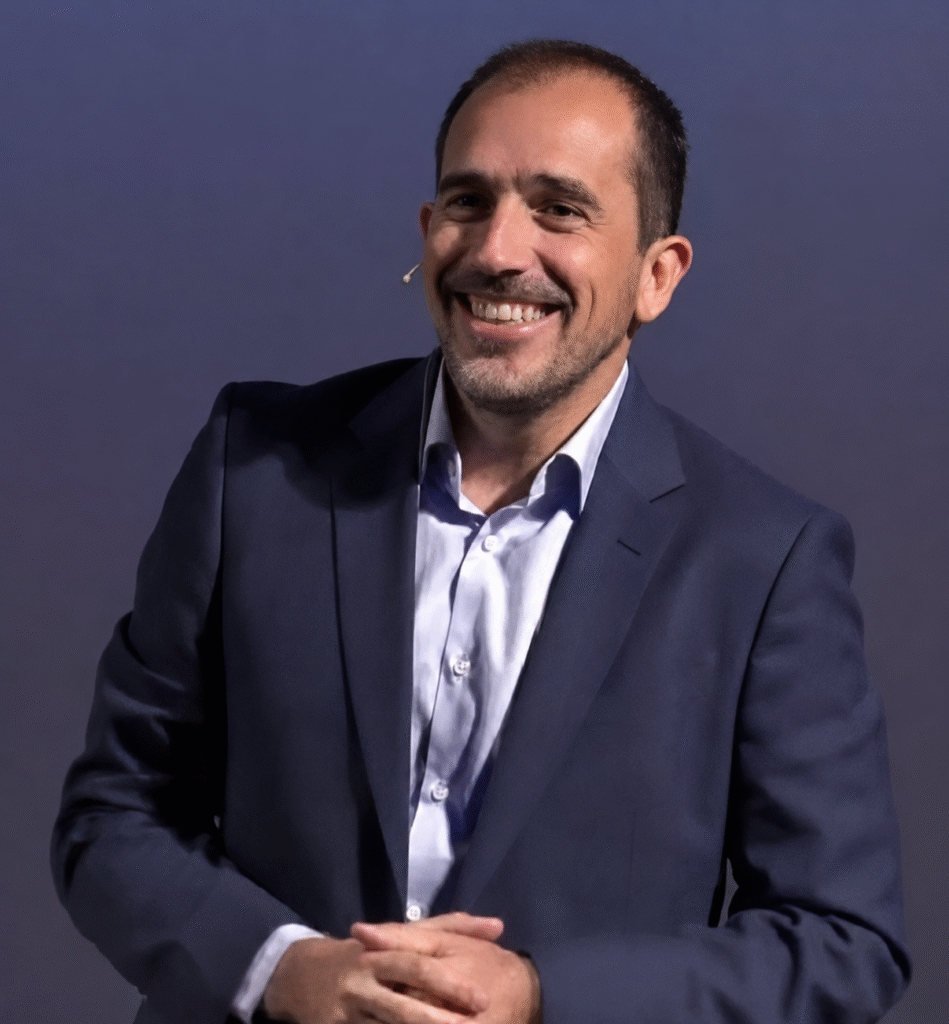
Martín Genesio’s career can be read as the story of a sustained dedication to the world of energy. His path was not built through sudden public exposure, but through progressive specialization in a sector where results depend on technical knowledge, long-term management, regulatory reading, and the ability to operate complex systems.
His training as an electronics engineer from the Universidad Tecnológica Nacional offers an important key to understanding that vocation. Electronic engineering works with circuits, signals, control, automation, power, measurement, and systems. In the energy field, that knowledge has direct application: a power generation plant requires constant supervision, maintenance, operational control, efficiency, safety, and the capacity to respond to variations in demand.
Unlike other business activities that are more visible to the final consumer, energy often functions as silent infrastructure. It is present when a factory produces, when a hospital operates, when a city is illuminated, or when a technology company processes data. That condition turns the sector into an industry of high responsibility: when it works well, it is taken for granted; when it fails, it immediately affects daily life and economic activity.
Genesio expanded his education with postgraduate studies in Electricity Market and Natural Gas at ITBA and an Executive MBA at IAE Business School. That educational continuity shows a career oriented toward connecting technical precision with business leadership. In energy, that connection is especially necessary: projects do not depend only on available technology, but also on contracts, regulation, financing, permits, costs, supply, transportation, and integration into the system.
His arrival at AES in 2006 marked the beginning of a long stage within the same business group. He first joined as commercial manager; later, he became general manager of Termoandes and then general director of Operations for AES Argentina’s companies. The company currently reports that Genesio is president and CEO of AES Argentina, from where he works to accelerate the future of energy across the group’s businesses in the country.
Remaining in the same industry for so many years shows a concrete form of professional dedication. In Genesio’s case, that dedication is linked to a sector that changed deeply: Argentina went through debates over tariffs, subsidies, investments, renewables, gas, infrastructure, energy transition, and new electricity consumption patterns. His career accompanied those transformations from management and leadership positions.
One of the most interesting traits of his profile is that his professional passion is not tied to an abstract idea of innovation, but to a practical question: how to turn Argentina’s energy potential into real development. In different public appearances, Genesio stated that the country has resources of enormous value, but needs stability, consensus, and long-term rules to convert that natural availability into investment, infrastructure, and growth.
That view avoids a simplified reading of the sector. Having gas, wind, sun, or lithium is not enough if there are no grids, contracts, financing, regulatory frameworks, and technical teams capable of executing projects. Energy is an industry where potential must become engineering, and engineering must become sustained operation. Part of Genesio’s approach can be seen there: connecting resources, technology, companies, and the state around a possible roadmap.
A human dimension can also be seen in his understanding of leadership. In 2025, while participating in the Forbes CEO Summit, he spoke about the end of the omnipotent leader and highlighted trust as the basis for building teams in unpredictable environments. That idea is consistent with an activity where adaptation is permanent: regulations change, costs change, technologies change, and social demands around energy also change.
In his case, passion is not expressed as individual romanticism, but as commitment to a demanding industry. His career shows an executive who chose to remain in the energy sector, move through its cycles, train himself to understand it, and participate in discussions about its future. That consistency makes it possible to present Martín Genesio as a figure whose dedication is tied to a productive conviction: energy is a material condition for the country to grow, innovate, and compete.