
Ida Vitale
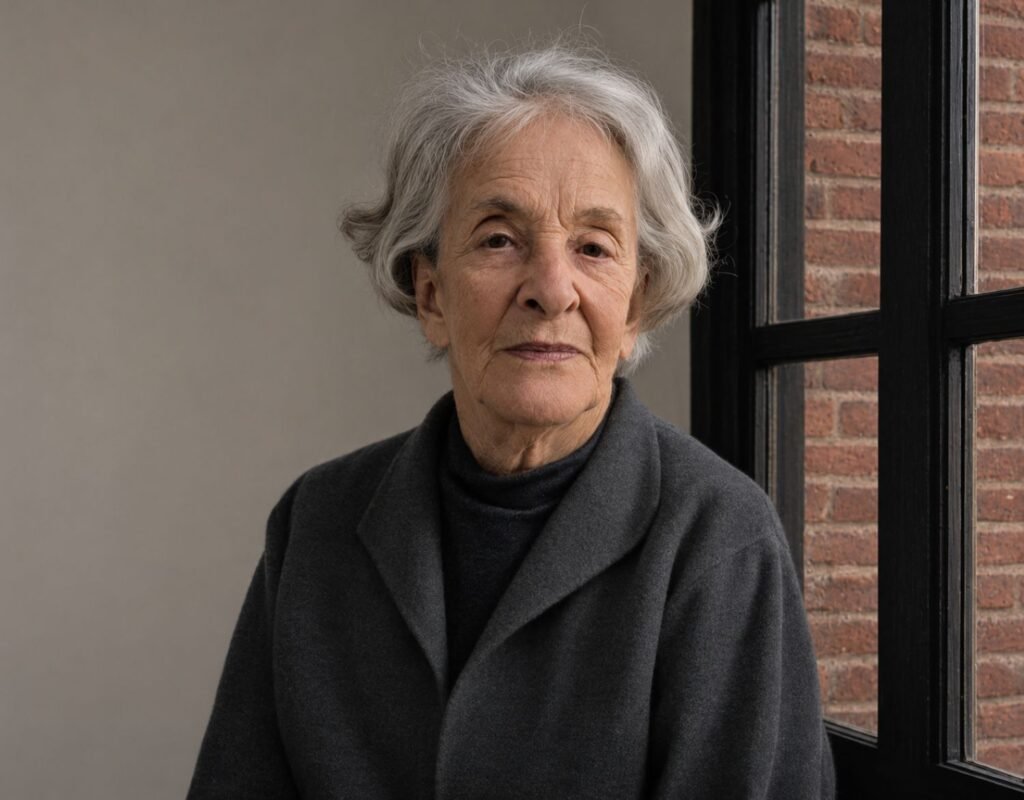
On November 2, 2026, Ida Vitale turned 103. She celebrated at her home in Malvín, a neighborhood in Montevideo, with cake, tea, her daughter Amparo, two grandchildren, and a few friends. Around the same time, two of her books arrived in bookstores. One gathers poems she wrote eight decades ago that resurfaced in a family library. The other follows a girl through a world of flowers, clouds, and dreams.
The discipline of the Generation of ’45
Vitale was born in Montevideo in 1923 to a family of Italian descent. She published her first book, La luz de esta memoria, in 1949. She belonged to the Generation of ’45, alongside writers such as Juan Carlos Onetti, Mario Benedetti, and Idea Vilariño. Her poems show how carefully she chooses each word. A bird or a plant can sit at the center of a few lines and change the way a reader looks at something familiar.
Over the years, she published books including Palabra dada, Cada uno en su noche, Oidor andante, and Jardín de sílice. She also taught, wrote literary criticism, and translated from Italian and French. In each of those roles, she read other writers with the same attention to language that she brought to her own verse.
From Montevideo to Mexico City and Austin
In 1974, during Uruguay’s dictatorship, Vitale went into exile in Mexico. She became part of Mexico City’s literary life and contributed to magazines associated with Octavio Paz. After a brief return to Uruguay, she moved to Austin, Texas, in 1989 with her second husband, the poet Enrique Fierro. She lived there for nearly three decades.
Fierro died in 2016, and Vitale moved back to Montevideo for good the following year. In 2018, she published Shakespeare Palace, a chronicle of the building where she lived in Mexico City. The book uses that place to recall scenes and people from her years in exile.
The prizes and the books that followed
Vitale received the Octavio Paz Prize in 2009 and the Queen Sofía Prize for Ibero-American Poetry in 2015. The Max Jacob Prize followed in 2017. She received both the FIL Literary Award in Romance Languages and the Cervantes Prize in 2018. She was 95 when she accepted the Cervantes Prize in Alcalá de Henares.
The awards brought her work to readers who were discovering it for the first time. She kept publishing. In 2021, by then settled in Montevideo, she released the poetry collection Tiempo sin claves.
Two new books at 103
In 2024, Camila Guillot, editorial director of Planeta Uruguay, found a suede-covered notebook while sorting through her father’s library. It was dedicated to the critic Gervasio Guillot Muñoz and contained poems Vitale had written between 1943 and 1946, when she was between 20 and 23. Fifteen of those poems appear in Poemas de juventud 1943-1946, published by Tusquets. The edition reproduces the notebook so readers can see the verses in Vitale’s own handwriting.
Her other book, Las historias de Aura Miní, was published by Planeta with illustrations by Daniel Heide. It is a children’s story about a girl in a mythological world who discovers that flowers, clouds, and dreams hold secrets about the origins of life.
Both books appeared around her birthday. While the Royal Spanish Academy sent its greetings on social media, Vitale was at home in Malvín, sharing cake and tea with family and friends.