
Jiro Ono
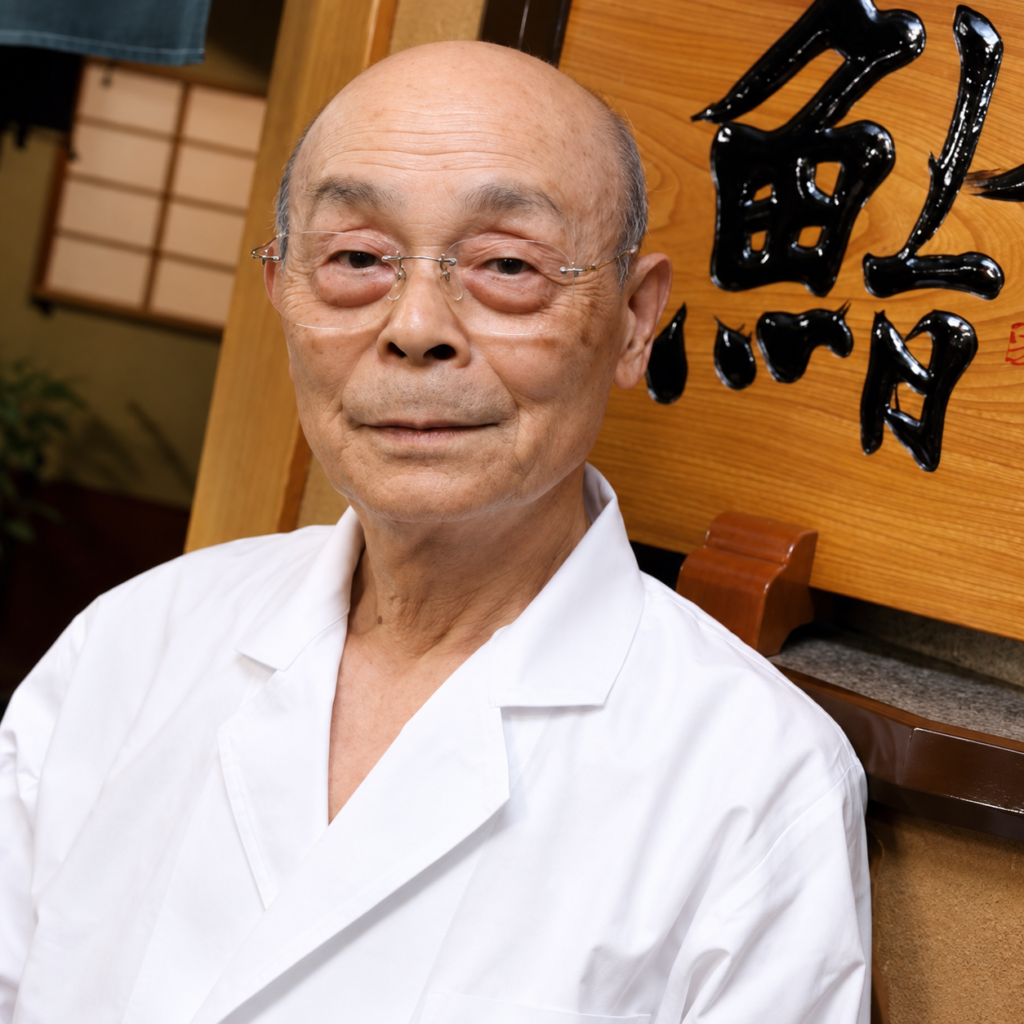
Jiro Ono has worked behind the same counter since 1965. His restaurant has ten seats, sits in the basement of an office building in Tokyo and serves nothing but sushi. From that tiny space, he became the oldest chef in the world to maintain three Michelin stars and the subject of a documentary that made him known around the globe. In October 2025, he turned 100 and said he planned to keep working for about five more years. By then, he had already given his favorite answer about longevity: the best medicine is work.
An Apprentice at Seven
Ono was born in 1925 in Hamamatsu, in central Japan, and began working at an age that is difficult to imagine today. By the age of seven, he was already an apprentice at the restaurant of a local inn. He grew up in a Japan shaped by war, where a boy who left home had to earn every meal.
At 25, he moved to Tokyo and became a sushi chef. Another fifteen years passed before, in 1965, he opened his own restaurant: Sukiyabashi Jiro.
Ten Seats in a Basement
At first glance, there is nothing spectacular about the restaurant. It is located in the basement of an office building in Ginza, one of Tokyo’s most expensive districts, near a subway station. It has a ten-seat counter, serves no appetizers or hot dishes, and the bathroom is outside the restaurant.
Yet something unusual happens there. The chef decides the menu, each piece arrives one at a time, and the entire meal can be over in half an hour. Every detail is measured: the temperature of the rice, the exact aging time of each fish and the order in which the pieces are served so that the flavors follow one another.
That obsession earned the restaurant three Michelin stars, something unprecedented for a place of its kind. Ono maintained them for more than a decade and became the oldest chef to receive them. In 2020, the restaurant disappeared from the guide, but not because its quality had declined: it stopped accepting reservations from the general public and began serving only regular customers or guests booking through top-tier hotels, while Michelin only includes restaurants accessible to everyone.
The School Behind the Counter
Training at Sukiyabashi Jiro is famous for its rigor. Apprentices spend years performing tasks that may seem minor before they are allowed to handle fish: massaging an octopus for nearly an hour to soften it, learning how to fan rice, and making the egg omelet over and over again until the master approves it. Many take a decade to reach the counter.
Ono represents a highly respected figure in Japan, the shokunin: a craftsman who dedicates an entire life to perfecting a single task. Several of his disciples later opened their own restaurants in Tokyo and other Japanese cities, and some also earned Michelin stars. That generation of chefs is now known in the industry as Jiro’s lineage.
The Documentary That Made Him Global
In 2011, American director David Gelb released Jiro Dreams of Sushi, a documentary filmed when Ono was 85. The film follows his routine, his demanding relationship with his eldest son, Yoshikazu, and the quiet work of his apprentices.
It captured the idea that summarizes his entire life. Ono said he had still not reached perfection and that he kept working to make tomorrow’s sushi better than today’s. He also said that he dreams about sushi, waking up at night with ideas for new pieces.
The documentary turned a counter chef into an international figure. Among his famous diners was U.S. President Barack Obama, who ate there in 2014 with then Japanese Prime Minister Shinzo Abe.
Handing Over the Counter Without Leaving the Craft
In 2023, for health reasons, Ono handed the restaurant’s daily management to Yoshikazu, his eldest son, who had spent decades working beside him. His other son, Takashi, runs another branch of the family business.
Fully retiring, however, was never part of his plans. In September 2025, during Respect for the Aged Day, Tokyo Governor Yuriko Koike presented him with a certificate marking his 100th birthday and asked him the secret of his health. He answered that it was work: he could no longer go to the restaurant every day, but even at 100 he tried to work whenever he could.
His son told an anecdote that captures him well. After seeing on television that Japan’s oldest man had died at 113, Ono remarked that another thirteen years seemed achievable. His routine is simple: he does not drink alcohol, walks regularly and eats well.
One Hundred Years, a Book and the Same Counter
In June 2026, publisher Shogakukan released Sushi Stories at 100 Years Old, a book written by Ono in which he looks back on his life and craft. It is the record of a man who began working before he could read properly and who, a century later, is still thinking about how to improve a piece of rice and fish.
His story works as an antidote to the idea that vocation arrives instantly. Ono had no single moment of revelation and no stroke of luck. He had ten seats, a counter and a decision repeated for more than seventy years: to come back the next day and try to do it better.