
Valeria Edelsztein
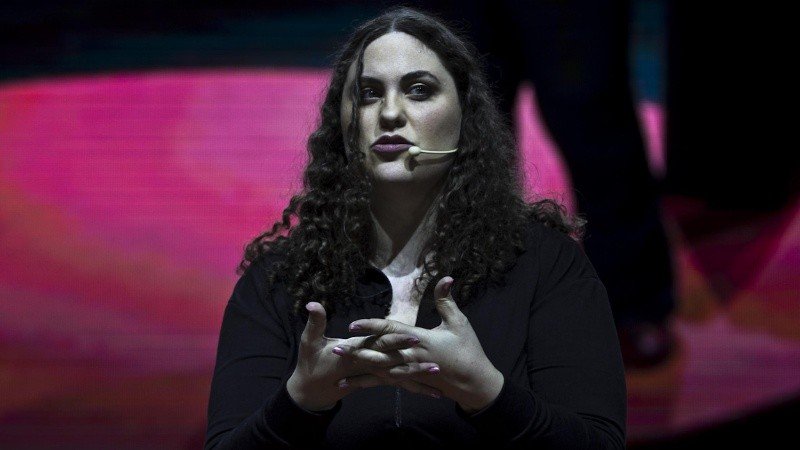
Valeria Edelsztein developed a career in which science functions as knowledge, public language and an educational tool. Trained in chemistry, with an academic career at the University of Buenos Aires and CONICET, she built a distinctive profile within Argentine science communication. Her passion appears in a sustained task: explaining complex subjects without losing rigor, bringing science closer to diverse audiences and showing that curiosity can also be a form of cultural intervention.
A scientific vocation born from questions and method
Valeria Carolina Edelsztein was born in Buenos Aires in 1982 and trained at the University of Buenos Aires, where she earned a degree in Chemical Sciences and later a PhD in Organic Chemistry. That academic foundation gave her a working structure marked by method, evidence and conceptual precision. Her later career would show that this training could extend beyond the laboratory, toward teaching, media, books and the public communication of science.
Chemistry as an entry point to knowledge
Chemistry occupies a central place in her professional identity because it makes it possible to observe how matter is organized, how substances transform and how everyday phenomena respond to invisible processes. In Edelsztein’s work, this discipline does not appear as a closed set of formulas, but as a way of reading the world. Her passion for science rests on that ability to connect abstract concepts with concrete scenes: food, objects, medicines, materials, habits and common questions.
From research to science education
Her career gradually incorporated an increasingly strong educational dimension. As a CONICET researcher linked to the field of science education, Edelsztein worked on the ways scientific knowledge is taught and learned. Didactics is not limited to transmitting information: it studies obstacles, languages, strategies and forms of appropriation. In her case, that perspective made it possible to unite research, the classroom and science communication within the same professional line of work.
Explaining without weakening the content
One of the most recognizable features of her dedication is the search for clarity without losing rigor. Communicating science requires translating technical concepts, but also preserving the structure of what is being explained. Edelsztein built a public voice capable of working with data, examples and narratives without turning science into superficial simplification. That tension between precision and accessibility defines much of her contribution to Argentine science communication.
A career shaped by books and media
Valeria Edelsztein has also developed a sustained presence in books, television, radio, podcasts and digital spaces. She has participated in science communication projects and written works aimed at different audiences, including children and young readers. In those formats, science is organized as narrative: what matters is not only what is discovered, but how a question is reached, what mistakes appear along the way and why an explanation changes the way reality is seen.
Science communication as cultural work
Her passion for communicating science has a clear cultural dimension. Science communication is not only about bringing data closer to the public, but also about intervening in public conversation. When a scientist explains a myth, reviews a belief or contextualizes a discovery, she also helps strengthen critical thinking. In that sense, Edelsztein works on a contemporary problem: the need for more people to distinguish evidence, opinion, rumor, advertising and validated knowledge.
Women in science and new role models
Another important part of her career is linked to making women in science more visible. This approach makes it possible to review which names were narrated as protagonists of knowledge and which were pushed aside. By recovering the stories of women scientists, researchers and inventors, Edelsztein expands the range of models available to new generations. That task has educational value because it shows that science is also built through diverse trajectories, questions and experiences.
Scientific stories that awaken curiosity
Her work in narrative content shows a precise understanding of curiosity. For Edelsztein, a scientific story can begin before the discovery itself, in the context that made it possible, in the tensions of a period or in the lives of those who formulated a new question. That way of telling avoids presenting science as a collection of final results. Instead, it shows science as a human, collective, historical activity, always shaped by decisions.
A passion that crosses everyday life
Valeria Edelsztein’s dedication can also be seen in the way she brings science into ordinary situations. Many scientific topics become understandable when they are connected with cooking, the body, health, school, materials or the news. That connection with daily life does not reduce the value of knowledge; it makes it more useful. Her work shows that scientific literacy does not belong only to specialists, but to anyone who wants to interpret their environment more clearly.
Critical thinking in the face of doubtful information
In a time marked by the rapid circulation of content, her profile as a science communicator becomes especially relevant. Explaining science also means reviewing misleading claims, dismantling myths and organizing public discussions with verifiable criteria. That task requires patience, because many false ideas become established through repetition or apparent common sense. Edelsztein approaches that terrain from a pedagogical position: not only correcting, but showing how a reliable explanation is built.
The consistency behind a public career
Valeria Edelsztein’s career is not sustained by a single format or an occasional public appearance. Her dedication is recognized in continuity: research, teaching, writing, consulting, columns, talks and educational projects. Each space requires a different adaptation, but all of them share the same orientation. In her career, passion for science becomes organized intellectual work, with the capacity to produce knowledge, form audiences and open better-founded conversations.
A key figure in Argentine science communication
Valeria Edelsztein represents a generation of Argentine women scientists who expanded the traditional limits of an academic career. Her profile combines rigorous training, pedagogical perspective and communicational sensitivity. That combination makes it possible to understand why her work is relevant to science education: it is not only about explaining complex topics, but about building bridges between institutions, classrooms, media and readers. Her passion appears there, in the persistent decision to help science circulate better.