
Marina Simian
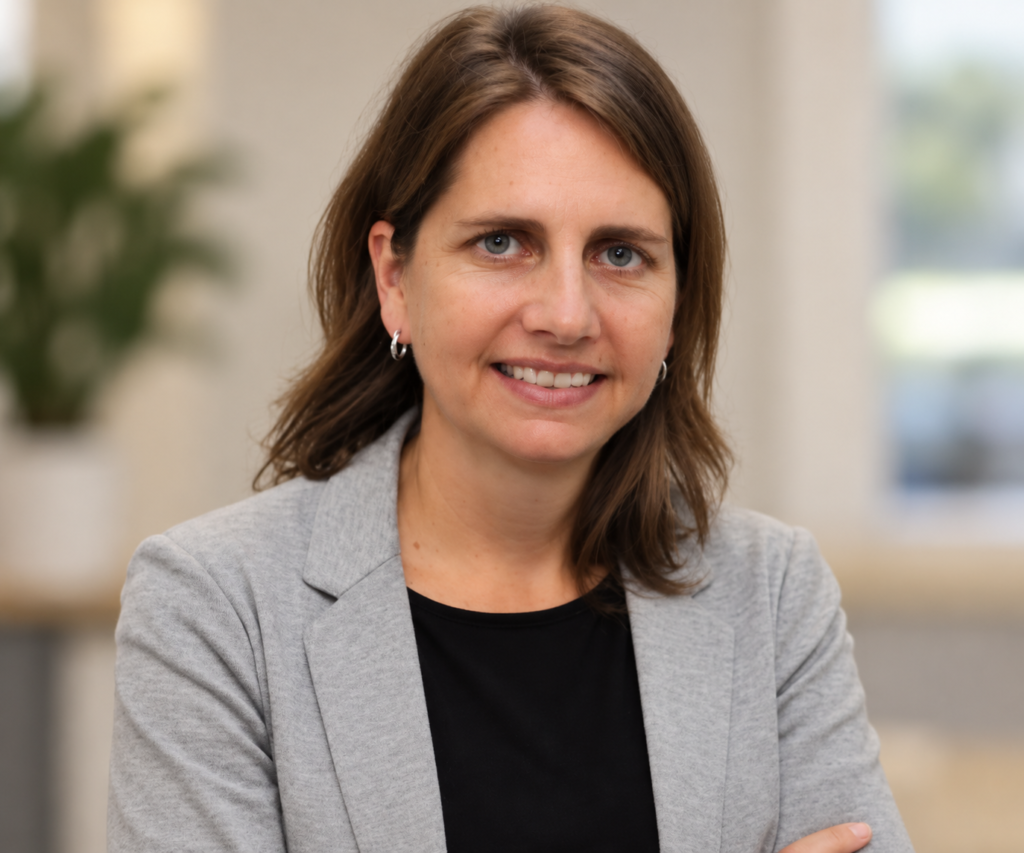
For years, she worked in the laboratory three days a week. Tuesdays, Thursdays and Saturdays, very long days. On Saturdays, her husband stayed with the children; on the other two days, she arranged for someone to help care for them. When she returned from the United States with her children still young, the routine became arriving at the institute at six in the morning so she could pick them up at one. Marina Simian says she was very lucky. Her career suggests something else: she became the first Latin American researcher to receive a grant from the Susan G. Komen foundation, published more than forty scientific papers, led her own research group at CONICET for two decades and, at 50, left all of that behind to found a company seeking to detect cancer through a blood test.
A scholarship at fifteen and the class that changed everything
The vocation appeared early, and it was recognized early. While in her fourth year at Northlands School, Simian won a scholarship to study marine biology for a semester in the United States. It was unusual at the time, particularly for someone her age.
The decisive turn came later, during her first year studying at the Faculty of Exact and Natural Sciences.
The course was called Introduction to Cellular and Molecular Biology and was taught by Alberto Kornblihtt. Simian describes him as an extraordinary teacher and uses an expression that sums up fairly well what happened: she became completely hooked.
From then on, the path moved in only one direction. A PhD at Lawrence Berkeley National Laboratory in California. A postdoctoral position at the Ángel H. Roffo Institute after returning to Buenos Aires. And more than twenty years as a CONICET researcher.
She herself warns that almost nobody fully understands what that path involves. She compares it with medical training: six and a half years of undergraduate study without ever falling behind, five years for a doctorate and another two for a postdoc. Only then does the opportunity arise to truly prove yourself.
And she adds the part that is rarely told: it is a tedious, demanding and frustrating path, because most of the time experiments do not produce what you expected.
What it takes to endure
When asked what skills a researcher needs, Simian does not mention intelligence.
She talks about a special motivation to keep reading constantly, connecting ideas and drawing conclusions. Part of that is transmitted by mentors, she says, but another part depends entirely on genuine interest, because the work consumes an enormous amount of energy.
Then comes an element that may be surprising: the hands.
She argues that laboratory work has a decisive manual dimension, and that handling materials and reproducing an experiment depend greatly on the person doing it. The analogy she uses is domestic and precise: it is like cooking; some people always make cakes successfully, while others never do.
The third element is tolerance for frustration. And there she makes an observation that not all of her colleagues would say out loud: since 2006, she has noticed that younger people arrive with less endurance and less ability to write and structure a text.
The boss who did not monitor her schedule
Simian had her first two children while completing her doctorate in the United States, in a laboratory where very few of the women in the group were mothers.
What changed everything was a conversation with her boss after her first child was born. She told Simian to organize herself however she wanted, that she would not monitor when she arrived or left, and that she did not care whether she worked on Saturday, Sunday or at night because she trusted her to deliver.
Simian describes that moment as fundamental. It was not administrative flexibility. It was trust.
That is where the three-long-days-a-week routine came from. Later, back in Buenos Aires, came the six-in-the-morning schedule. Her description of those years is strikingly unheroic: she was always rushing, figuring things out, rearranging schedules and adjusting everything so it would work.
Only when all three children began attending school for full days did things become more manageable. The difficult stage, she says, is when they are very young.
Writing projects, where the fun is
Asked what she enjoys most about research, her answer is not the discovery.
It is writing the projects.
Imagining an idea, planning it, deciding where to go, reading everything needed to understand it and formulating a hypothesis nobody else has thought of. That, for her, is the most enjoyable part.
And it creates a chain reaction that explains how a laboratory works internally: those proposals written to secure funding later became her students’ theses. What began as a funding request ended up driving the group’s research.
The subject to which she devoted most of her career was the tumor microenvironment: everything surrounding a cancer cell that influences its behavior. More specifically, she studied why some breast cancer patients stop responding to tamoxifen.
The figures behind the question explain the urgency. Around 70% of patients take the drug for ten years after surgery, and close to 30% experience a relapse. Her team sought to understand which signals from the surrounding environment allow some tumor cells to survive treatment and begin growing again later.
Her choice of breast cancer, she says, was less a decision about a disease than a decision about people. Her supervisor in the United States worked on the idea that a cell’s behavior can be altered by modifying the scaffolding around it. Simian took that approach and applied it to a particular cancer.
The grant she secured by knocking on a door
In 2006, at age 34, she received a $250,000 grant from the Susan G. Komen foundation. She was the first Latin American researcher to receive it.
What happened next says something about both the period and her personality. With the money already awarded but no structure in place to administer it, she knocked on the door of the president of the Ángel H. Roffo Institute and asked him to help her manage the funds.
It worked. She began taking on CONICET fellows and built her career from there. She published more than forty papers.
But when she lists what she values most from that period, she does not mention the papers. She mentions training people. She says she wanted to give her students the same positive experience she had received abroad.
She also describes the other side of it without disguising anything. Every new fellow becomes a responsibility: the student receives a salary for five years, and during that period the laboratory must produce publishable and defensible results. The supervisor is, in a sense, the provider who makes it possible for the thesis to move forward.
Why she left the laboratory at 50
The decision in 2021 had several layers, and Simian describes all of them, including those that are less flattering.
The pandemic had left her two fellows unable to enter the laboratory, and she did not want to start new doctoral projects knowing they would lose one or two years.
But she was also tired of the mentoring role. She felt students were arriving increasingly less prepared and that compensating for that required an enormous effort. She perceived less curiosity and less motivation than in previous generations, without being sure whether screens or something else were responsible. And she noticed that as each doctorate progressed, she had to become more involved —supervising the thesis and experiments, writing the papers, securing the funding— which undermined precisely the independence she expected to see develop.
Watching a student take off and surprise her with ideas of their own remains, for her, the most beautiful part of the profession. That dynamic had stopped happening.
Then, in February of that year, her colleague Adriana De Siervi proposed turning their shared research into a company. By November it already had a name.
Simian adds one final factor, stated plainly: turning fifty mattered too.
Oncoliq and the number that organizes everything
The research that gave rise to the company had begun by studying microRNAs —molecules that regulate gene expression— in breast tumors in mice. Then it moved into the blood of those mice. And finally into patients’ blood.
The problem Oncoliq aims to solve is summarized in a statistic Simian repeats because it explains everything else. Around half of adults will develop cancer at some point. With current technology, roughly half of those cases are detected at a late stage. And among those who receive a late diagnosis, approximately 80% die within five years.
Her formulation is direct: what they want to solve is death as a consequence of late detection.
The test is performed using an ordinary blood sample. It measures microRNAs, which are not currently evaluated in conventional clinical laboratories, using a methodology that is not part of standard platforms. The estimated retail price is around $70, and the idea is for it to become part of routine testing.
At the same time, the company is developing its own laboratory to process samples because the technique is not yet ready to be transferred to third parties. The second cancer they plan to address is lung cancer, and since May 2025 they have been working with the province of Chubut on an HPV screening program for the early detection of cervical cancer.
The investment round financing this stage was led by Endurance28, a San Francisco-based fund, alongside Draper U Ventures, Air Capital, Women in Technology, DIM Centros de Salud, Sah-lood and angel investors.
Kitesurfing, airplanes and an uncomfortable recommendation
Today, her year is divided among three places. Buenos Aires. The United States, where she spends around two months seeking financing. And La Pedrera, on the Uruguayan coast, where after work she goes kitesurfing and spends time with her husband and children.
It is a routine that only works for someone willing to organize life around what interests her, which is exactly what she has been doing since having her first child while working in a California laboratory.
To young people who want to build companies in science, she gives advice many do not like to hear: finish your training first. Get the doctorate. She argues that science is complex, that developing a drug or diagnostic test is not trivial and that it is worth establishing that foundation before making the leap.
Her view of the ecosystem is optimistic and has a basis. She believes Argentina will produce biotechnology unicorns because the country stands out in the region thanks to a solid scientific foundation and a high density of researchers compared with its neighbors.
And she ends with the warning most often repeated by people who have already crashed: many startups fail because they develop something nobody needs. Her final recommendation is to find a large, real problem and prepare properly to solve it.
She chose one that can be stated in a single sentence, and that is why it organizes her days.