
María Eugenia Estenssoro
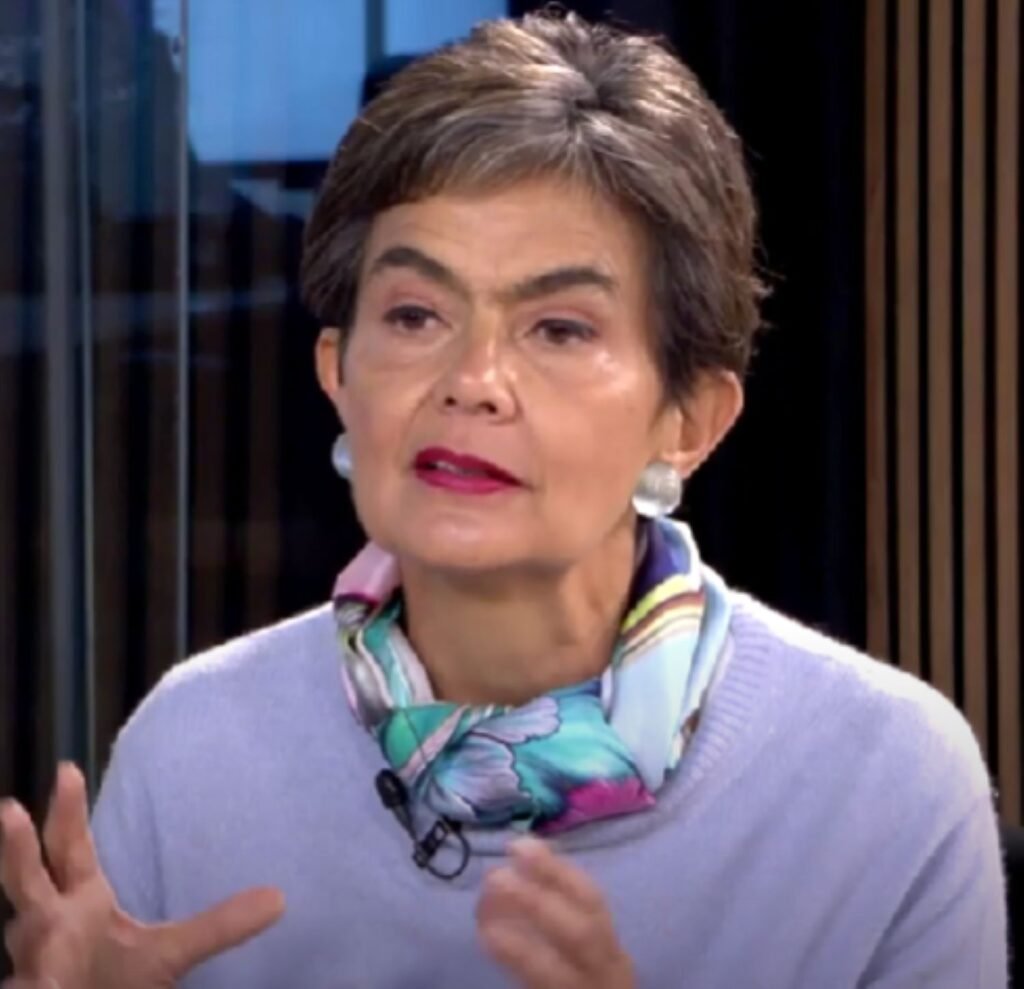
Born in La Paz and trained in Argentine newsrooms, María Eugenia Estenssoro went from writing for Time and The Wall Street Journal to holding a seat in the Argentine Senate, and from there to organizations promoting transparency, entrepreneurship and innovation. A journalist, politician and social entrepreneur, she left her final legislative post before the end of her term to return to civil society. Her career later continued through Poder Ciudadano and two books written with Silvia Naishtat. This profile traces that journey and the question connecting its different stages.
An obsession born in the newsroom
Some public figures move from one field to another and appear to begin again each time. That is not the case with María Eugenia Estenssoro. Journalism, legislative work and civil society organizations became three different routes toward the same concern: understanding why some countries build rules that endure while others rewrite them every decade.
Her training took place in newsrooms. She contributed to Time magazine and The Wall Street Journal, served as managing editor of El Porteño—one of the sharpest publications of the early years following Argentina’s return to democracy—and worked as a reporter for Mercado magazine.
That combination of international journalism and local political debate shaped a method she later carried into her other activities: looking at the evidence before forming an opinion.
From journalism to the legislature
In 2003, Estenssoro entered the Buenos Aires City Legislature. Four years later, in December 2007, she became a national senator representing the City of Buenos Aires under the Civic Coalition. Her term lasted until 2013.
In the Senate, she chaired the Committee on Communication Systems, Media and Freedom of Expression during a period when the relationship between the press and political power stood at the center of Argentina’s public debate.
She also served on the committees for Labor and Social Security; Mining, Energy and Fuels; National Economy and Investment; and the Women’s Caucus.
In December 2010, her party selected her by consensus as its candidate for mayor of Buenos Aires. She finished fourth in the 2011 election, with 3.32 percent of the vote. In September 2012, she joined the Broad Progressive Front bloc.
The decision to leave
The most revealing move came in March 2015. While serving another term in the Buenos Aires City Legislature, she announced that she would resign effective April 1. Official legislative records confirm that her second city mandate, which had begun in December 2013, ended with her resignation on March 31, 2015.
She explained that the decision had already been made months earlier and that she believed she could contribute more from civil society than from a legislative chamber. She returned to journalism and public advocacy.
Few political leaders leave an elected position before their term expires. Her decision revealed where she placed the real purpose of her work: in the problem she wanted to address rather than in the office she occupied.
Entrepreneurship, women and transparency
Outside party politics, Estenssoro became involved with organizations advancing specific public agendas. She led Fundación Equidad, which works to narrow the digital divide through access to technology, and also directed Endeavor Argentina, the organization that supports high-impact entrepreneurs.
She co-founded the magazine Mujeres & Compañía and helped establish the Argentine chapter of the International Women’s Forum, a network that promotes women’s participation in decision-making roles.
She is currently listed as a board member of Fundación Poder Ciudadano, the Argentine chapter of Transparency International. She has also participated in the Political Action Network, known as RAP.
The connection between these activities is clear: institutions that are accountable and economies capable of producing knowledge.
Books as a continuation of the argument
Together with journalist Silvia Naishtat, Estenssoro wrote Argentina Innovadora, a book about scientists, entrepreneurs and companies working toward a productive model based on knowledge and technology. The book was published in 2017.
Their second joint project was Laboratorio Uruguay, published by Sudamericana in 2023. The investigation examined the institutional, economic and social characteristics that made Uruguay attractive to Argentine entrepreneurs, professionals and families looking for greater stability.
That research led to some of Estenssoro’s most widely discussed public arguments in recent years. She warned about the departure of business owners, bankers, industrialists, technologists and highly qualified professionals, whom she compared with elite athletes because of the value of their knowledge and experience.
She also drew a parallel with the Argentine brain drain of the 1960s, when scientists and academics who left the country contributed to the development of institutions elsewhere in Latin America.
Her criticism extends to what she describes as messianic leadership, regardless of political affiliation. Against that style of politics, she argues that childhood poverty, education, institutional stability and long-term development should organize any serious electoral program.
The question behind her career
María Eugenia Estenssoro’s central concern is not a single subject but a question she has repeated for four decades, since covering Argentina’s return to democracy in 1983: what does a country need in order to keep its word?
She approached that question as a reporter, a legislator, a member of civil society organizations and the co-author of two books.
The instruments changed several times. The argument did not.