
Sean Rooney and a career shaped by energy
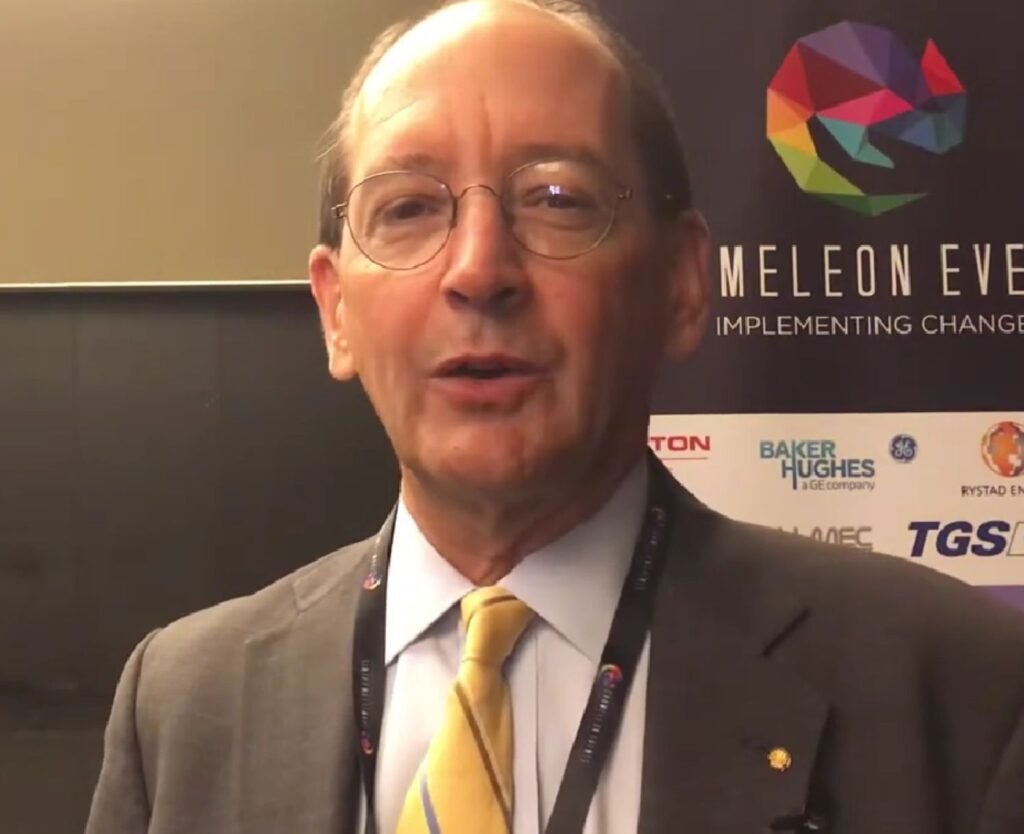
Sean Rooney built a career linked to oil and gas, with a particularly visible stage in Argentina when he assumed the local presidency of Shell at the end of 2018. He arrived in the country at a time of corporate reconfiguration, after Shell had divested its refining and service station businesses to focus on exploration and production. That transition placed Rooney in an agenda dominated by Vaca Muerta, long-term investment and the development of unconventional resources.
A dedication marked by upstream
Rooney’s professional dedication can be read from a specific area: his interest in developing complex energy projects. In the oil industry, vocation is not expressed as abstract enthusiasm, but as the ability to sustain decisions under uncertainty, interpret long cycles, manage risks and work with assets that require capital, technology, infrastructure and time.
During his leadership at Shell Argentina, Rooney emphasized the importance of the country offering competitive conditions to attract investment. That view reveals a way of understanding energy as a long-term activity: underground resources may be valuable, but they only become production when economic conditions, infrastructure, technical teams and rules exist to make projects executable.
Vaca Muerta as a professional horizon
Rooney’s name became linked to Vaca Muerta because Shell deepened its operations there during his local presidency. The company operated in blocks such as Sierras Blancas, Cruz de Lorena, Coirón Amargo Sur Oeste and Bajada de Añelo, in addition to participating in other assets in the Neuquén Basin. In 2021, La Nación reported that Shell had just inaugurated an oil and gas processing plant that would allow it to triple its production in the country.
Vaca Muerta requires continuity. Drilling, completing, transporting and commercializing unconventional hydrocarbons demands a chain of successive decisions. Rooney’s profile can be narrated from that consistency: a career linked to transforming geological opportunities into operating projects, with attention to costs, productivity, logistics and market conditions.
The departure from Shell and a new stage
In 2022, it was reported that Rooney was leaving the presidency of Shell Argentina and that Ricardo Rodríguez would take over in his place. The departure closed a stage that had begun in 2018, but it did not fully distance him from Argentina or from the energy world. At that time, Río Negro reported that Rooney was not retiring and would continue with personal projects.
After that transition, his public profile took two visible directions: on one hand, investment initiatives linked to Argentine SMEs and mature energy assets; on the other, continued presence as a consulted voice on oil, gas and investment conditions in Latin America. That dual path makes it possible to update his trajectory without forcing a new corporate position.
Productive investment and a view on Argentina
In 2024, Forbes Argentina reported that Rooney had created a fund focused on Argentine SMEs and was analyzing opportunities linked to the local energy sector. That post-Shell stage shows a continued interest in the country, but from another position: no longer as president of a multinational company, but as an investor focused on companies, assets and productive opportunities.
The information published about YPF’s mature areas should be written with caution. In 2024, sector media reported that Rooney had partnered with Velitec to compete for mature oil assets. However, for an updated article, it is advisable not to present him as the current owner or controller of a specific area if there is no firm and current confirmation in that regard. The most precise formulation is that he participated in investment processes linked to mature energy assets.
A current energy voice in 2026
At the beginning of 2026, Sean Rooney reappeared in the regional energy conversation through an interview published by Forbes Argentina, where he was presented as a former president of Shell in Venezuela and consulted about the possible Venezuelan oil scenario. That information makes it possible to update his profile without attributing a nonexistent position to him: Rooney is not only a former president of Shell Argentina, but also an executive with regional experience who continues to be read as a specialized voice in oil, investment and energy production.
In that interview, Forbes presented him as an executive retired from the corporate world who manages an investment fund and divides his time between Buenos Aires and Montana. That description adds currency and nuance: his profile is no longer located in the formal leadership of an oil company, but in a stage of investment, sector analysis and intellectual participation in Latin American energy debates.
Energy, experience and a view of the country
Rooney’s trajectory combines international experience, local management and interest in Argentina’s potential. In his public statements, Vaca Muerta appears as a relevant opportunity, but also as a project that requires the right conditions to compete with other investment destinations. That tension between potential and execution runs through much of his profile.
His professional history makes it possible to show a form of dedication linked to doing: studying markets, leading operations, understanding constraints, participating in investments and sustaining a view on energy development. It is not an ornamental passion, but a technical and business dedication applied to an industry where results depend on persistence, capital and strategic reading.
A career connected with production
Sean Rooney can be presented as an executive whose dedication was marked by energy, investment and the search for productive projects. His time at Shell Argentina linked him to one of the most relevant unconventional basins in the world, while his later stage kept him close to business opportunities in the country and regional debates on oil and gas.
As of today, his profile should be read with precision: he does not appear publicly associated with a new formal position at Shell, but he does maintain presence in the energy conversation as a former company executive, investor and consulted voice on investment conditions, oil and production in Latin America.