
Gustavo Santaolalla
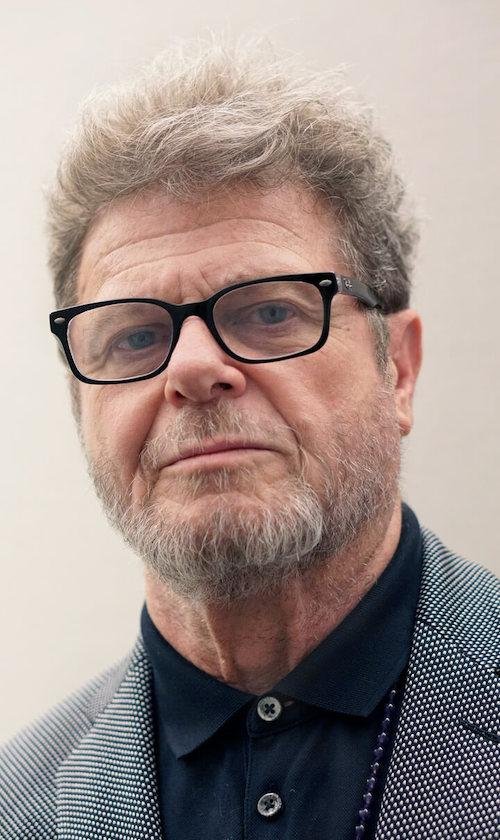
Gustavo Santaolalla has built a career grounded in continuous exploration, where music operates as a transversal language across formats. From Argentine rock to film and video games, his work integrates cultural identity with technical rigor, maintaining a consistent aesthetic over time.
Early years and musical formation
During his youth in Buenos Aires, Santaolalla became part of the emerging rock scene through projects such as Arco Iris. In this environment, he developed an experimental relationship with composition and performance. His formation was largely self-directed, based on exploration of sound textures and rhythmic structures rather than formal academic training.
Exile and international expansion
His relocation to the United States in the 1970s expanded his working context, incorporating new technologies and industry dynamics. This transition did not replace his identity but broadened his toolkit. He combined Latin American musical roots with contemporary production techniques aimed at global markets.
Music production as language
In the 1990s, his role as a producer gained international relevance. Working with diverse artists, he developed an approach centered on identifying the core identity of each project. Production became a process of sound construction, involving decisions on timbre, dynamics, and structure, enhancing each artist’s expression without imposing uniformity.
Film composition
His work in cinema introduced a narrative dimension to his music. In films such as Brokeback Mountain and Babel, he developed minimalist compositions that emphasize repetition and texture. This approach creates atmospheric soundscapes that support emotional development without overwhelming the visual narrative.
Video games and interactive music
His participation in The Last of Us extended his work into interactive media. In this format, music must respond to variable player actions, requiring modular structures. Santaolalla addressed this through flexible compositions that maintain coherence while adapting in real time.
Sonic identity and aesthetic coherence
Throughout his career, he has maintained consistent criteria: predominant use of acoustic instruments, simple structures, and strong emotional resonance. These elements make his work recognizable across formats. Rather than fragmenting his identity, project diversity reinforces it through repeated and refined technical decisions.
Relationship between life and music
Music functions not as an isolated activity but as a framework for interpreting reality. His engagement with Latin American cultures and social contexts informs compositional choices, linking personal perspective with artistic output.
Persistence as a professional axis
Santaolalla’s trajectory reflects sustained dedication rather than isolated achievements. Continuous adaptation to new formats, integration of technology, and preservation of a coherent aesthetic define his method. His career illustrates how creative exploration can be structured as a disciplined, long-term process.