
Gustavo Adolfo Bécquer
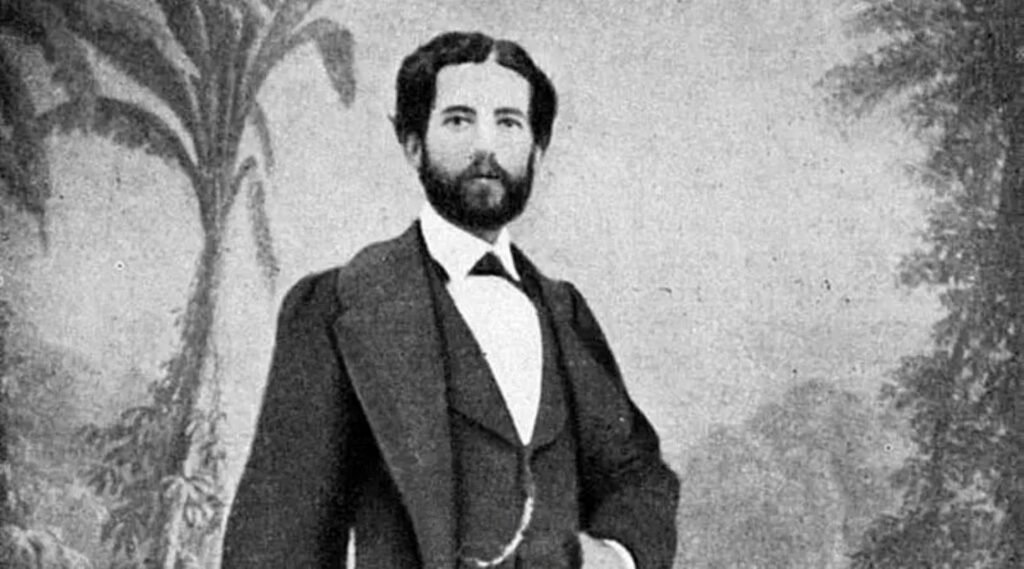
The trajectory of Gustavo Adolfo Bécquer is defined by a constant relationship between personal experience and literary construction. His work does not emerge from editorial abundance during his lifetime, but from a sustained process of expressive refinement. Passion for writing operates as an organizing axis, transforming individual experiences into a poetics based on synthesis, suggestion, and introspection.
Early formation and literary vocation
A family environment linked to art establishes a sensory foundation oriented toward observation. Although painting does not become his primary discipline, it shapes an attentive gaze to detail and atmosphere. During adolescence, reading European Romantic authors introduces a conceptual framework centered on subjectivity, which early defines his inclination toward writing.
Madrid and the consolidation of craft
The move to Madrid implies a structural shift in his life. The city functions as a space of cultural validation, but also as a setting of economic precariousness. In this context, writing ceases to be exclusively vocational and becomes a disciplined practice. The need to produce texts for subsistence strengthens his capacity for synthesis and adaptation to different formats.
Aesthetic construction in the Rimas
The Rimas reveal a process of linguistic refinement. Brevity does not respond to limitation, but to an expressive strategy that prioritizes intensity. Passion manifests in lexical precision and in the elimination of superfluous elements. This approach allows the condensation of complex emotional states into minimal structures, anticipating later poetic forms.
Symbolic narrative in the Leyendas
The Leyendas develop a narrative logic in which the supernatural integrates into everyday perception. His dedication is evident in the construction of dense atmospheres, where space and time acquire a diffuse character. The symbolic dimension does not function as ornament, but as a mechanism to explore internal tensions through seemingly external narratives.
Personal experience and thematic structure
The material conditions of his life, marked by economic instability and health problems, directly influence his production. The treatment of love avoids linear idealization and is presented as a fragmented experience. Writing operates as a space of elaboration, where loss and emotional intensity are transformed into literary material.
Journalism and intellectual discipline
His journalistic activity introduces demands of clarity and speed. This field does not dilute his literary identity, but contributes to the consolidation of a precise style. The alternation between registers demonstrates sustained dedication, where each format becomes an instance of controlled experimentation within a coherent conceptual framework.
Posthumous recognition and edition of his work
The publication of Rimas and Leyendas takes place after his death, based on the work of his close circle. This editorial process organizes a dispersed production and consolidates it as a corpus. Subsequent recognition does not respond to a forced reinterpretation, but to the identification of an aesthetic proposal that introduces changes in Spanish-language poetry.
Influence and permanence
Bécquer’s work stands as a point of transition between Romanticism and more modern forms of poetic expression. His influence is evident in the adoption of a restrained language and in the centrality of subjective experience. The passion that runs through his production operates as a method, articulating life and writing within a coherent structure.