
Sofía Heinonen
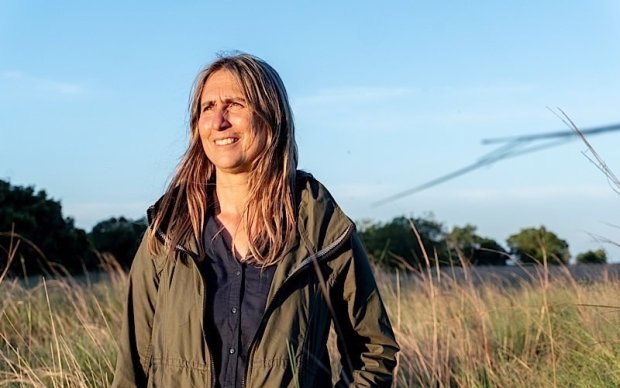
Sofía Heinonen has built a trajectory based on sustained fieldwork, where conservation is approached as active intervention. Her work integrates scientific knowledge, institutional management, and on-site execution to restore degraded ecosystems through long-term strategies.
Technical background and conservation training
Her formation is linked to biology and environmental management, with an applied perspective from the outset. Work in protected areas provided experience in land-use planning, wildlife monitoring, and ecosystem management. This foundation shaped an operational approach where technical diagnosis translates into concrete field decisions and sustained intervention strategies.
Rewilding as a restoration tool
Within Rewilding Argentina, rewilding operates as a core methodology. This approach focuses on reintroducing key species to recover lost ecological functions. Rather than preserving static conditions, it seeks to rebuild complete systems by reactivating processes such as seed dispersal and population balance.
Iberá as a large-scale implementation
The Esteros del Iberá represents a large-scale application of this model. Programs include breeding, release, and monitoring of species previously extinct in the region. These processes incorporate tracking technologies and adaptation protocols. Restoration extends beyond fauna, reshaping territorial dynamics and enabling nature-based economic activities such as ecotourism.
Institutional management and leadership
In her organizational role, Heinonen coordinates interdisciplinary teams and oversees long-term projects. Conservation management involves scientific, legal, and financial variables, requiring coordination among multiple stakeholders. Her leadership emphasizes continuity in initiatives where outcomes depend on sustained effort over extended periods.
Community integration and social sustainability
Conservation projects incorporate local communities as active participants. This includes job creation, development of compatible economic activities, and agreements on land use. The reintroduction of species requires adaptation and dialogue. Sustainability is therefore defined not only by ecological balance but also by social acceptance and participation.
Expansion of the restoration model
The model has been extended to multiple regions in Argentina. While each ecosystem requires specific adjustments, the underlying framework remains consistent. Replication depends on adapting technical tools to local conditions while maintaining the objective of restoring ecological functions and generating environmental value.
Personal dimension of commitment
Her trajectory reflects continuity between professional activity and environmental commitment. The work involves long-term planning, uncertainty management, and sustained presence in natural environments. This approach prioritizes structural processes over immediate results.
Conservation as a productive system
This model reframes conservation as an activity capable of generating economic and social value. Ecosystem restoration enables new economies based on tourism and responsible resource use. By integrating science, territory, and development, the approach positions conservation as a system where biodiversity and human activity operate in balance.