
Marisa Berenson
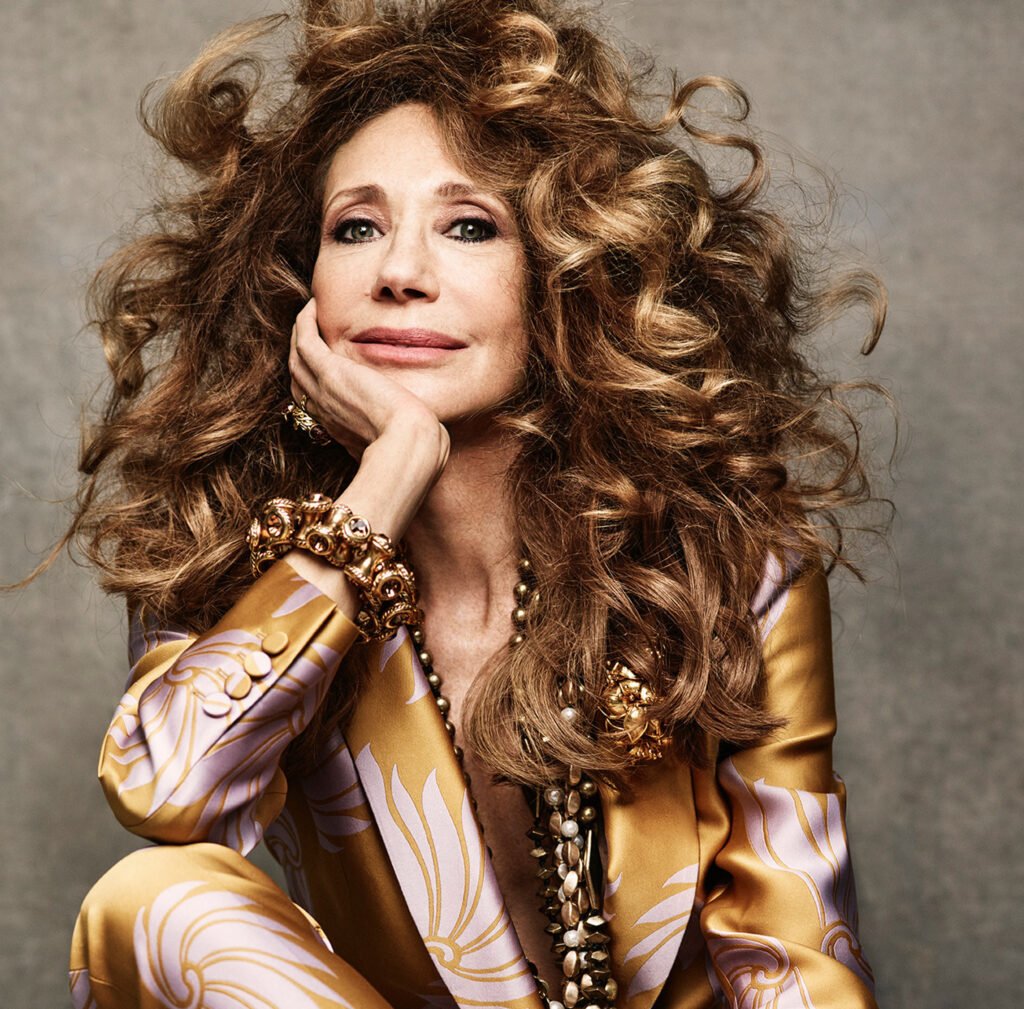
Marisa Berenson’s trajectory rests on a distinctive combination of artistic sensitivity, aesthetic discipline, and a constant search for creative spaces where visual and emotional authenticity operate as engines of expression. Her passion for beauty, composition, and storytelling through the body shaped a career that influenced both international fashion and auteur cinema.
The origins that shaped her sensitivity
Born in New York into a family connected to design and culture—her grandmother was the legendary Elsa Schiaparelli—Berenson grew up surrounded by a visual universe that taught her the language of form from an early age. That environment nurtured a sharp aesthetic perception marked by attention to nuances, textures, and gestures, elements she later carried into her professional work without resorting to artifice or excess.
Breakthrough in international fashion
Her career began in the 1960s, when renowned photographers recognized in her a singular stage presence: a blend of serenity, elegant physical structure, and a personal way of conceiving the pose as narrative. Berenson did not limit herself to fulfilling the function of model; she approached each session as an interpretive process where posture conveyed intention. That dedication turned her into one of the most influential faces of magazines such as Vogue and Harper’s Bazaar.
Transition to auteur cinema
Her shift toward film was not accidental. Directors like Luchino Visconti saw in her silent expressiveness a valuable dramatic resource. In Death in Venice, Berenson used stillness as a form of presence, offering an aesthetic tension that complemented the film’s contemplative tone. Later, Bob Fosse cast her in Cabaret, where the discipline she had refined in fashion merged with a performance built on precision of gesture.
Collaboration with Stanley Kubrick
One of the central milestones of her career was her role in Barry Lyndon. Kubrick found in Berenson a performer capable of working within rigorous narrative structures and unusual technical demands. Her portrayal of Lady Lyndon required complete mastery of body language and an emotional reading based on subtle details. The way she held a gaze or adjusted her posture contributed to the film’s overall aesthetic and reinforced the director’s characteristic approach to lighting.
A career sustained by passion as method
Berenson’s passion never manifested as impulsive improvisation but as a practice of constant observation. Her obsession with details, expressive silence, and the construction of images with narrative depth shaped every stage of her professional life. This dedication also led her to publish books on style and well-being that synthesize her perspective on the body, natural light, and visual harmony.
Resilience and personal reconstruction
Her life was marked by painful experiences, including the loss of close relatives in public tragedies. She did not process these through media exposure but through an artistic search that helped her sustain her creative identity. A spiritual dimension complemented her aesthetic discipline and influenced her approach to work and her selection of later projects.
Expansion into design, writing, and photography
Beyond acting, Berenson developed work in interior design, writing, and visual curation. These interests did not emerge as opportunistic diversification but as natural extensions of her sensory language. Each project maintains a stylistic coherence built on balance, proportion, and conscious use of light—whether in a photo shoot or a film set.
Presence in contemporary culture
Although she emerged during a period of analog glamour, Berenson has remained relevant in the present cultural landscape. She understands how to translate her artistic identity into new formats without losing authenticity. Her presence in interviews, publications, and recent projects demonstrates a remarkable ability to move between tradition and modernity without diluting her history.
Influence on later generations
Her contributions defined a paradigm that unites fashion and cinema under a shared expressive code. Models, actresses, and visual creators cite her as a reference for her ability to turn stillness into a narrative tool, for her professional rigor, and for the way she transformed 1970s aesthetics into a universal language. Her legacy does not depend on nostalgia but on the continuity of an artistic vision that remains alive.