
Victoria Azarenka
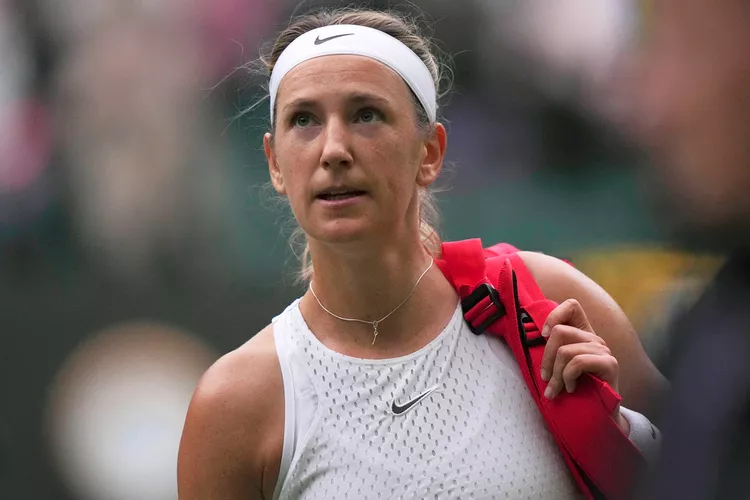
Victoria Azarenka established herself as one of the most intense and determined figures in contemporary tennis. Her career blends discipline, remarkable pressure management, and a conviction that led her to reinvent herself in different stages of life. Her journey is defined not only by results but by an emotional force that shaped her comebacks, her sporting maturity, and her competitive identity.
Childhood in Belarus and early signs of determination
Azarenka was born in Minsk during a period of political and social transition. From an early age she showed a strong inclination toward sports. She began training in local clubs, where her natural power and disciplined approach caught the attention of coaches who recognized uncommon potential. Her family played a central role, enabling her move to the United States in adolescence to access more advanced training. That early shift revealed a solid will to assume risks in pursuit of growth.
Turning training into personal identity
Azarenka’s passion for tennis extended far beyond competition. Her relationship with daily practice became a defining component of her personality. Intense conditioning routines, tactical analysis sessions, and constant self-demand shaped the first stage of her professional development. The power of her strokes—especially her flat, penetrating backhand—was reinforced by a conscious technical focus and meticulous attention to detail.
Rise to the elite and consolidation on the WTA Tour
By the mid-2000s she began achieving notable results that placed her among the circuit’s leading prospects. Her progression was driven by a firm competitive attitude with no room for relaxation in high-pressure matches. In 2012 she reached world No. 1 after a season built on consistency: deep runs in major tournaments, victories over top opponents, and a style that combined aggression with control.
Australian Open triumphs and emotional strengthening
Her Australian Open titles in 2012 and 2013 represented more than athletic success. They served as proof of a mental structure prepared for extreme tension. Each match unfolded as a sustained battle built on tactical precision, baseline power, and an exceptional ability to correct mistakes without losing focus. These wins reinforced her identity at the top and solidified her reputation as an intense, strategic competitor.
A disrupted career and the challenge of rebuilding
Azarenka faced complex phases involving injuries, personal issues, and interruptions that altered her trajectory. Motherhood marked a turning point: returning to competition after her son’s birth in 2016 required a complete reorganization of routines, timing, and priorities. That transition revealed a different emotional maturity. Her comeback relied on an expanded awareness of balance between performance, family life, and personal well-being.
Competitive resurgence and search for new motivations
After her personal challenges, Azarenka returned with notable solidity. Her 2020 US Open run, where she reached the final, displayed a profound shift in her competitive approach. Instead of relying solely on power, she incorporated a more strategic reading of pace and greater variation in her strokes. Her technical evolution, combined with a more reflective attitude, confirmed her adaptability to an increasingly dynamic tour.
Passion as a driving force at every stage
Azarenka’s career is marked by a type of passion that operates as a persistent motor. Her competitive style conveys emotional intensity, rapid analytical ability, and a relationship with effort that extends beyond the physical dimension. This internal impulse remains visible even in losses, where she openly evaluates her performance and returns to training with the same commitment she showed at the beginning of her career.
Influence on new generations and a legacy in progress
Beyond results, Azarenka left a mark on women’s tennis. Her blend of strength, discipline, and perseverance became a reference for younger players who see how a career can endure despite long interruptions. Her advocacy for mental health and motherhood in sport expanded her impact, revealing a human dimension that complements her competitive identity.
A journey that continues to evolve
Victoria Azarenka remains active on the tour with the intention of extending her career through accumulated experience. Her evolution shows that passion is not a static resource but an energy that reshapes itself at every stage. Her legacy, built through demanding standards and emotional awareness, continues to develop both on and beyond the court.