
Heather Graham
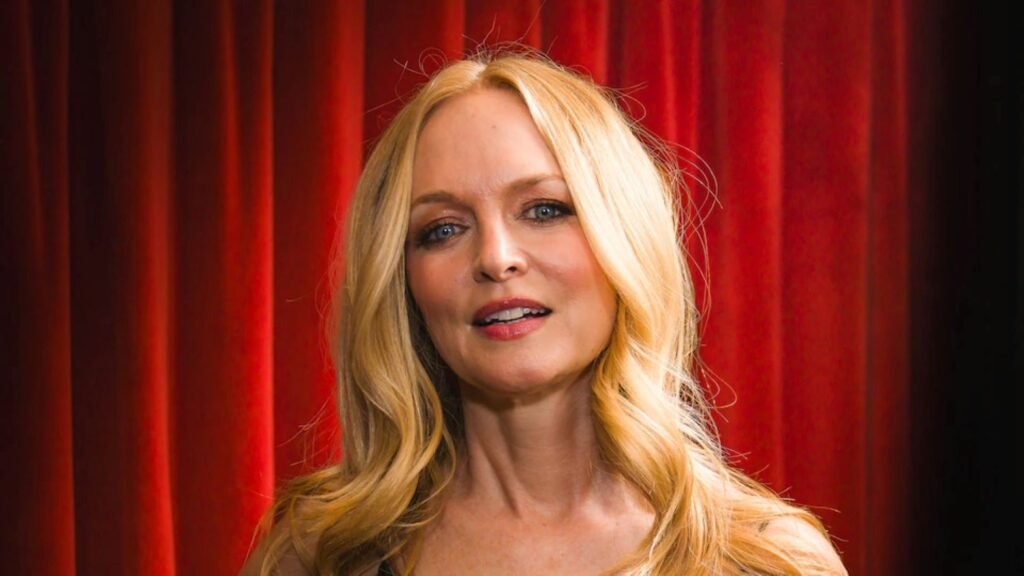
Heather Graham has built a career defined by selective decisions and a consistent prioritization of artistic development over continuous exposure. Her trajectory integrates commercial cinema, independent projects, and later expansion into writing and directing, forming a profile centered on creative autonomy and long-term coherence.
Early formation and professional choices
During her time at the University of California, Los Angeles, Graham began acting while pursuing academic studies. Her decision to leave university to focus on film established a recurring pattern: privileging direct experience over formal structures. This early shift framed her professional logic, where each project functions as a cumulative learning process and a refinement of artistic criteria.
Breakthrough in cinema
Her role in Boogie Nights, directed by Paul Thomas Anderson, marked a turning point. The character of Rollergirl required emotional precision within a complex ensemble narrative. This performance expanded her visibility within the industry and enabled access to projects with greater narrative density, while preserving flexibility in role selection.
Balancing industry and authorship
From the late 1990s onward, Graham alternated between large-scale productions and independent cinema. Her participation in Austin Powers: The Spy Who Shagged Me increased mainstream recognition, while continued involvement in smaller projects maintained a focus on character exploration. This dual positioning reflects a deliberate strategy rather than a market-driven trajectory.
Expansion into writing and directing
With Half Magic, Graham extended her role into writing and directing, assuming control over narrative structure, tone, and character development. This transition broadened her scope within filmmaking, allowing her to intervene not only in performance but also in the construction of the cinematic language itself.
Relationship with public exposure
Throughout her career, Graham has maintained periods of reduced media visibility. This pattern reflects a controlled approach to public presence, where project selection is prioritized over frequency of appearances. The result is a trajectory characterized by consistency rather than saturation.
Method and introspective process
Her acting process incorporates observation and personal writing as tools for building emotional depth. Preparation extends beyond filming, involving analytical routines that inform character development. This method establishes continuity between personal reflection and professional execution.
Persistence and adaptation
Since the late 1980s, Graham has sustained an active presence across film and television. Her continuity does not rely on cycles of high exposure but on the capacity to redefine her role within the industry. The integration of acting, writing, and directing outlines a long-term strategy based on adaptability and a stable artistic identity.