
Glen Powell
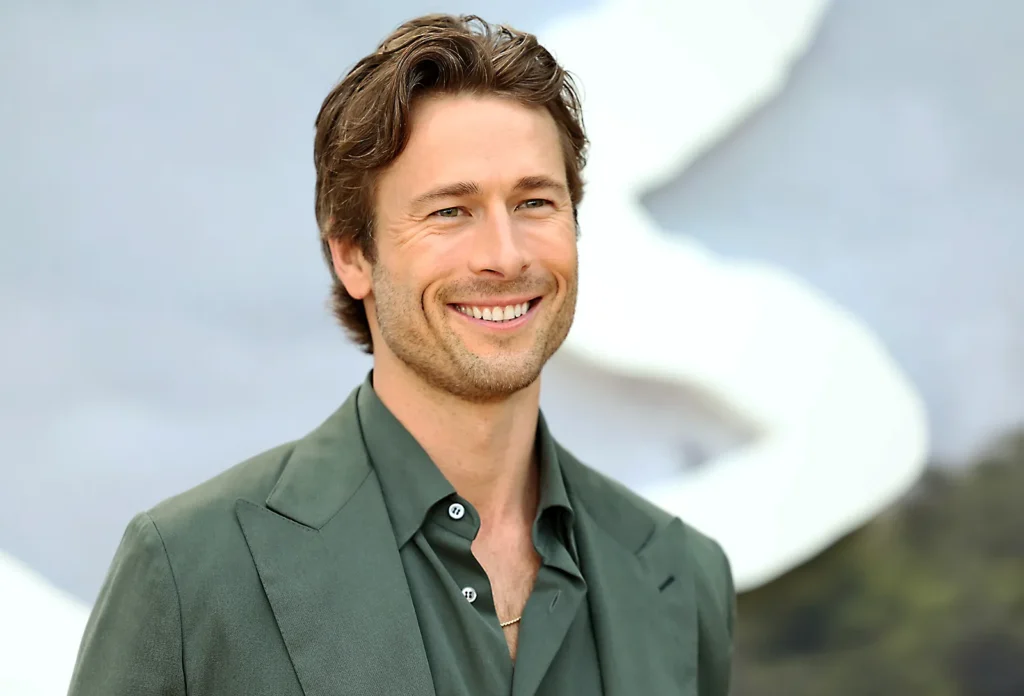
Glen Powell built his career around a consistent idea: talent without method falls short in a market that rewards repeatable outcomes. Born and raised in Austin, Texas, he accumulated small roles while learning how the industry actually works: failed auditions, minimal openings, and the need to sustain drive when there are no headlines. His public rise came later, after preparation had already become internalized.
Passion as a work system
In Powell’s case, passion functions less as a romantic impulse and more as daily architecture: training, script analysis, tonal testing, and body control as a narrative tool. In romantic comedy, his work depends on rhythm and precision; in action, on physical credibility and risk management that protects continuity on set. That combination requires habits that hold across long weeks, box-office pressure, and media exposure.
From supporting actor to leading man
His arc was not linear. The early years were defined by scattered appearances in film and television, enough to stay close to sets but not enough to dominate cultural conversation. That phase often decides careers: either fatigue wins, or each brief scene is turned into technical proof. Powell chose the second route, refining a register that now allows him to move between light charisma and a darker profile without breaking plausibility.
Top Gun: Maverick and ensemble discipline
The leap to global recognition became associated with Top Gun: Maverick, a production where physical preparation, environmental control, and technical precision are not decoration but structure. In that context, he reinforced a public image grounded in professionalism: punctuality, consistent physical conditioning, and willingness to train so the camera does not forgive sloppiness. The result was consolidation that opened the door to leading roles.
Hit Man and the need to write in order to act
Co-writing and producing Hit Man revealed another dimension of his approach: not waiting for the ideal role, but helping design it. For an actor, writing is not a vanity move; it is control over tone, tempo, and subtext. By participating in the screenplay, Powell aligns his primary instrument—performance—with the engineering of the story, reducing friction between intention and result. It also positions him as a creator, not only an interpreter.
Romantic comedy and emotional precision
Romantic comedy demands fine control over exposure: likability without excess, vulnerability without melodrama, and chemistry that reads as spontaneous even when built through repetition. Anyone But You worked as a showcase of that craft. The operative passion is not grand gesture, but the ability to sustain naturalness under choreography: camera marks, dialogue timing, functional silences, and real listening.
Twisters, action, and physical credibility
In the realm of physical spectacle, Twisters places him in a type of film where the body becomes part of the argument. Dedication translates into endurance, coordination, and intelligent energy management. In disaster cinema, performance competes with noise: effects, weather rigs, cranes, extras. For the character to hold, the actor has to build emotional clarity inside staged chaos.
Personal life: roots, study, and autonomy
Powell maintains a strong tie to Texas and, in 2024, returned to living in Austin, a decision that works both as identity and as environment management. He also resumed studies related to the audiovisual field at the University of Texas at Austin, reinforcing a simple idea: the craft must be updated even when the career is already established. Added to that is a public interest in aviation: he obtained a pilot’s license, another signal of disciplined commitment to technical skills.
Cultural influence: the return of the skilled movie star
His influence extends beyond the box office and enters the debate on how a film star is built in an age of fragmentation. Today’s star system often grows out of platforms and series; Powell advances a more classic logic based on presence, consistent delivery, and the capacity to carry a film. His case suggests that passion, when converted into method, becomes creative control: selecting projects, building a personal brand without losing acting craft, and maintaining a functional relationship with exposure.
Projection: a career that adds layers
The next phase places him alternating high-reach roles with expansion behind the camera. At this stage, dedication is measured by a less visible variable: selection and continuity. Sustaining prestige means saying no, protecting the body, avoiding repetitive character types, and developing projects where acting is part of a larger vision. In the tension between star and craftsman, his trajectory is defined: passion understood as serious work, every day.