
Humphrey Bogart
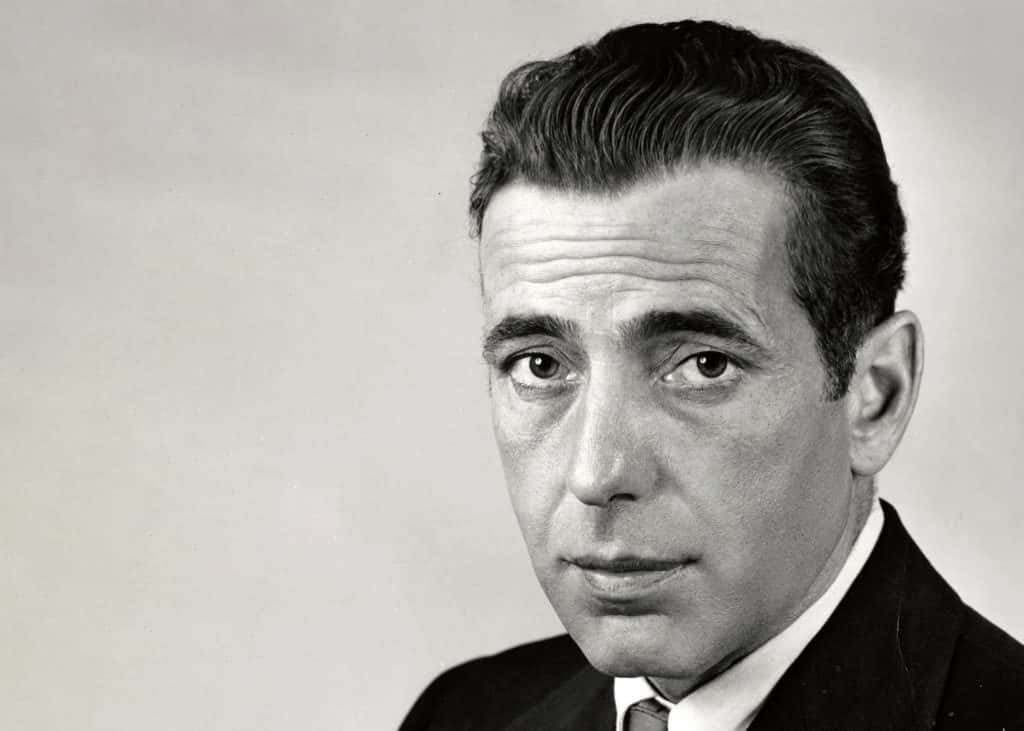
The trajectory of Humphrey Bogart was shaped through a sustained process of technical work, adaptation to the studio system, and the consolidation of a distinctive acting identity. Rather than an immediate breakthrough as a leading figure, his positioning emerged from the accumulation of roles and the refinement of limited but effective expressive resources. This progressive construction defined both his career and his cultural projection.
Education and early years
Bogart’s professional beginnings were not directly linked to film but to theater, where he developed specific skills in vocal control, modulation, and stage presence. His experience on Broadway functioned as a formative stage, allowing him to understand acting as a structured craft. This technical approach, centered on repetition and precision, proved decisive in his later adaptation to cinematic language.
Early Hollywood period
During the 1930s, Bogart was assigned supporting roles, often associated with marginal or antagonistic figures. Productions such as The Petrified Forest provided him with visibility within a system that tended to fix rigid actor profiles. In this context, his development focused on refining a restrained expressiveness, where minimal gestures and verbal economy began to distinguish his performances.
Consolidation in film noir
The turning point came with The Maltese Falcon, directed by John Huston. There, the character of Sam Spade introduced a central figure defined by moral ambiguity and analytical reasoning. Film noir required psychological density, and Bogart responded with a technique that prioritized silence, pauses, and rhythm control, shaping a recognizable style.
Casablanca and global projection
In Casablanca, Bogart achieved a synthesis between technique and narrative. The character of Rick Blaine combined emotional detachment with ethical involvement within a wartime context. His performance relied on subtle variations in tone and gaze, creating depth without resorting to broad gestures. This expressive economy amplified the character’s impact and consolidated his international projection.
Relationship with Lauren Bacall
His association with Lauren Bacall introduced a dynamic based on contrast. In films such as To Have and Have Not and The Big Sleep, their interaction generated a balance between restraint and dramatic tension. This relationship influenced both his personal life and the expansion of his professional range.
Maturity and recognition
Institutional recognition came with the Academy Award for The African Queen. At this stage, Bogart incorporated greater physical and emotional flexibility, partially moving away from the urban archetype. His performance revealed an openness to more vulnerable registers while maintaining the technical precision that defined his entire career.
Legacy and influence
Bogart’s lasting presence in film history is explained by the coherence of his interpretative construction. His contribution lies in establishing the antihero as a central figure, characterized by introspection, ambiguity, and moral autonomy. This model remains present in various cinematic traditions, demonstrating the enduring relevance of his technical approach.