
Ludovic Slimak
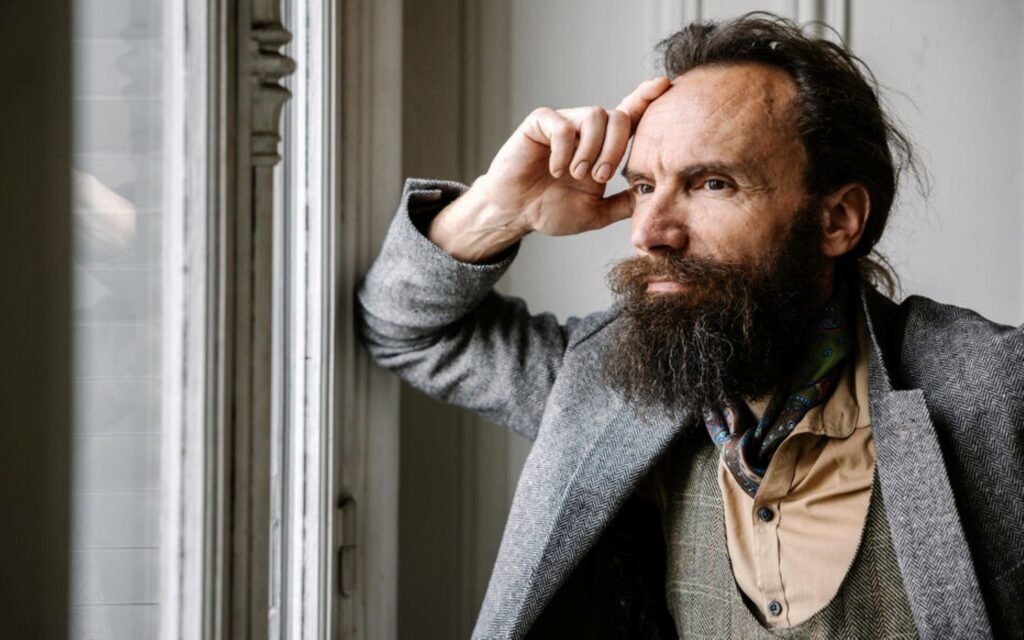
Ludovic Slimak built his career through sustained dedication to the study of the last Neanderthal societies and the earliest movements of Homo sapiens in Europe. His commitment is not expressed through spectacle, but through the steady discipline of stratigraphic work, chronological revision and the formulation of hypotheses that challenge established narratives. Long-term excavation at Grotte Mandrin defined the axis of his research and consolidated his international standing.
Commitment to precision archaeology
Slimak’s trajectory is marked by rigorous methodology. In Paleolithic archaeology, each sedimentary layer functions as a temporal archive. His work focuses on reading those layers with technical accuracy, avoiding premature conclusions. This discipline shaped his professional identity: prioritizing intact contexts, combining multiple dating methods and advancing arguments grounded in verifiable evidence. Passion, in his case, translates into method before narrative.
Grotte Mandrin as a life project
Sustained research at Grotte Mandrin transformed the rock shelter into a long-term laboratory. Alternating occupation sequences by Neanderthals and Homo sapiens were identified there. The continuity of excavations supported hypotheses concerning human mobility in the Rhône Valley. His dedication was cumulative rather than episodic: season after season, the site expanded the interpretive framework of European prehistory.
Revising established chronologies
One of the most debated contributions associated with his research is the proposal of an early presence of Homo sapiens in France, around 54,000 years ago. This argument required reconsideration of widely accepted timelines. Scientific commitment, in this instance, meant engaging in academic debate and defending evidence under critical scrutiny. Methodological controversy increased the visibility of his work and reinforced the importance of empirical rigor.
Societies rather than species
Slimak distinguishes himself by examining not only human remains or tools, but patterns of social organization. His approach seeks to understand how groups lived, occupied territories and developed cultural dynamics that may explain persistence or disappearance. This perspective extends beyond biological classification. His dedication centers on reconstructing ancient human decisions, not merely dating artifacts.
Intellectual discipline and public debate
International attention surrounding his findings placed him at the center of high-impact scientific discussions. The question of coexistence, alternation or replacement between Neanderthals and Homo sapiens remains unresolved. Within this context, his work demonstrates how scholarly commitment requires tolerance for disagreement. Ongoing revision does not weaken research; it refines it. Persistence in debate forms part of his professional path.
A life shaped by fieldwork
Field archaeology imposes distinctive rhythms: extended campaigns, logistical planning and seasons conditioned by climate and funding. Within this structure, personal life intertwines with the excavated landscape. Annual return to the same site generates a nearly topographical relationship with place. This continuity shapes both his career and his professional identity.
Impact and future projection
Ludovic Slimak’s trajectory illustrates how sustained dedication can reshape historical paradigms. His research contributes to a more complex understanding of Neanderthal disappearance and sapiens expansion in Europe. Rather than closing debates, his work expands them with new data and renewed questions. Long-term commitment positions him as a contemporary reference in Paleolithic studies and human evolution research.