
Jonny Greenwood
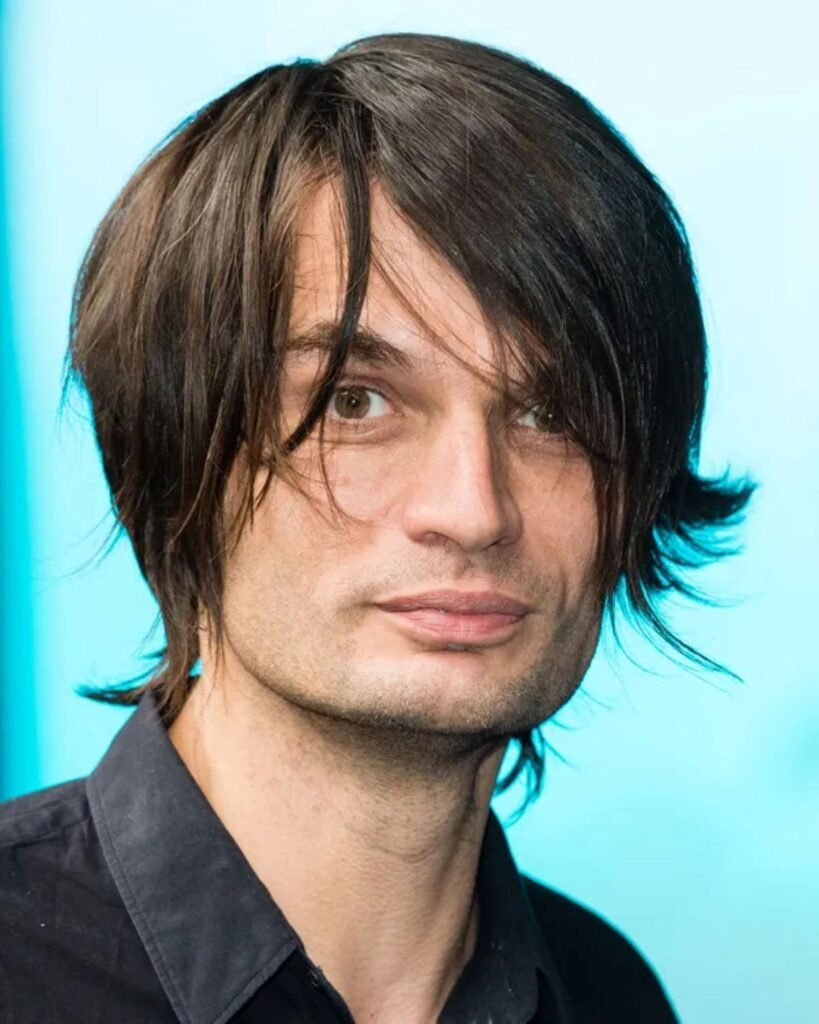
Jonny Greenwood has sustained a career guided by a technical passion for sound: investigating, testing, and reorganizing resources until they become language. His trajectory connects his work with Radiohead, film scoring, and contemporary composition without separating “genres,” but rather functions: texture, rhythm, tension, and silence. This dedication operates as a sustained method, closer to a laboratory than to inspiration, and helps explain his cross-cutting influence on contemporary music.
Jonny Greenwood and the logic of sonic passion
Greenwood developed a path in which passion for sound functions as the organizing principle of his professional life. His career integrates academic training, instrumental exploration, and a work ethic oriented toward constant experimentation. Far from a linear progression, his dedication is expressed through the permanent search for new musical languages, applied equally to band formats, contemporary composition, and cinema, without rigid boundaries between disciplines.
Musical training and early construction of method
Beginning with formal training in piano and viola, Greenwood acquired a structural understanding of music grounded in timbre, texture, and rhythm. This education did not lead to orthodox adherence to the classical tradition, but rather provided a solid technical base from which to question musical forms. His early interest in contemporary music and nonconventional systems anticipated a working method centered on analysis, testing, and continuous reformulation of sonic materials.
Radiohead as a creative laboratory
Within Radiohead, Greenwood functioned as a vector of experimentation rather than as a conventional guitarist. His role was defined by the expansion of instrumental language through alternative tunings, noise, electronic devices, and irregular rhythmic structures. His passion for exploration turned the band into a permanent testing ground, where each technical resource responded to a conceptual decision rather than to superficial identity-building.
Film composition and the relationship with image
In cinema, Greenwood transferred his analytical approach to the relationship between sound and narrative. His scores avoid traditional illustrative functions and instead operate through tension, silence, and repetition, engaging directly with editing and character psychology. Music becomes a structural layer of the film, reinforcing atmosphere and conflict without resorting to predictable emotional cues or conventional harmonic resolution.
Academic production and contemporary writing
His work in contemporary music expanded his creative field toward writing for ensembles and orchestras. In this context, Greenwood explored alternative scales, polyrhythms, and specific timbral configurations, maintaining continuity with procedures developed in other formats. Passion appears here as sustained formal research, where each piece poses a concrete technical problem and a specific musical solution.
Creative discipline and rejection of repetition
A constant trait in his career is resistance to replicating successful formulas. Greenwood treats each project as an opportunity to learn new tools, collaborate with specialized performers, and reassess his own methods. This stance reflects a conception of passion as active discipline, grounded in study, critical listening, and a willingness to revise previous decisions when the creative process requires it.
Personal life and professional coherence
His reserved public profile aligns with a conscious choice of working environments removed from overexposure. Greenwood prioritizes long processes, stable collaborations, and conditions that favor concentration. This coherence between personal life and artistic practice reinforces a view of creative work as a sustained activity, where daily dedication outweighs media visibility.
Influence and projection of his work
Jonny Greenwood’s influence spans genres and generations, not through imitation of a closed style, but through the adoption of a rigorous experimental attitude. His legacy lies in demonstrating that musical passion can be organized as a working method, integrating technique, compositional thought, and openness to risk, and in consolidating an understanding of music as a dynamic system in constant transformation.