
Ursula Andress
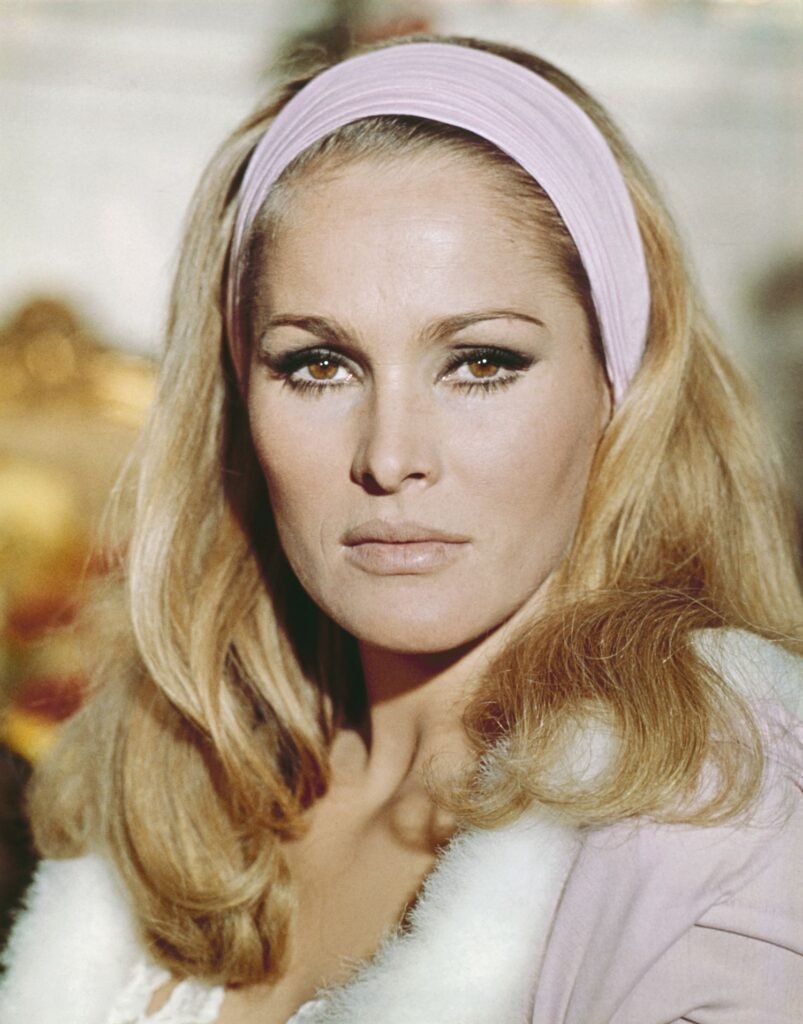
Ursula Andress built her career through a sustained relationship with acting understood as discipline, physical exposure, and control over her own image. Her trajectory was not defined solely by the impact of an iconic role, but by a sequence of professional decisions that connected European and Hollywood cinema, personal autonomy, and an early understanding of the symbolic value of the body in twentieth-century visual culture.
Training and early professional movement
Born in Switzerland in 1936, Ursula Andress developed outside the traditional entertainment circuits. Her introduction to acting was shaped by direct experience on postwar European film sets, where cinema prioritized bodily presence and expressiveness over verbal psychology. This context led her to understand acting as a physical and technical craft, closer to a trade than to stardom, and to adopt a pragmatic attitude toward the industry from the outset.
The impact of Dr. No and global projection
Her participation in Dr. No (1962) marked a turning point that permanently altered her trajectory. Her screen presence redefined the female role within commercial action cinema, introducing a figure that combined autonomy, visual power, and command of the frame. The impact extended beyond immediate popularity, establishing Andress as an iconic reference capable of sustaining dominant screen presence without relying on conventional narrative frameworks.
Conscious career management and role selection
After achieving international recognition, Andress avoided confinement within a single archetype. She alternated between Hollywood productions and European projects, prioritizing diversity of contexts and production modes. This strategy revealed a clear awareness of the risks of repetition and typecasting. Her commitment to the craft was reflected in careful role selection, accepting demanding shoots and characters that required cultural adaptation, physical discipline, and sustained exposure.
The body as a narrative tool
A central axis of her career was the use of the body as a primary narrative element. Far from a decorative logic, the physical dimension of her performance functioned as a language in itself. Action sequences, shoots in hostile outdoor environments, and an aesthetic based on bodily precision were integral to her professional practice. This dedication sustained a coherent image in which the body operated as an expressive medium rather than an accessory within cinematic storytelling.
Personal life and decisional autonomy
Ursula Andress’s private life attracted media attention, yet she maintained a clear separation between personal matters and professional decisions. Unlike many figures of her time, she prioritized personal independence and control over her working rhythm. This stance directly shaped her relationship with fame, limiting overexposure and preserving decision-making margins that allowed her to sustain her artistic identity without subordinating it to external expectations.
Professional maturity and strategic withdrawal
Over time, Andress reduced her participation in large-scale productions without fully abandoning acting. This withdrawal did not represent an abrupt retreat, but rather a reorganization of her relationship with the industry. She chose to preserve her figure and legacy without forcing artificial updates, consolidating an image associated with a specific era, a working method, and a professional ethic grounded in coherence and continuity.
Legacy and lasting influence
Ursula Andress’s figure continues to operate as a reference in discussions on female representation, icon construction, and autonomy in cinema. Her legacy extends beyond a specific filmography to a way of understanding an artistic career as a sustained process. The passion that shaped her trajectory manifested through concrete decisions, image management, and a lucid relationship with cinema’s symbolic power.
A trajectory sustained by method
Beyond her status as a cultural icon, Ursula Andress embodies a conception of acting grounded in consistency and professional control. Her career demonstrates how passion, structured as method rather than impulse, can sustain a long trajectory without diluting identity or purpose. This balance between exposure, discipline, and autonomy defines the core of a figure that continues to be examined from historical and cultural perspectives.