
Tyra Banks
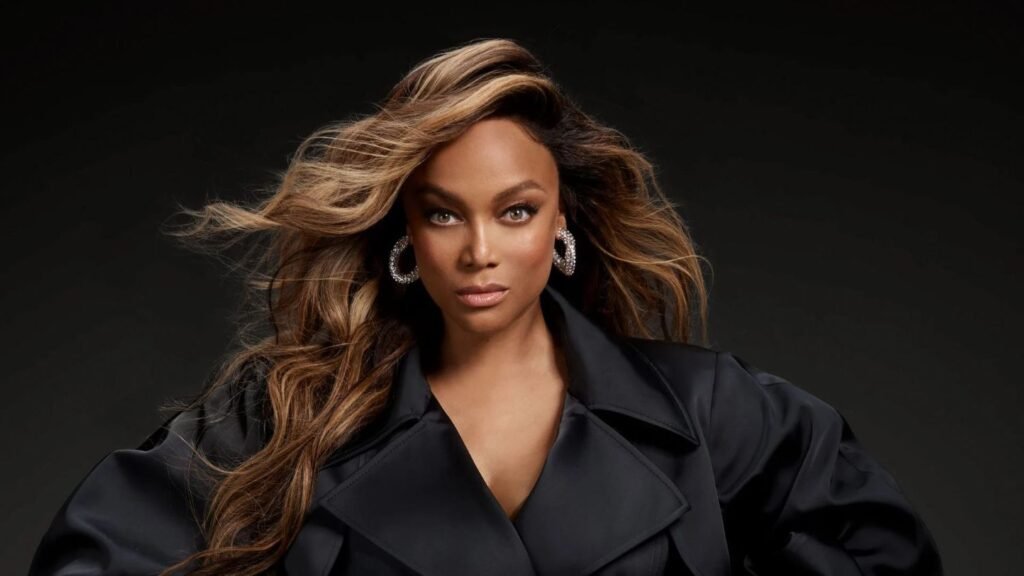
Tyra Banks built a career where passion does not appear as an abstract impulse but as a repeatable practice: observing, rehearsing, measuring outcomes, and trying again. Her dedication is best understood as a work ethic applied to image: learning to read the camera, directing public attention, and turning presence into platform. That logic carried her from modeling to television and then to business ventures where aesthetics become product, experience, and brand.
Origins: the camera as early training
Born on December 4, 1973, in Inglewood, California, she entered the modeling world young and quickly learned that beauty alone cannot sustain a career. Her passion was channeled into concrete habits: studying angles, practicing poses, understanding lighting, and developing emotional control in the face of rejection, common in castings. This dedication—closer to athletic training than glamorous fantasy—gave her the tools to compete in a demanding, highly selective market.
Passion for image: turning intuition into technique
In her modeling career, image became language and strategy. Dedication appears in an obsession with detail: posture, breathing, body rhythm, and reading the environment. Her focus was not merely on “looking good,” but on designing a visual message coherent with a client’s goal and with her own public identity. This ability to translate emotion into gesture—and gesture into narrative—became a signature that later moved to the screen: the same principle, now with a mass audience.
Discipline and reinvention: expanding the playing field
Sustained passion often requires reinvention, and Banks crafted transitions that did not depend on chance. When modeling reached its natural ceiling—due to age norms or media saturation—she sought spaces where her knowledge gave her an advantage: hosting, producing, and creating her own formats. Her key insight was that image is a full industry: not just bodies on runways, but scripts, editing, casting, art direction, communication, and monetization.
Television as laboratory: narrative, competition, and public pedagogy
With America’s Next Top Model, Banks turned the fashion world into narrative television. Her passion was expressed architecturally: rules, challenges, evaluation, and character evolution. The format worked as a laboratory mixing entertainment with popular pedagogy about the craft: how to work in front of a camera, how to build a personal brand, and how to negotiate pressure. Her dedication is visible in her double role—on-screen figure and producer—balancing charisma with structural design, pacing, and season continuity.
Entrepreneurship: when passion becomes product
Her entrepreneurial side is driven by a central idea: image is also a consumer experience. Banks promoted initiatives in beauty and immersive experiences tied to her brand, transferring industry lessons—aspiration, transformation, belonging—into marketable proposals. Here, dedication transforms: no longer training a pose, but designing a full system of product, communication, distribution, and community. The guiding thread remains the same: converting creativity into method.
Personal life: focus control and energy management
Intense passion comes with costs: exposure, schedule pressure, and constant demand. Banks maintained a relatively protected private life for someone of her visibility, managing media attention as part of her professional health strategy. She is mother to a child born in 2016, a fact that reframes her discipline: in caregiving phases, dedication shifts toward calendar decisions, priorities, and project selection—with less volume, more intention.
Controversies: public revision and institutional learning
Part of her trajectory has been marked by criticism of competitive television dynamics, especially regarding moments viewed as harsh or questionable in retrospect. Seen constructively, these controversies illustrate the clash between entertainment norms of a past era and changing social sensitivities: what was once normalized later becomes subject to scrutiny. Her public evolution can be measured by her ability to absorb criticism, adjust criteria, and understand that media pedagogy has real effects on self-esteem, inclusion, and representation.
Legacy: passion as craft, not slogan
Tyra Banks’ contribution exceeds her fame. Her impact lies in showing that sustained passion can become a work system: applied technique, strategic reinvention, and brand-building with business logic. In a sector where many depend on short cycles, she established a useful idea for broad audiences: image is not superficial when treated as language, discipline, and a tool for creating opportunity.